
Apparel Production Timeline: How Long Does Launching Really Take?
One of the biggest mistakes new fashion apparel production founders make is treating brand development like a short creative project instead of a full business-building process. A clothing brand is not ready just because the logo looks good, the mood board feels strong, or the first sample arrives. It becomes real when product, pricing, production, branding, ecommerce, and launch planning all work together.
That matters even more in 2026. McKinsey’s State of Fashion 2026 says the global fashion industry is expected to remain in low single-digit growth, while value-conscious behavior continues to shape buying decisions. The same report also says generative engine optimization is becoming an important counterpart to SEO as AI’s role in product discovery grows. That means new brands need stronger planning, sharper positioning, and better execution, not just better aesthetics.
Digital commerce also keeps evolving. UNCTAD reports that business e-commerce sales across 43 economies approached US$25 trillion in 2021, and the OECD’s 2025 e-commerce guidance notes that updated measurement now considers AI-assisted transactions and emerging digital ordering channels. In simple terms, a clothing brand launch in 2026 is not only about getting products made. It is about getting discovered, trusted, purchased, and fulfilled in a more complex digital environment.
So how long does clothing brand development actually take? For many startups, a realistic timeline from concept to first launch often falls somewhere between 3 and 9 months, depending on product complexity, manufacturing model, number of styles, sample revisions, and how quickly decisions get made. A lean private label launch can move faster. A custom cut-and-sew brand with original fits, custom fabrics, and a more polished launch usually takes longer.
This guide explains the full clothing brand development timeline step by step, from idea validation to post-launch refinement.
Quick Overview: Clothing Brand Development Timeline
The typical clothing brand development process takes 3 to 9 months, depending on product complexity, number of styles, and manufacturing method.
A simplified timeline usually looks like this:
| Phase | Estimated Time |
| Market research and niche validation | 2–4 weeks |
| Brand identity and collection planning | 2–4 weeks |
| Tech packs and supplier sourcing | 2–3 weeks |
| Sampling and revisions | 4–8 weeks |
| Bulk production | 3–8 weeks |
| Website setup and content creation | 2–4 weeks |
| Pre-launch marketing and launch preparation | 2–6 weeks |
Why Timeline Planning Matters More Than Most Founders Expect
A clothing brand timeline is not just a calendar. It is a decision-making system. Every phase affects the next one. If your tech pack is late, sampling starts late. If sampling is delayed, production approval moves back. If production moves back, photography and launch content get compressed. If content gets compressed, the launch becomes rushed and weaker than it should be.
That is why timeline planning is really risk planning. It protects product quality, launch timing, cash flow, and customer trust. It also helps you decide whether your first collection is realistically sized for your budget and operational ability.
Many founders think delays only happen in manufacturing. In reality, early-stage brands often lose more time in indecision than in production.
How Long Does It Take to Develop a Clothing Brand?
For most startup brands, a practical planning range looks like this:
| Brand Type | Typical Development Timeline |
| Print-on-demand basics brand | 4 to 10 weeks |
| Lean private label launch | 2 to 4 months |
| Small custom cut-and-sew launch | 4 to 7 months |
| More polished multi-style custom brand | 6 to 9 months |
These are planning estimates, not fixed industry rules.
Scaling a Fashion Brand: What to Expect
Scaling a fashion brand requires planning a clear roadmap from a successful launch to becoming a profitable fashion brand. Start by prioritizing a high-quality product and finished product readiness through creating detailed tech packs, careful sourcing and production choices, and selecting the right production facility. Understand moq and moqs, anticipate the number of revisions during sampling and production, and factor in common delays so you can accelerate your launch without sacrificing quality. Clear communication with partners and documenting key milestones helps keep inventory in stock and ensures timely final delivery.
Use branding and marketing and targeted digital marketing to align with evolving consumer preferences. This definitive guide template highlights key factors for building a successful and building a strong brand, answers frequently asked questions, and shows how to accelerate growth while maintaining margins.
Brand Idea, Market Research, and Niche Validation
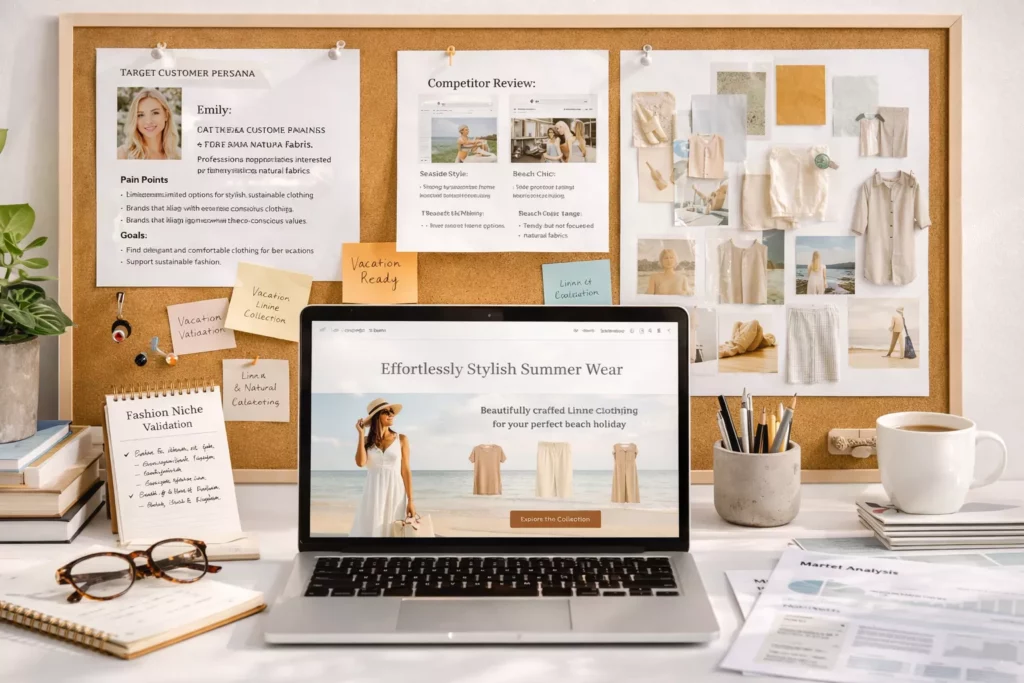
The first phase starts before design. It begins with research. This is where you define the customer, the niche, the product angle, and the commercial opportunity.
A strong clothing brand does not start with random inspiration. It starts with clear answers to three questions:
- Who is the product for?
- What problem or desire does it serve?
- Why should customers choose your brand instead of others?
This phase often includes competitor research, audience research, mood boards, and concept validation.
For many startups, this stage takes 2–4 weeks.
Brand Strategy, Naming, and Identity Development
Once product direction is clear, the brand identity phase begins. This includes naming, logo design, typography, color palette, tone of voice, and packaging style.
This phase usually takes 2–4 weeks if decisions move quickly. The goal is not to create a huge branding document. The goal is to create a clear and consistent identity system.
Product Planning and Collection Structure
This is where the brand moves from concept to real products.
You decide:
- How many styles are in the first collection
- Which product is the hero item
- Which pieces support the hero product
- What colors and sizes are needed
For most startups this planning stage takes 1–3 weeks.
Smaller collections are usually easier to develop and launch successfully.
Tech Packs and Product Development Documents
Once products are selected, the next step is building technical documentation.
This includes:
- tech packs
- measurement specs
- construction details
- fabric information
- trim requirements
- labeling instructions
Factories rely on these documents to produce samples accurately.
This phase typically takes 1–3 weeks.
Supplier Search and Manufacturer Evaluation
With product documents ready, brands begin searching for manufacturers.
This includes comparing:
- pricing
- minimum order quantities
- production capabilities
- communication reliability
This process often takes 2–4 weeks, depending on how quickly suppliers respond.
Sampling and Fit Development
Sampling is one of the longest and most important parts of brand development.
Most brands go through several sample rounds:
- prototype sample
- fit sample
- revised sample
- pre-production sample
This process usually takes 4–8 weeks.
Costing, Pricing, and Margin Planning
After samples are close to final, pricing and cost structure must be finalized.
This includes:
- manufacturing cost
- packaging cost
- shipping estimates
- retail price planning
- margin analysis
This phase often takes 1–2 weeks.
Pre-Production Preparation
Before bulk production begins, final approvals must be completed.
These include:
- fabric approval
- trims and labels
- packaging design
- artwork files
- final sample approval
This phase usually takes 1–3 weeks.
Bulk Production and Quality Control
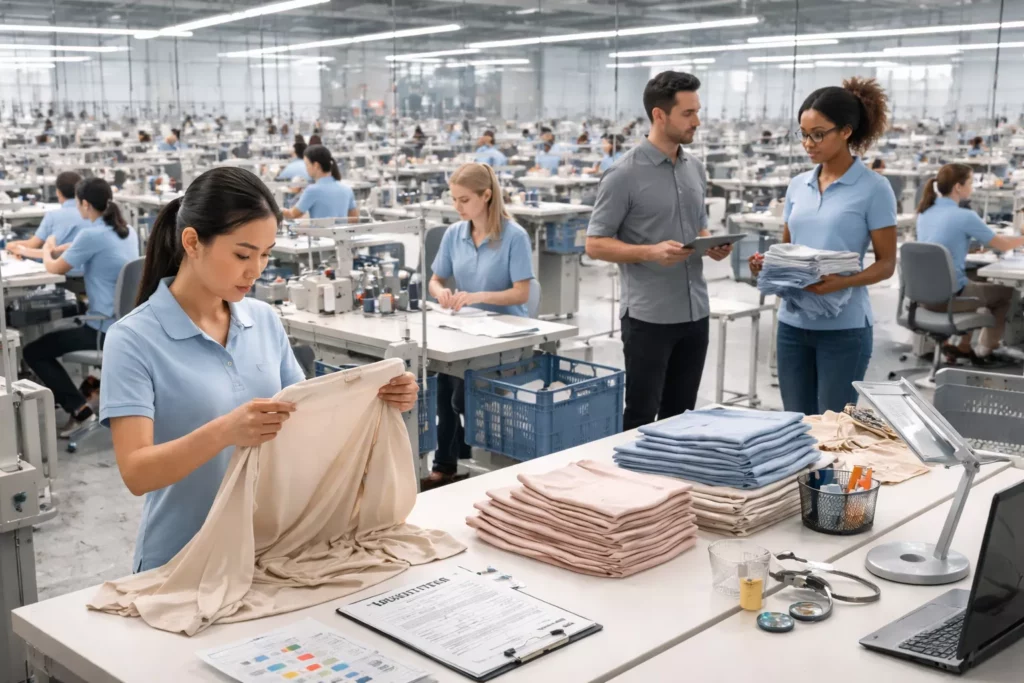
Bulk manufacturing usually takes 3–8 weeks depending on order size and complexity.
Production includes:
- cutting
- sewing
- finishing
- labeling
- packing
- inspection
Quality control is critical during this stage.
How Long Does Clothing Production Really Take?
Launching a fashion brand requires clear concept development and a solid business plan—from initial fashion design sketches to a market-ready clothing line. In this guide for 2026 we explain how design complexity and the chosen production partners shape production lead times. Design to delivery timelines vary widely: simple pieces move faster, while intricate samples and detailed tech packs lengthen the product development process.
For founders launching your fashion brand or launch your clothing brand, understanding the clothing production timeline is essential to build a unique brand identity and a successful clothing fashion label. The apparel production and manufacturing process depend on a reliable supply chain, skilled production partners, and realistic schedules—so know how long it will really take, because timelines vary across the fashion business landscape.
Can I Speed Up The Manufacturing Timeline?
Accelerating a manufacturing timeline is possible with focused planning and clear communication, but it must not compromise fair labor practices. Start by identifying bottlenecks in design, procurement, and production scheduling, and allocate resources to parallelize tasks where safe and ethical. Tightening timelines often depends on faster decision cycles, especially around approving samples; set firm review windows, use digital approvals, and arrange rapid prototyping to reduce iterative delays.
Work closely with trusted suppliers to secure priority slots, and build contingency buffers for logistics and quality checks to avoid costly mistakes. Regular progress tracking and early quality inspections catch issues before they cascade, saving time overall. Finally, be transparent with stakeholders about realistic trade-offs between speed, cost, and worker welfare so you can accelerate responsibly without creating hidden risks.
What Causes Delays in Apparel Production and How to Avoid Them
Delays in apparel production often stem from unclear concept development, ambiguous detailed tech packs, and complex design complexity that drag out the manufacturing process, stretching production timelines and lead times. A fashion brand or fashion label hoping to launch your clothing brand or scale a clothing line must prioritize a streamlined product development process and strong production partners to streamline handoffs and protect the supply chain.
To avoid holdups, fashion designers should refine design concepts, keep design to delivery steps visible, and align with a realistic business plan that accounts for how timelines vary by complexity. Building a unique brand identity and boosting brand awareness helps attract reliable partners, while a clear, step-by-step implementation guide — a guide for 2026 — helps new founders launching your fashion brand or launching your brand really take the steps to produce high-quality, successful clothing and a successful fashion business as they scale and build a brand.
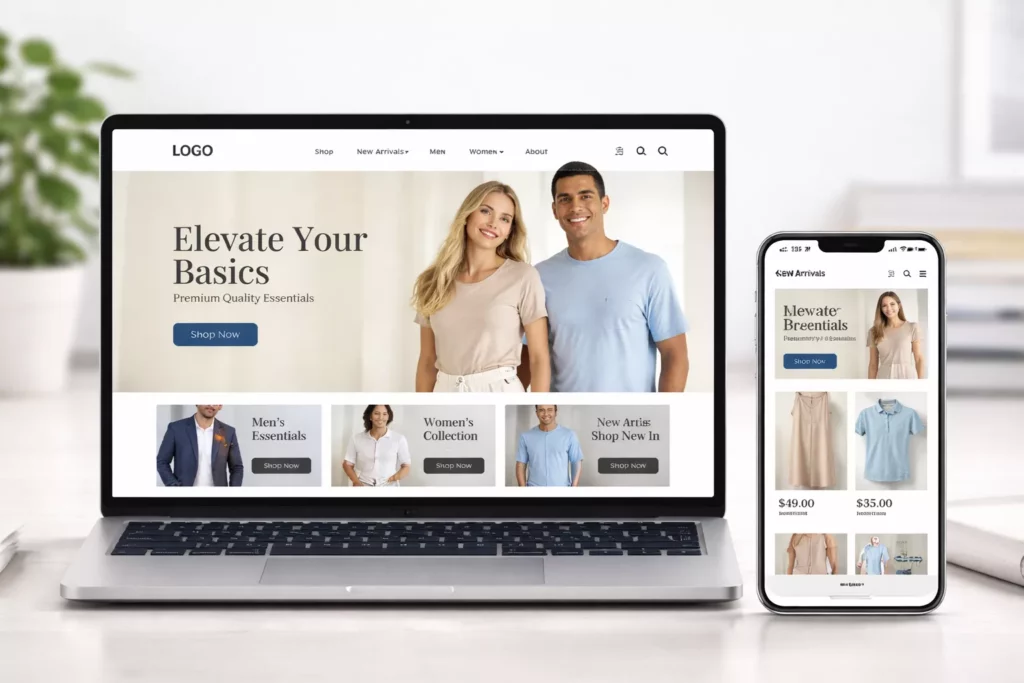
E-commerce Website and Store Setup
While production is happening, the ecommerce store should be built.
Tasks include:
- homepage design
- product pages
- size guides
- shipping policies
- return policies
This stage often takes 2–4 weeks.
Photography and Launch Content
Content creation includes:
- product photography
- lifestyle images
- launch campaign visuals
- social media content
- email marketing graphics
This stage typically takes 2–4 weeks.
Pre-Launch Marketing and Audience Building
Successful brands start building interest before launch day.
Pre-launch marketing often includes:
- email waitlists
- teaser posts
- influencer outreach
- early access campaigns
This stage usually begins 2–6 weeks before launch.
Launch Week and Early Operations
Launch week includes:
- publishing the online store
- sending launch emails
- releasing campaign content
- monitoring orders
- handling customer support
Launch week is only one week on the calendar, but it reflects months of preparation.
Post-Launch Feedback and Optimization
After launch, founders analyze:
- product sales data
- size performance
- customer feedback
- return reasons
This information helps improve the second collection.
A Realistic 6-Month Clothing Brand Development Timeline
| Month | Main Focus |
| Month 1 | Niche research and brand concept |
| Month 2 | Brand identity and product planning |
| Month 3 | Supplier search and sampling |
| Month 4 | Sample revisions and costing |
| Month 5 | Production and website development |
| Month 6 | Photography, marketing, and launch |
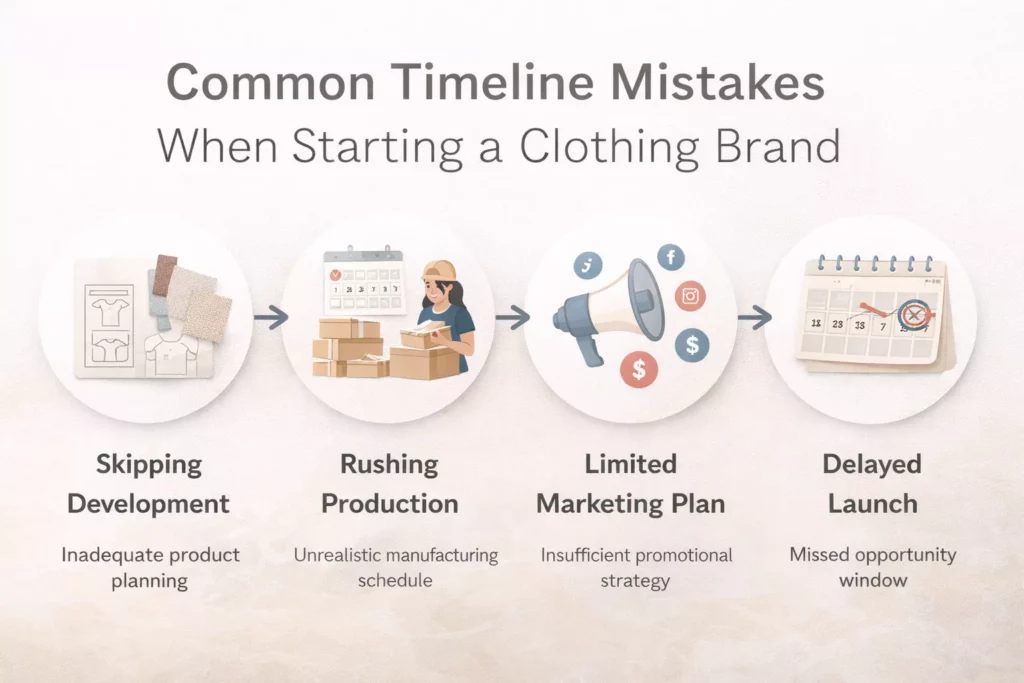
Common Timeline Mistakes When Starting a Clothing Brand
Many clothing brand launches are delayed because founders underestimate how long development actually takes.
Some of the most common mistakes include:
Launching with too many styles
Large first collections increase sampling time, production complexity, and content creation workload.
Changing product designs during sampling
Frequent design changes create new sample rounds and slow development.
Waiting too late to build the website
E-commerce setup and product page content should start while production is happening.
Ignoring pre-launch marketing
Brands that start marketing only on launch day often struggle to generate early sales.
Choosing the wrong manufacturing partner
Factories without experience in your product category can create communication delays and quality problems.
Avoiding these mistakes can significantly shorten the brand development timeline.
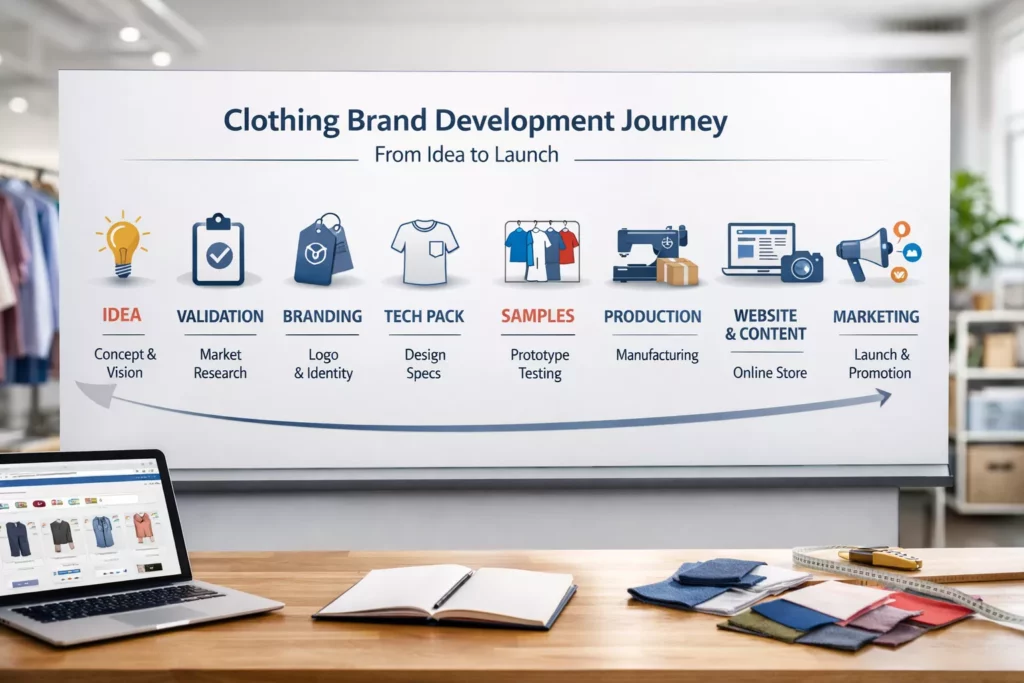
Visual Timeline of Clothing Brand Development
Understanding the overall process visually can help founders plan their launch more realistically. The timeline below summarizes the key phases of clothing brand development from idea to market launch.
| Development Phase | Key Activities | Typical Duration |
| Idea validation | Market research, niche selection, audience analysis | 2–4 weeks |
| Brand creation | Naming, logo design, visual identity, brand message | 2–4 weeks |
| Product development | Tech packs, product design, fabric selection | 2–3 weeks |
| Sampling | Prototype development, fit testing, revisions | 4–8 weeks |
| Manufacturing | Bulk production, quality control inspections | 3–8 weeks |
| Ecommerce preparation | Website design, product pages, store setup | 2–4 weeks |
| Marketing preparation | Photography, campaign planning, social content | 2–4 weeks |
| Brand launch | Store launch, marketing campaigns, order fulfillment | 1 week |
For many startup clothing brands, this process takes 3 to 9 months, depending on product complexity and production scale.
The timeline also shows why early planning matters. Each phase affects the next, so delays in sampling, supplier selection, or content preparation can push the launch date back significantly.
Clothing Brand Development Timeline Checklist
Before setting your launch date, confirm that these steps are complete:
- Your niche and target customer are clearly defined
- Your first collection size is realistic for your budget
- Tech packs include clear measurements and construction details
- Your manufacturer confirms production lead time
- Your e-commerce website structure is planned
- Product photography and launch content are scheduled
- Pre-launch marketing campaigns are prepared
- Shipping, packaging, and fulfillment systems are ready
If several of these steps are incomplete, the brand development timeline may need additional time.
Conclusion
A clothing brand development timeline is much more than a production schedule. It includes research, branding, product planning, supplier selection, sampling, pricing, production, e-commerce setup, content creation, marketing preparation, and post-launch analysis.
For most startup brands, this process takes three to nine months. The strongest clothing brands are not the ones that launch the fastest. They are the ones who build clearly, plan carefully, and execute consistently.