

Apparel Textile Labeling Laws: Garment Label Requirements
Many apparel brands treat labelling as a last-minute task but spend months developing products, approving samples, and planning production. That is risky. Clothing labels are not just small pieces of fabric sewn into a garment. In international trade, labels are part of product compliance. They help communicate fibre composition, care information, country of origin, and the identity of the responsible business. In some markets, missing or inaccurate labels can create customs issues, retailer chargebacks, relabelling costs, product holds, or consumer-law problems.
The challenge is that there is no single global clothing label format that works everywhere. The European Union focuses heavily on fibre composition under its textile labelling rules. The United States requires fibre content, country of origin, marketer or manufacturer identity, and care instructions under FTC rules. Canada requires dealer identity and fibre information, with bilingual fibre information rules in most cases. The United Kingdom has its own textile-labelling rules after Brexit, including fibre content and disclosure of fur or other animal parts.
This guide explains clothing label requirements for international markets in a practical, beginner-friendly way. It covers what clothing labels usually need to include, where the biggest market differences appear, how to think about care labels, origin claims, fibre content, language, and product-component labelling, and what fashion brands should do before exporting garments into major markets. It is a business guide, not legal advice, so brands should still verify product-specific requirements with counsel, customs specialists, or local compliance experts before shipping.
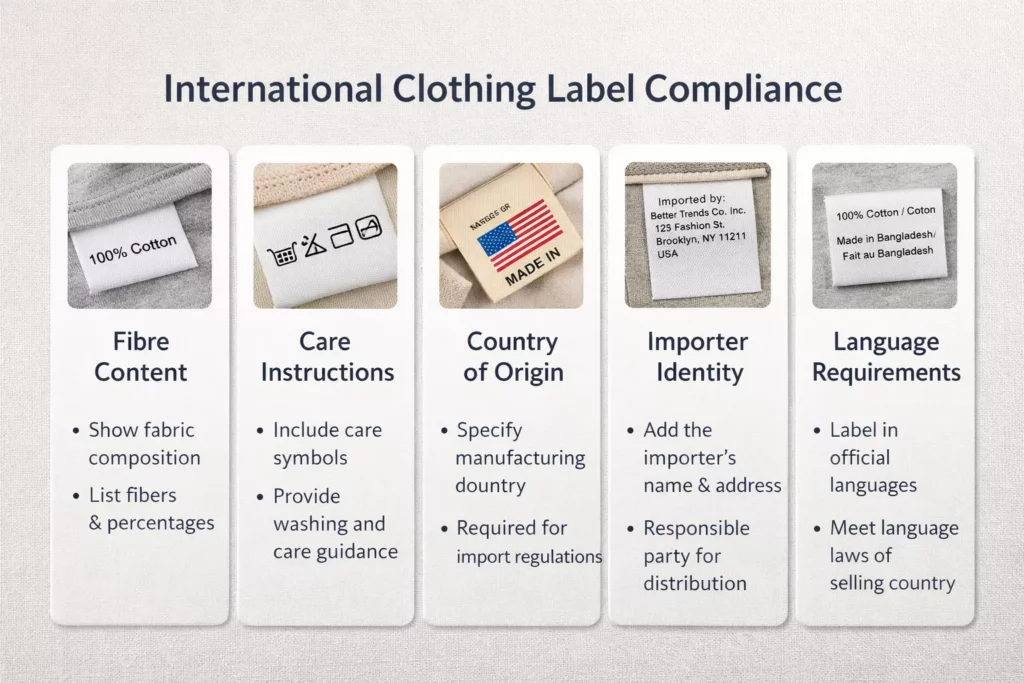
Global Apparel Industry and Compliance
The global apparel industry produces more than 100 billion garments every year, making product labeling a critical part of international trade.
Because clothing products move through complex global supply chains, clear labeling helps regulators, retailers, and consumers identify product materials and manufacturing origins.
Brands that export garments must ensure their labels meet the requirements of each destination market.
What Are Clothing Label Requirements?
Clothing label requirements refer to the mandatory information that must appear on garments before they can be sold in a specific market.
Most countries require apparel labels to include:
- fibre composition
- care instructions
- country of origin
- responsible company information
These labels help consumers understand the garment while ensuring that brands comply with national textile and consumer protection regulations.
The FTC and Key Labelling Regulations and Label Requirements
The Federal Trade Commission enforces regulations and requirements that ensure consumers receive clear country of origin and manufacturer information; labels must include a size label and the identification of the manufacturer so that the product is made claim is verifiable and not a violation of the ftc act. Under federal law, a garment must have care instructions and the label may say “made in u.s.a only when substantiated. The seller must provide reliable care instructions and warnings that are accessible to the consumer and delivered to the consumer with the item.
Labels should be attached to the product and include required information that required information must appear clearly; the disclosure can list either the company name or full address to provide reliable care instructions and protect buyers.
Why clothing labels matter so much in the global apparel trade
Labels matter because they do more than identify a garment. They help regulators, retailers, and consumers understand what the product is, how it should be cared for, and who is responsible for it. In the EU, textile labels are mandatory for qualifying textile products sold to end consumers, and national authorities can check conformity at different stages of the marketing chain. In the US, federal rules require key disclosures on many textile products. In Canada, dealers are responsible for ensuring the item carries a label that meets the rules.
Labels also matter commercially. Retailers often expect garments to arrive correctly labelled for their destination market. If the label is missing mandatory information, the product may need to be reworked before sale. That creates delay, added labour, and avoidable cost. For growing brands, labelling errors are often not just technical mistakes. They are supply-chain mistakes that affect launch timing and brand credibility.
What Are The Legal Requirements For a Clothing Brand?
Section 1: A clothing brand must follow labeling laws enforced by the Federal Trade Commission, meaning labels must be attached and conspicuous so consumers can read origin and fiber content; some items like footwear and fur have additional requirements. Brands need to display a registered identification number or the manufacturer or dealer identity on a permanent label, and meet garment label requirements under federal labeling and textile labeling laws governing textile and apparel sold in the U.S. Section 2: The care labeling rule requires manufacturers that care instructions must be provided—either as words or care symbols—and labels must include fiber content, country of origin such as made in usa, “made in u.s.a” or made in the united states. Typically, a label is attached to the inside, sewn into the garment, often in the inside centre of the neck or on the outside of the garment, and the manufacturer must comply with these stringent requirements and specific requirements.
What Are The Legal Requirements For Labelling Clothes?
Clothing labels must meet specific legal requirements to ensure transparency and consumer protection: fiber content (percentages of materials), country of origin, and identification of the manufacturer or a registered identification number (RN) are commonly mandated, along with clear, permanent placement on the garment. Care instructions must be reasonable and accurate, so laundering symbols or plain-language directions are often required to prevent consumer deception and damage to the product. For items produced domestically, claims such as made in u.s.a must be truthful and substantiated, following Federal Trade Commission guidance that all or virtually all significant parts and processing occur in the United States.
Labels should also specify size and may need to be in English (or bilingual where required), legible, and durable through normal use. Noncompliance can trigger fines, product recalls, or corrective labelling orders from regulators. Retailers and manufacturers should consult federal and state statutes plus industry-specific rules to ensure full compliance.
Garment Label Requirements You Need To Know
Garment labeling is governed by clear regulations and requirements so consumers see a size label, the country of origin and manufacturer details, and often a mark like “made in u.s.a or a label may say where the product is made. Under federal law, required information must be attached to the product and delivered to the consumer in a manner accessible to the consumer. Manufacturers must provide and must have care instructions — for example, clothing must have a washing direction — so brands can provide reliable care instructions and include reliable care instructions and warnings.
Labels also require identification of the manufacturer, since the required information must identify who made the item, whether that is either the company name or another recognized identifier; failure is a potential violation of the ftc act.
The Core Label Information Many International Markets Care About
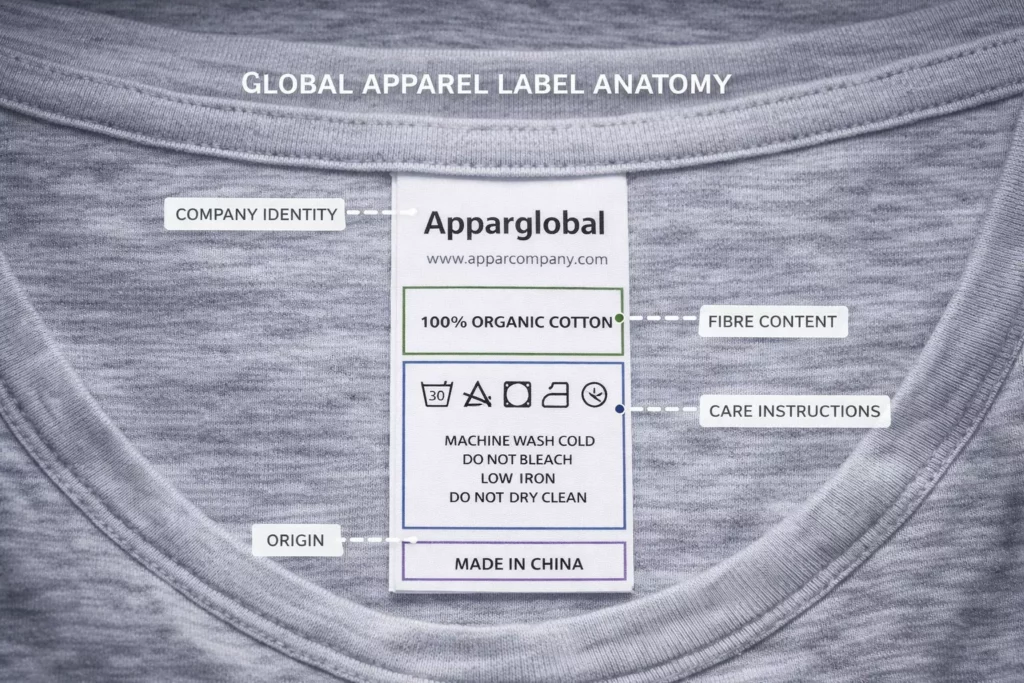
While rules differ, several label fields appear repeatedly across major clothing markets. The most common are fibre composition, care instructions, country of origin, and the identity of the responsible business. In the US, the FTC Textile Fiber Rule requires disclosure of generic fibre names and percentages by weight, the manufacturer or marketer name, and the country where the product was processed or manufactured. The FTC Care Labelling Rule separately requires manufacturers and importers to attach care instructions to garments.
In Canada, a textile label has two key components: dealer information and fibre information. The label must show the company name and mailing address or a CA Identification Number, and for each fibre present at 5% or more of total fibre mass, the generic fibre name and percentage. Fibre-related information generally must appear in both English and French.
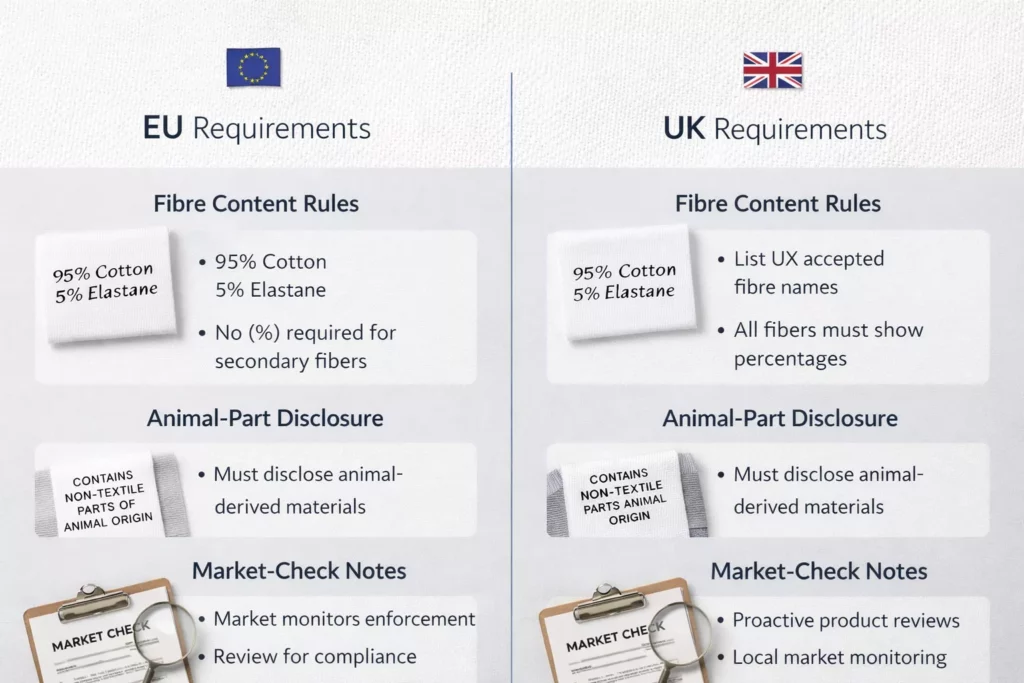
In the EU and UK, fibre composition is central. EU guidance states that textile products marketed in the EU must be labelled or marked to show fibre composition, and UK guidance says the label must show fibre content, including fur and other animal parts, with each component shown if the product has two or more components with different fibre contents.
A useful way to think about this is simple: not every market asks for the exact same label fields, but fibre content, origin-related statements, care information, and responsible-party identification are the most common building blocks across major apparel destinations.
Fibre Composition is One Of The Most Universal Requirements
If a brand is selling clothing internationally, fibre composition is one of the first things to get right. In the EU, textile products made up of at least 80% textile fibres by weight must be labelled or marked to show fibre composition when marketed, and labels must be firmly attached, for example sewn in. In the UK, the label must show fibre content, and if a product has multiple components with different fibre contents, each component’s content must be shown.
The US also requires fibre disclosure, but the FTC framework is more explicit about generic names and percentages by weight of constituent fibres in covered textile products. Canada similarly requires generic fibre names and percentages for fibres present at 5% or more by mass.
This means a fashion brand cannot assume that writing “cotton blend” or “premium knit” is enough. International markets generally expect more precise fibre disclosures, and those disclosures need to use legally accepted or recognised fibre names for the destination market. In the EU, the regulation is specifically about textile fibre names and related labelling of composition, which is why approved terminology matters.
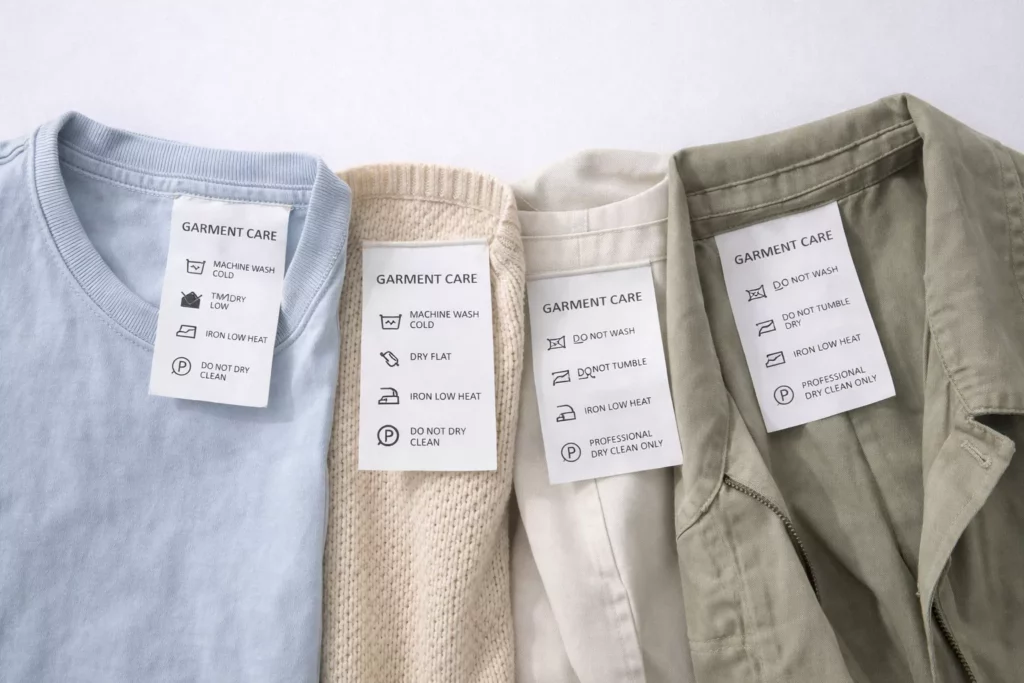
Care labels are not optional everywhere, but they are critical in key markets
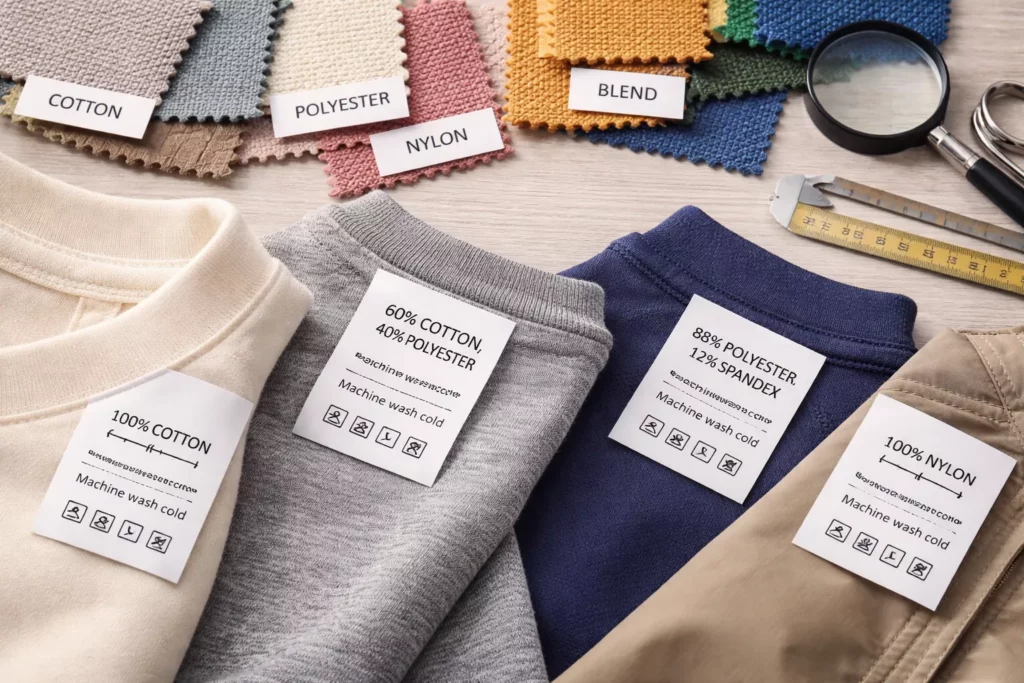
One of the biggest beginner mistakes is assuming care instructions are always optional. They are not. In the United States, the FTC enforces the Care Labeling Rule, which requires manufacturers and importers to attach care instructions to garments. The FTC also notes that businesses may provide more than one set of care instructions if they have a reasonable basis for each.
This makes care labels especially important for brands selling into the US market. If your clothing line includes delicate fabrics, wash-sensitive garments, or products that need dry-cleaning or low-temperature care, the care label becomes a key compliance and customer-service tool.
By contrast, EU-wide textile labelling rules are centred on fibre composition, and the European Commission has noted that the current Textile Labelling Regulation is limited to fibre composition, which has allowed the development of disparate national requirements in other labelling domains. That means brands selling across Europe should not assume one simple EU-wide care-rule framework exists for every non-fibre labelling topic. They should check destination-country expectations and retailer requirements as well.
A practical lesson follows from that. Even where care labels are not harmonised in the same way as fibre labels, they are often commercially expected and highly useful. Brands that include accurate care information reduce customer confusion and can lower avoidable complaints about shrinkage, pilling, or wash damage.
Size Labels: Optional or Mandatory?
Many shoppers want clear labeling, and regulations stress that manufacturers and importers must provide accurate tags at the point of sale, including labels containing fiber content and whether an item can be washed. The rule requires manufacturers and importers to state country of origin — examples include made in u.s.a or made in the u.s — and must be visible inside or outside the product so customs and border protection and consumers can verify compliance. Washing details are also important: washing instructions for items and directions that give instructions for both washing and drying help buyers; indeed, consumers like having washing instructions because they clarify which items that can be washed and extend the useful life of an item. Where warnings apply, labels should include warnings for the useful life; failure to include required disclosures means the item is a violation. Finally, all required information in english must be provided.
How clothing label requirements are made
Labeling requirements for clothing are developed through a combination of law, agency rulemaking, and industry input; regulators like the Federal Trade Commission set standards for accurate country-of-origin claims, fiber content, and care instructions, often after public notice and comment, while trade associations and manufacturers provide technical data and practical feedback.
Technical standards rely on supply-chain documentation, testing, and audits to verify claims such as made in u.s.a, and labels must conform to specific formats, font sizes, and placement rules to ensure consumer clarity; enforcement comes from inspections, consumer complaints, and penalties for mislabeling, with state or international requirements layered on top for global brands.
Textile, Wool, Fur, Apparel and Leather Labels Matters
Labels matter in textiles because they communicate origin, fiber content, care instructions and ethical claims, helping consumers make informed choices and protecting brands from misrepresentation. Clear labeling for wool, fur, and leather indicates not only material composition but also whether items meet animal welfare and sustainability standards that many buyers now prioritize.
For apparel, accurate tags reduce returns and improve garment longevity by advising appropriate care for delicate fibers such as wool or treatments used on leather. Fur and leather require specific disclosures about tanning, origin, and legal compliance to avoid trade in prohibited species and to maintain transparency across supply chains.
Regulators and shoppers pay attention to origin statements, so claims like made in u.s.a must be verifiable; misuse can lead to fines and damage reputation. Consistent, honest labeling builds trust, ensures regulatory compliance, and supports responsible sourcing across textile, wool, fur, apparel and leather industries.
Common Clothing Care Symbols
| Symbol | Meaning |
| Wash tub | Machine washable |
| Triangle | Bleaching instructions |
| Iron | Ironing temperature guidance |
| Circle | Dry cleaning instructions |
| Square | Drying method |
These care symbols are widely used in apparel manufacturing and retail labelling to provide clear garment maintenance instructions across different markets.
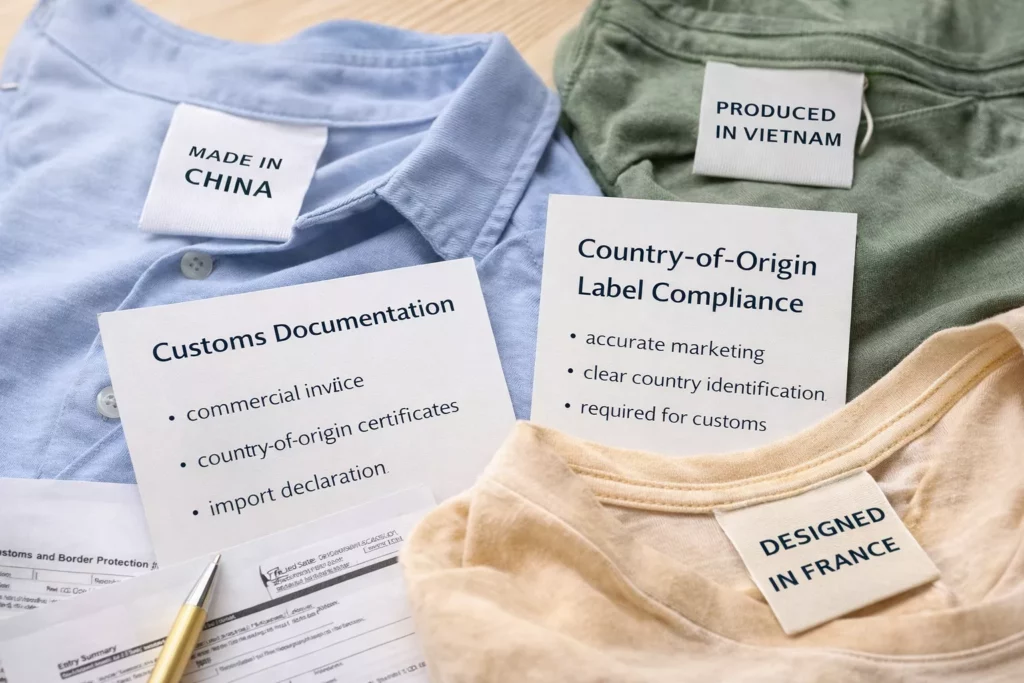
Country Of Origin Is a Major issue, Especially In The US And For Marketing Claims
Country of origin is another high-risk area because brands often treat it as a marketing phrase instead of a regulated disclosure. In the US, FTC apparel labelling guidance states that most textile and wool products must have a label listing fibre content, country of origin, and the identity of the manufacturer or another business responsible for marketing or handling the product.
In Australia, the ACCC explains that the Australian Consumer Law does not generally require non-food products to have country-of-origin labelling, but businesses still must ensure any country-of-origin claims they make are true, accurate, and based on reasonable grounds. The ACCC also explains the meaning of claims such as “grown in,” “produced in,” and “made in,” and warns that misleading origin claims can breach consumer law.
This matters because many fashion brands want to say things like “Made in Italy,” “Produced in Bangladesh,” or “Designed in London.” Origin-related wording should be used carefully and truthfully, and the threshold for what counts as “made in” is not always the same as where the design happened or where a single processing step took place. For multi-country supply chains, origin statements should be checked carefully before labels are finalised.
Responsible-business Identity Is Easy To Overlook, But Important
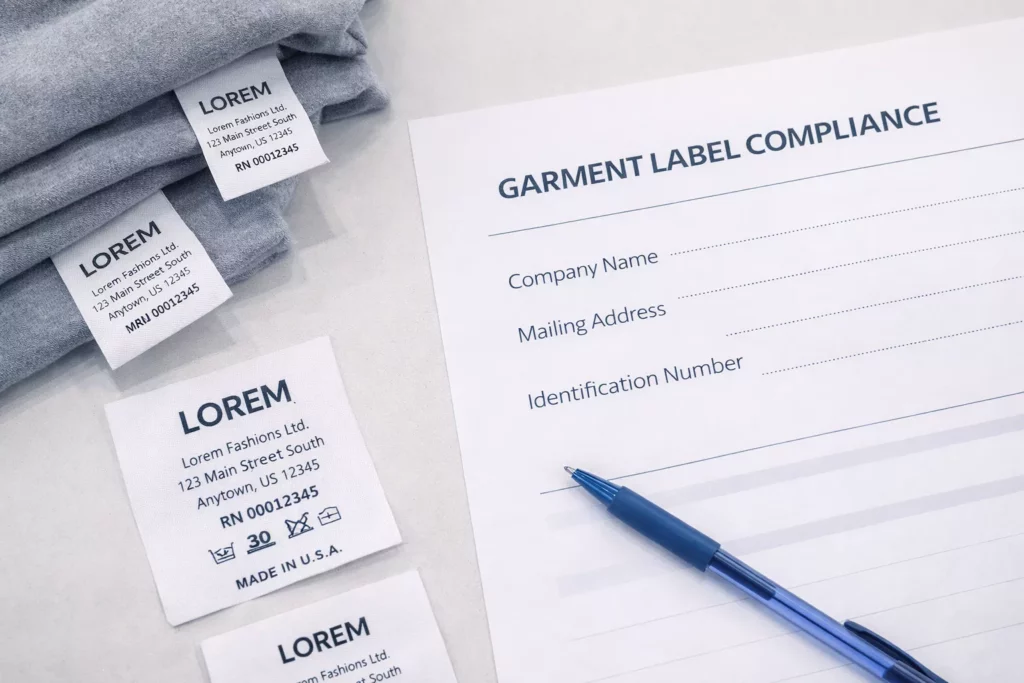
Many brands focus on fibre and care information, then forget that some markets also require identification of the responsible business. In the US, the FTC Textile Fiber Rule requires the manufacturer or marketer name along with fibre and origin disclosures. In Canada, the label must show the company name and mailing address or a CA Identification Number.
This is important because regulators and consumers need a way to identify who stands behind the product. It also matters operationally when garments are sold through importers, private-label partners, or multi-country sourcing arrangements. If you are selling internationally through a local distributor or importer of record, the correct responsible-party identification should be decided before labels go into bulk production.
For new brands, this field can feel less exciting than design or fabric, but it is part of professional market entry. Missing or inaccurate responsible-party details can create compliance headaches that are completely avoidable with better planning.
Non-compliance With Regulations and Requirements
Non-compliance with regulations and requirements undermines product safety, market access, and organizational reputation, especially when consumers expect transparency about origin and standards. Companies that fail to document adherence to labeling, safety testing, or import rules risk fines, recalls, and loss of trust; a mislabeled item claiming made in u.s.a without substantiation can trigger investigations and civil liability, amplifying financial and operational disruption.
Regulators enforce a complex web of statutes and industry-specific codes designed to protect consumers and fair competition, and non-compliance often reflects weaknesses in internal controls, supplier oversight, or legal understanding. Corrective actions—ranging from process redesign and staff training to third-party audits—are typically more costly than proactive compliance investments.
Ultimately, cultivating a compliance culture, maintaining accurate documentation, and verifying claims such as made in u.s.a through reliable traceability systems reduce risk, preserve brand value, and ensure sustained market participation.
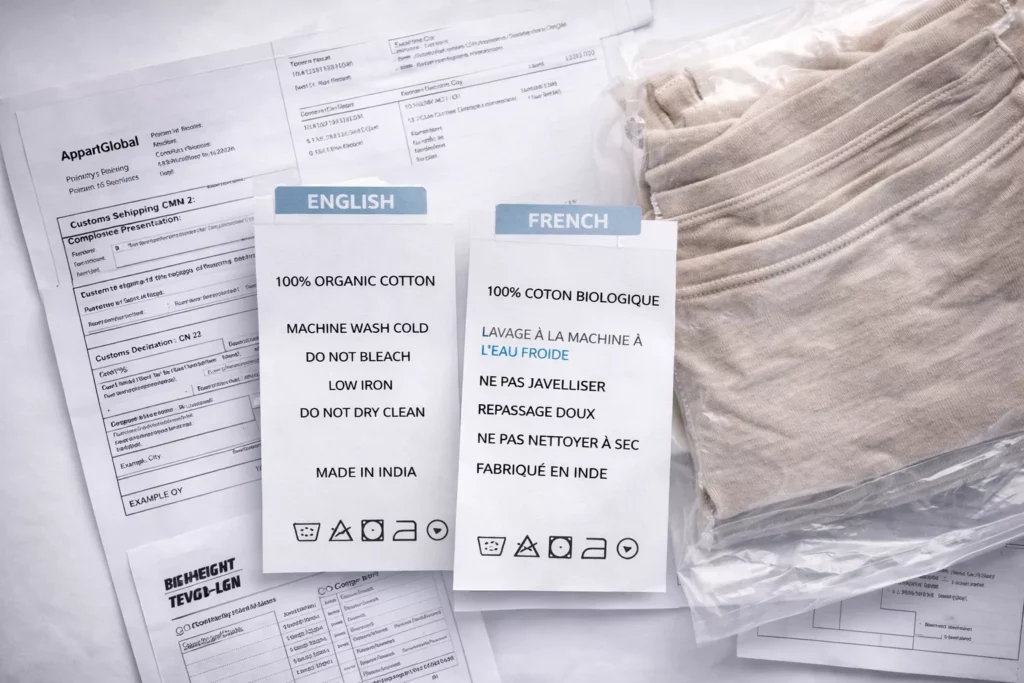
Language Requirements Can Change By Market
International clothing labels are not only about what you say. They are also about what language you use. Canada is one of the clearest examples. The Competition Bureau states that the generic name of the fibre and any information relating to fibre content must appear on the label in both French and English, though dealer identification and country of origin, when required, do not have to be bilingual. Quebec can also impose additional requirements for products marketed in the province.
This creates a practical lesson for fashion brands: translation planning should happen before the label artwork is finalised. If your product range is moving into Canada, you may need more label space and bilingual formatting for fibre-related content.
Even outside Canada, language issues can still matter because retailers and local-market consumer expectations may require or strongly prefer information in a usable local language. The safest approach is to treat label translation as part of export planning, not as a last-minute artwork task.
Multi-component Garments Need Extra Attention
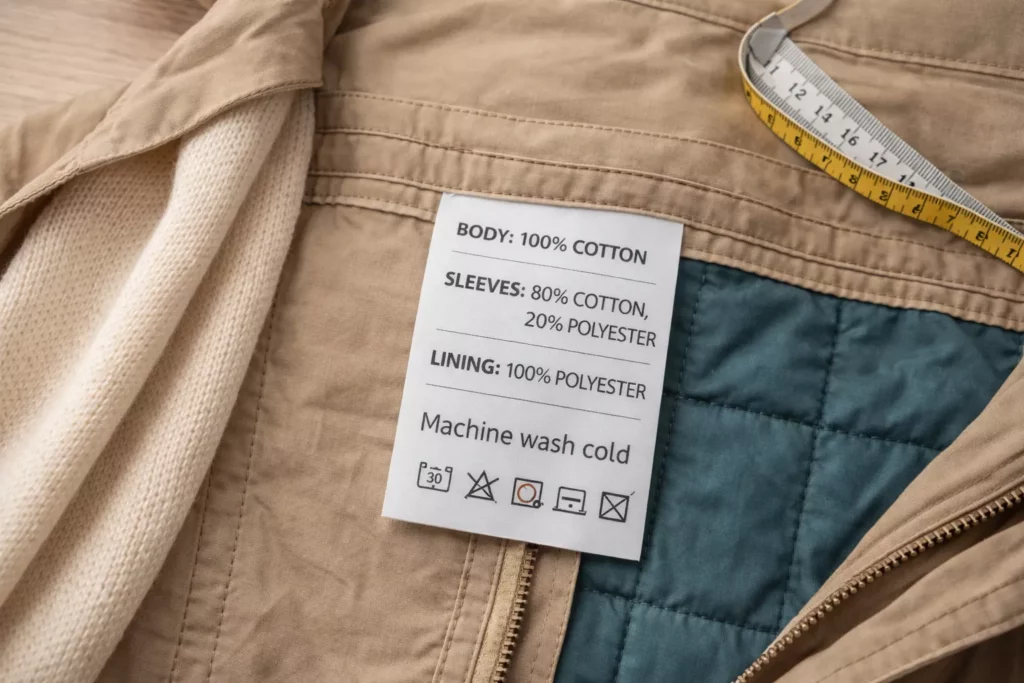
Some garments are simple. Others are made from multiple components with different fibre contents. This is where labelling gets more technical. UK guidance says that if a product consists of two or more components with different fibre contents, the content of each must be shown. Canada’s guidance also gives examples using body and sleeves as separate fibre-content disclosures.
That matters for products such as jackets with contrast sleeves, dresses with mixed-fabric panels, hoodies with ribbing and shell differences, or garments where lining and outer shell compositions differ in a way that the rules require to be disclosed. If the brand treats the whole garment as one simple composition when the market expects component-level information, the label can become inaccurate.
Component labelling should be discussed early with your technical team and manufacturer, especially for fashion styles using contrast fabrics. It is much easier to design the correct label layout early than to rebuild label artwork after bulk production is already underway.
Animal-origin Disclosures Can Apply In Some Markets
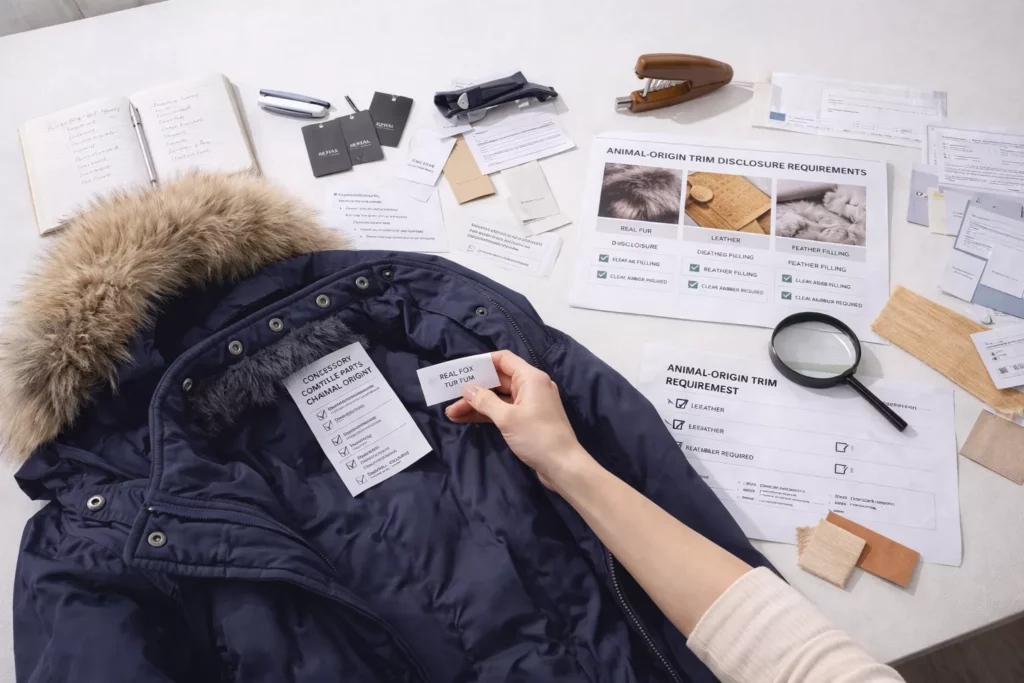
Animal-origin disclosures are another area where brands can get caught off guard. UK government guidance states that the textile label must show fibre content, including fur and other animal parts. That means garments or accessories containing such elements may need clearer disclosure than founders expect.
This is especially relevant for mixed-material fashion products such as trims with fur, shearling-like details, leather-adjacent components, or garments using animal-origin decorative elements. Even if those parts are not the core fabric of the product, they may still create disclosure obligations depending on the market and the item.
For brands selling internationally, this is a reminder that composition labelling is not always only about the main shell fabric. Product details and components can matter too.
The EU And UK Are Similar In Some Ways, But Not Identical In Practice
Many brands assume EU and UK textile labels can be handled identically. There is overlap, but brands should still treat them carefully. EU guidance requires fibre-composition labelling for qualifying textile products marketed in the EU, and those labels must be firmly attached. UK rules also require fibre content and additional disclosure around fur and other animal parts, with manufacturers and retailers responsible for compliance.
The broader lesson is that “Europe” should not be treated as one single shorthand label strategy without checking destination specifics. Brexit changed the regulatory context for the UK, and brands should verify whether any local-market operational or documentary expectations apply in addition to core textile-labelling content.
This is especially important for brands exporting from Asia or running one global trim package. Sometimes a single shared label can work across multiple markets. Sometimes a market-specific version is safer. The right answer depends on the exact markets, garment types, and the rest of the compliance package.
Retailer Requirements Often Go Beyond Legal Minimums
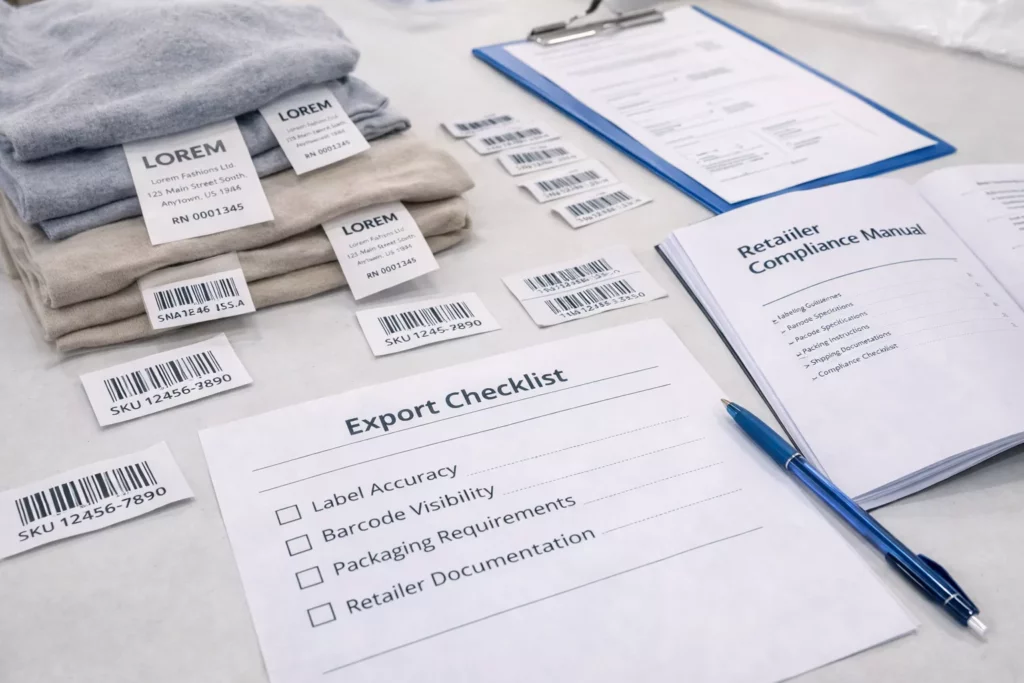
Legal compliance is only one layer of labelling. Large retailers, marketplaces, and distributors often add their own requirements. They may ask for specific care-symbol formats, barcode placements, carton markings, product IDs, sustainability claims substantiation, hanger instructions, or package-language formatting even when those are not the core legal minimum. This is why brands should never stop at “what does the law require?” They should also ask “what does this customer or channel require?”
A brand selling DTC in one market may be able to keep labels simpler than a brand supplying department stores across several countries. Wholesale and marketplace channels often expect more structured product data and more consistent back-end documentation. If you ignore those expectations, you can be legally compliant but still operationally non-compliant for the customer you are shipping to.
This is one reason experienced apparel teams build a label checklist into product development. They do not wait until goods are packed to ask what labels should say.
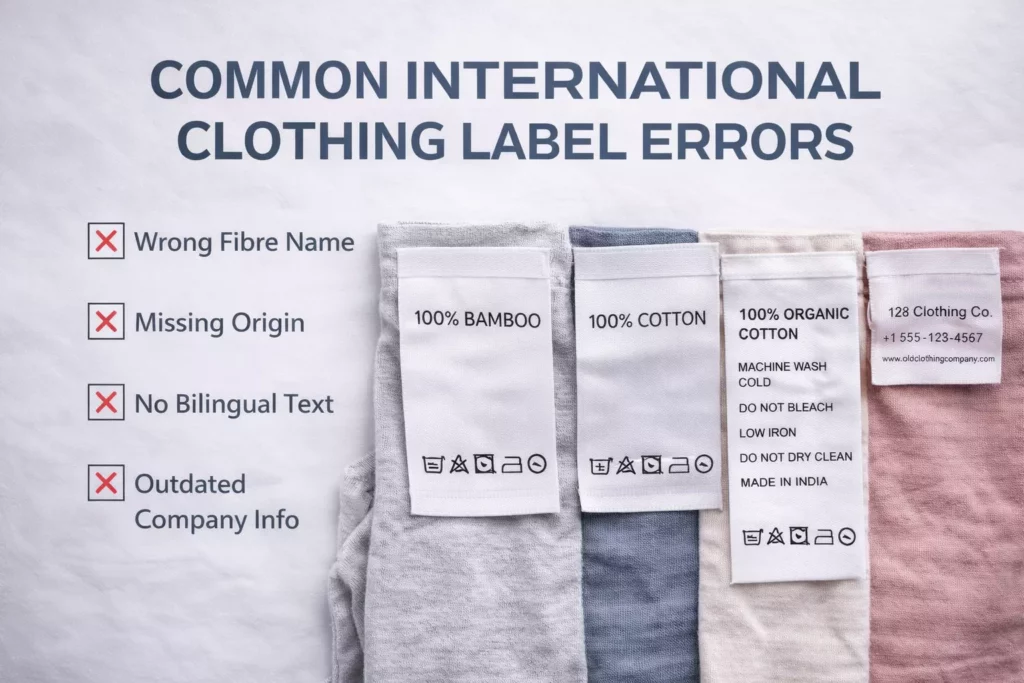
Common Clothing Label Mistakes Brands Make In International Trade
Several mistakes appear repeatedly when fashion brands begin exporting. One common error is using marketing language instead of legally meaningful fibre descriptions. Another is assuming a domestic label can be reused everywhere without checking language, origin, and identity requirements. Brands also forget to update labels when fabric composition changes, when a component fabric is added, or when the importer or marketer of record changes.
Another frequent problem is relying on supplier assumptions. A factory may produce labels based on previous orders or based on another client’s market. That is dangerous. The brand should approve final label content for each destination market, not assume the supplier knows every jurisdictional nuance.
Finally, brands often leave label review too late. Once labels are woven, printed, or sewn into production, corrections become expensive. The best time to catch a label mistake is at artwork and pre-production stage, not at final inspection.
A practical label-planning workflow for clothing brands
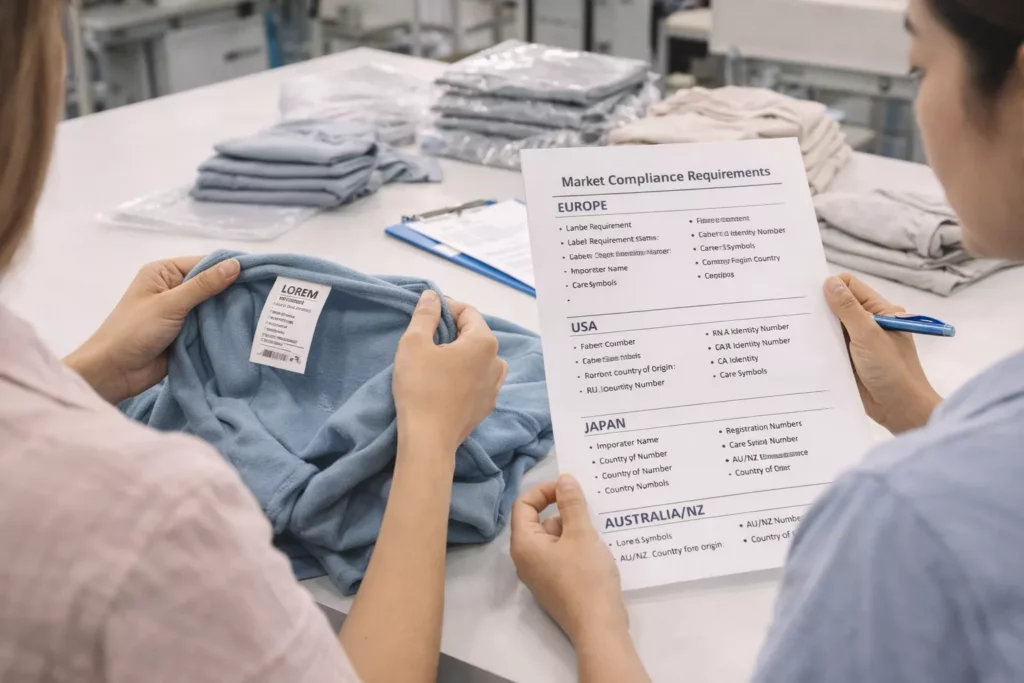
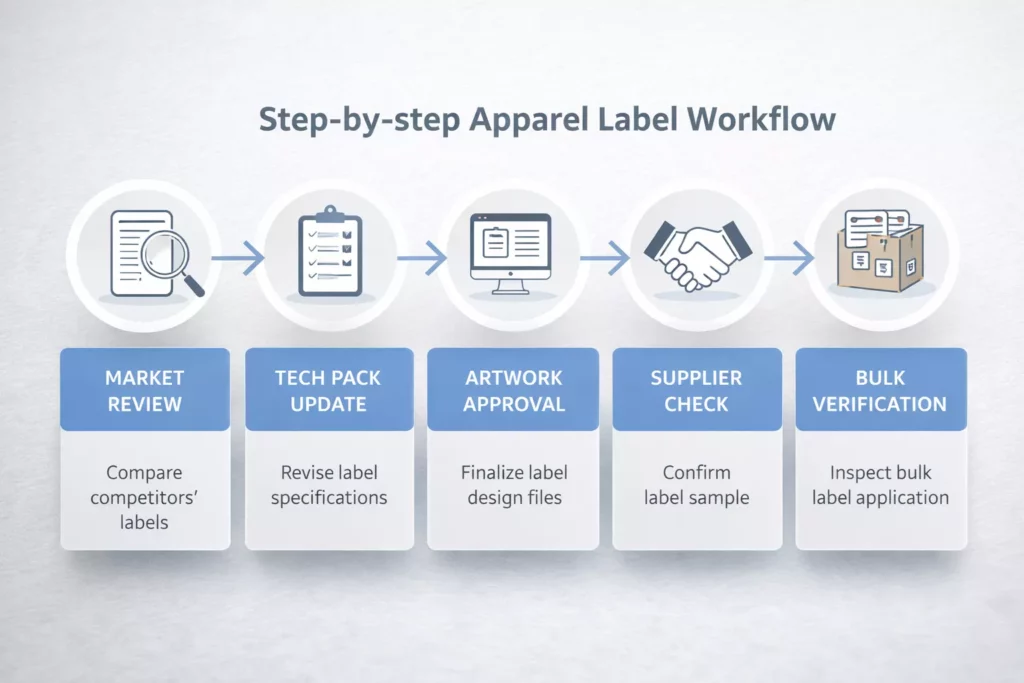
The safest way to handle international clothing labels is to build them into product development. Start by defining your destination markets before production begins. Then make a market-by-market matrix covering fibre-content rules, care-label needs, origin statements, responsible-party details, language requirements, and retailer-specific extras. After that, align this matrix with the garment’s actual bill of materials and technical pack.
Next, prepare label artwork early and have it reviewed internally before bulk trims are ordered. If the garment has multiple components, contrast fabrics, or animal-origin details, make sure those are handled before final approval. If you sell in Canada, build bilingual fibre space into the label. If you sell in the US, make sure care instructions, fibre content, origin, and company identity are all aligned.
Finally, check the bulk labels against the approved artwork before sewing starts. Labels should be treated like a controlled trim, not an afterthought. This one workflow can prevent a surprising amount of avoidable cost.
A Simple International Clothing Label Checklist
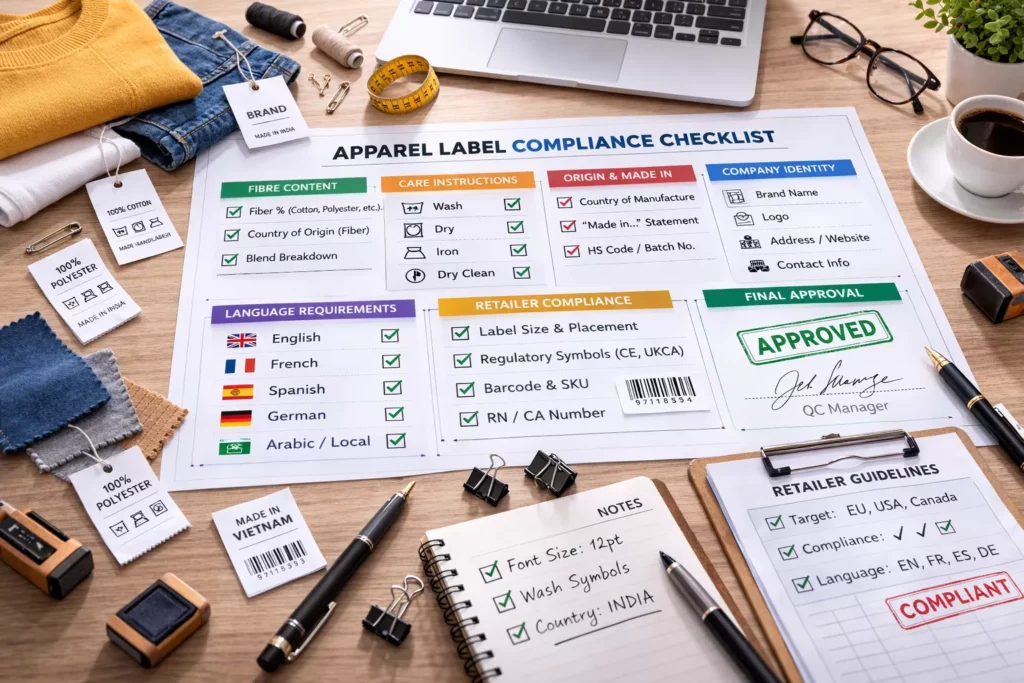
Before shipping garments internationally, clothing brands should confirm five things. First, the fibre composition is accurate and uses accepted fibre names for the destination market. Second, any required care instructions are present and support realistic garment care, especially for US-bound apparel. Third, the country-of-origin statement is accurate and supportable. Fourth, the responsible business identity is correct for the market. Fifth, language and component disclosures are handled properly where required.
If your garments are sold through retailers, add a sixth step: confirm that customer-specific label and packaging requirements are also met. Legal compliance and retailer compliance are related, but they are not always identical.
Brands that use this checklist early usually experience fewer relabelling headaches later.
What This Means For Brands Manufacturing In One Country And Selling In Many
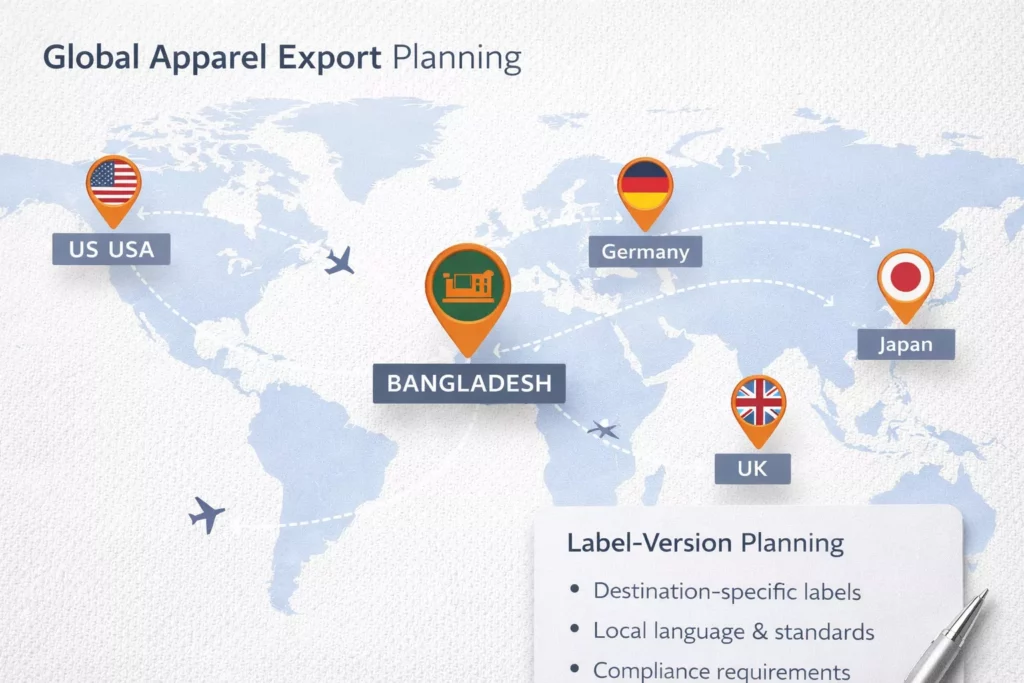
Many modern apparel brands manufacture in countries such as Bangladesh, China, India, Turkey, or Vietnam and then sell into the US, EU, UK, Canada, and elsewhere. In that setup, the label becomes part of export readiness. It is not enough to know how the garment was made. You also need to know what each destination market expects to see on the product.
This often means one of two things. Either you create a global label solution that satisfies all intended markets, or you create market-specific label variants. The right choice depends on the complexity of your distribution. If bilingual content, care rules, or responsible-party details differ too much, market-specific label planning may be cleaner than forcing one universal label to do everything.
The biggest mistake is pretending this decision can wait until the goods are already in bulk. Labels should be part of the sourcing plan, trim plan, and production calendar.
ApparGlobal
Many clothing brands reduce export and compliance risk when they work with apparel partners that understand fibre-content disclosure, care-labelling workflows, trim planning, packaging requirements, and international production standards. Companies such as ApparGlobal help fashion brands align garment specifications, market-specific label needs, sourcing workflows, and manufacturing execution so export-ready clothing programs become more organised and more reliable from the beginning.
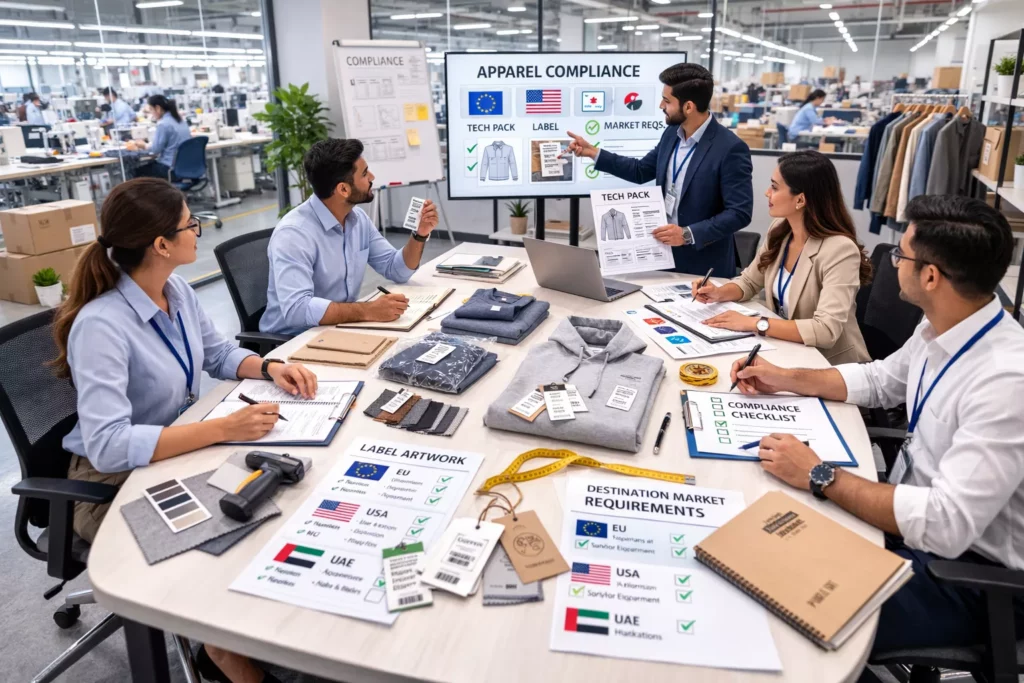
Clothing Label Examples for Different Garments
Clothing label requirements can vary depending on the garment type, fabric composition, and destination market. While the legal rules still focus on the same core areas such as fibre content, care instructions, and origin, the way labels appear can differ from one product category to another.
Looking at garment-specific label examples helps fashion brands understand how these requirements work in practice.
Example: Cotton T-Shirt Label
A basic cotton t-shirt sold internationally will usually need a clear fibre composition label, care instructions, and country-of-origin information. In markets such as the United States, the label may also need the company name or RN number, depending on how the product is marketed.
A typical t-shirt label may include:
- 100% Cotton
- Machine wash cold
- Tumble dry low
- Made in Bangladesh
- Brand name or responsible company information
This type of label is common for casual basics, private label products, and direct-to-consumer apparel.
Example: Hoodie With Mixed Fabric Components
A hoodie may require more detailed labelling if it includes different fabric components such as a cotton-polyester body and polyester rib or fleece lining. In some markets, especially where multi-component disclosure matters, the brand may need to identify each major component correctly.
A hoodie label example could include:
- Body: 80% Cotton, 20% Polyester
- Rib: 95% Cotton, 5% Elastane
- Machine wash cold
- Do not bleach
- Made in Vietnam
This kind of label is especially important when the product uses multiple textile parts that affect product classification or consumer understanding.
Example: Women’s Dress in Viscose Blend Fabric
A women’s fashion dress often needs careful fibre-content labelling because drapey woven fabrics are commonly made from blends such as viscose, rayon, linen, or polyester. If the garment also has a lining, some markets may require the lining composition to be disclosed separately.
An example dress label might include:
- Shell: 85% Viscose, 15% Linen
- Lining: 100% Polyester
- Hand wash cold
- Line dry
- Made in India
This example shows why brands should not assume one fabric statement always covers the entire garment.
Example: Activewear Leggings
Performance garments like leggings often include stretch-fabric blends, and the exact fibre percentages matter because customers expect compression, flexibility, and recovery. These garments also benefit from accurate care instructions, since heat exposure can affect stretch performance.
A leggings label example may include:
- 78% Nylon, 22% Spandex
- Machine wash cold
- Do not iron
- Do not dry clean
- Made in China
For activewear brands, label clarity supports both compliance and customer satisfaction.
Example: Wool Blend Coat
Outerwear may need more detailed labelling because of lining, shell, padding, or animal-origin disclosures, depending on the garment and destination market. A wool-blend coat sold internationally may need separate component declarations.
An example coat label might include:
- Shell: 60% Wool, 40% Polyester
- Lining: 100% Polyester
- Dry clean only
- Made in Turkey
If the coat includes fur or another animal-origin component, extra disclosure may also be required in some markets.
Example: Kidswear Garment
Children’s apparel should be labelled with the same level of accuracy as adult clothing, but brands often need to be even more careful because parents pay close attention to fibre content, washability, and comfort.
A children’s t-shirt example could include:
- 95% Cotton, 5% Elastane
- Machine wash warm
- Tumble dry low
- Made in Bangladesh
For kidswear, labels should be especially easy to understand because care convenience often influences purchase decisions.
Why Garment-specific Examples Improve Compliance Planning
These examples make one important point clear: clothing labels are not always one-size-fits-all. A basic t-shirt label may be simple, while a lined dress, activewear set, or multi-component outerwear item may require more detailed information.
That is why brands should review labels product by product, not only market by market. The destination country matters, but the garment construction matters too.
When fashion brands use garment-specific examples during development, they reduce the risk of:
- missing component disclosures
- using incomplete fibre descriptions
- overlooking lining information
- applying the wrong care instructions
- making origin or company-information errors
Clothing Label Compliance Checklist for Fashion Brands
Before exporting garments internationally, clothing brands should confirm:
- fibre composition is accurately listed
- care instructions match fabric properties
- country of origin statements are correct
- responsible company information is included
- language requirements are satisfied
Using a structured compliance checklist helps reduce the risk of customs delays or product relabeling.
Conclusion
Clothing label requirements for international markets are not something brands should leave until the end of production. Labels are part of product compliance, customer communication, and market readiness. The exact requirements vary, but the most common international themes are fibre composition, care instructions, country of origin, responsible-business identity, language rules, and special disclosures for certain components or materials.
The safest approach is to treat labels like any other important trim or specification. Decide your destination markets early, map the requirements, build them into the tech pack and label artwork, and confirm bulk labels before production moves too far. That process costs far less than fixing labelling errors after goods are packed or shipped.
For growing fashion brands, good labels are not tiny details. They are part of building a professional international apparel business.