

Bangladesh Apparel Industry: Reasons to Invest In Bangladesh
Why do so many fashion brands, private label businesses, and clothing retailers choose Bangladesh for apparel production? The answer goes far beyond low-cost labor. Bangladesh has become one of the world’s most important apparel manufacturing destinations because it combines large-scale production capacity, deep garment-making experience, strong export performance, broad supplier networks, and growing investment in sustainability. Official BGMEA export data shows Bangladesh’s apparel exports reached about $38.48 billion in 2024, underlining how central the country is to global clothing supply chains.
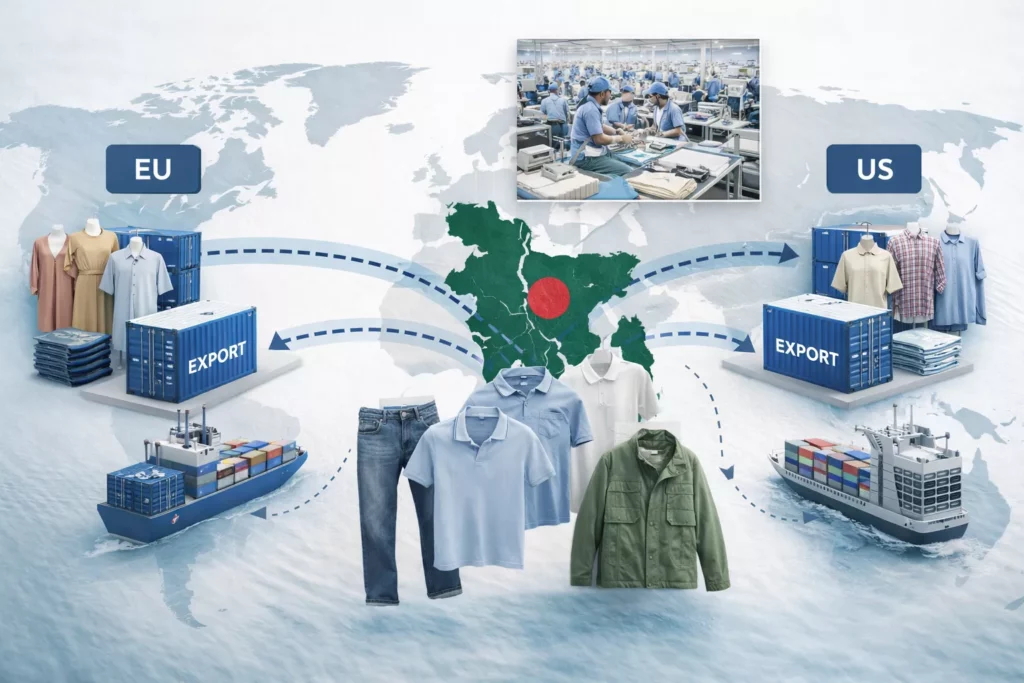
For global buyers, sourcing decisions usually depend on a mix of factors: quality consistency, production capacity, supplier experience, lead times, compliance, product specialization, and long-term reliability. Bangladesh performs strongly across many of these areas, especially for categories such as T-shirts, polo shirts, trousers, shirts, sweaters, jackets, denim, uniforms, and large-volume casualwear. The country is also deeply connected to major buying markets. The WTO notes that in 2024, about 40 percent of Bangladesh’s ready-made garment exports went to the European Union and another 18 percent went to the United States.
This matters because brands do not keep sourcing from one country for decades unless that country consistently supports production at scale. Bangladesh’s garment sector remains a major force in the national economy and a trusted sourcing base for brands across Europe, North America, and beyond. The World Bank has noted that ready-made garments account for about 82 percent of Bangladesh’s exports, showing just how developed and strategically important the sector has become.
In this guide, you will learn the real advantages of apparel manufacturing in Bangladesh, why global brands continue to source there, what makes the country attractive for both startup and established fashion businesses, and what buyers should understand when evaluating Bangladesh as a manufacturing base.
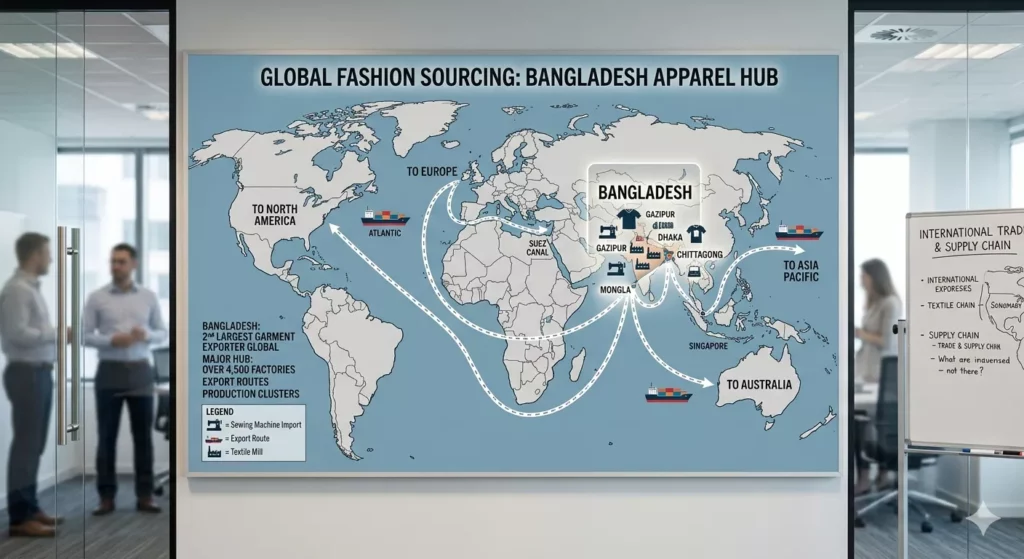
Bangladesh Apparel Industry
The readymade garment industry is a backbone of Bangladesh, and the sector in Bangladesh is currently evolving rapidly to meet global demand. At forums like the world textile conference the country highlights how Bangladesh offers unmatched cost competitiveness and strategic duty advantages in its export strategies, while leveraging long-standing advantages in its export destinations.
As a global garment supplier, Bangladesh produces high-quality garments and reliable finished garments lines, with the majority of garment factories focused on fulfilling orders for the global fashion market. Moreover, Bangladesh also adapts to the evolving demands of the global consumer by investing in sustainability and ethical practices, which Bangladesh ensures through certifications and improvements in factory governance.
With competitive clusters inside export processing zones, Bangladesh is strong on scale and lead time, and Bangladesh holds a critical share of international sourcing. Overall, Bangladesh is optimistic that Bangladesh will continue to grow as a trusted apparel hub.
Why is the clothing industry very important to Bangladesh?
The clothing industry is a cornerstone of Bangladesh’s economy, generating significant export earnings and contributing a large share of national GDP. It supplies global brands with affordable garments, attracting foreign investment and strengthening the country’s position in international trade.
This sector is also a major source of employment, directly providing millions of jobs and creating numerous opportunities in related areas like textiles, logistics, and retail, which helps reduce poverty and raise household incomes.
Moreover, the industry has empowered many women by offering wage work and social mobility, leading to broader social changes and improved access to education and healthcare. Its growth has funded infrastructure and skills development, while remittances and foreign exchange earnings from garment exports stabilize the balance of payments and support broader economic development.
Apparel Manufacturer Bangladesh: Leading the Global Textile Industry with Quality and Innovation
Apparel Manufacturer Bangladesh has emerged as a destination for apparel sourcing, with textile and apparel capacity spanning modern textile mills and efficient backward linkage to raw material suppliers, making Bangladesh’s benefits tangible in the global market. Supported by preferential schemes like the generalized system of preferences and everything but arms, and duty-free access, Bangladesh benefits from duty-free trade. Bangladesh is the third-largest and even the second-largest apparel exporter in key segments, attracting foreign investment and increasing profit margins without compromising worker safety.
After rana plaza, initiatives such as the accord on fire and building, the alliance for Bangladesh Worker Safety, the centre of excellence for Bangladesh, and the Garment Manufacturers and Exporters Association reforms improved fire and building safety and conditions for garment workers and skilled labor. With export processing zones, the Bangladesh Economic Zone Authority, data from Bangladesh Bureau of statistics, and proactive apparel manufacturers and exporters, there are clear reasons to invest in Bangladesh and compelling calls to invest in Bangladesh’s apparel industry to sustain growth in Bangladesh’s apparel sector and Bangladesh’s textile sector.
Key Advantages of Apparel Manufacturing in Bangladesh
Before exploring the details, it helps to understand why Bangladesh remains one of the most important global apparel sourcing destinations. Over the past three decades, the country has built a strong reputation for delivering reliable clothing production at scale.
Some of the key advantages of manufacturing clothing in Bangladesh include:
- Large-scale production capacity capable of handling bulk orders for international brands
- Competitive manufacturing costs that help brands maintain healthy margins
- Experienced garment workforce with decades of export-focused production expertise
- Strong apparel supply chain ecosystem, including fabric suppliers, trims vendors, and washing facilities
- Established export infrastructure serving major markets like the EU, US, and UK
- Growing sustainability leadership, including hundreds of green garment factories
- Reliable production experience in core apparel categories such as T-shirts, denim, sweaters, and casualwear
Because of this combination of strengths, Bangladesh continues to attract global fashion brands looking for dependable apparel manufacturing partners.
Bangladesh Is One of the World’s Largest Apparel Manufacturing Hubs
One of the biggest advantages of apparel manufacturing in Bangladesh is scale. Brands that need reliable, high-volume production generally prefer sourcing countries with proven factory ecosystems, experienced export operations, and large manufacturing capacity. Bangladesh offers all three. BGMEA states that the country’s apparel industry serves buyers in more than 150 countries, reflecting the global reach and maturity of its manufacturing base.
This level of scale creates confidence for buyers. When a country consistently exports tens of billions of dollars’ worth of garments each year, it signals that suppliers, logistics systems, and factory operations are already built to handle demanding international orders. BGMEA’s official data shows apparel exports of roughly $45.7 billion in 2022, $35.9 billion in 2023, and $38.48 billion in 2024. These figures also suggest resilience, because the industry remained globally significant even through changing retail demand and market uncertainty.
For apparel brands, scale matters not only for large initial orders but also for replenishment and continuity. If a product performs well and the brand needs to repeat or extend production, Bangladesh is often in a stronger position than smaller sourcing markets to respond efficiently.
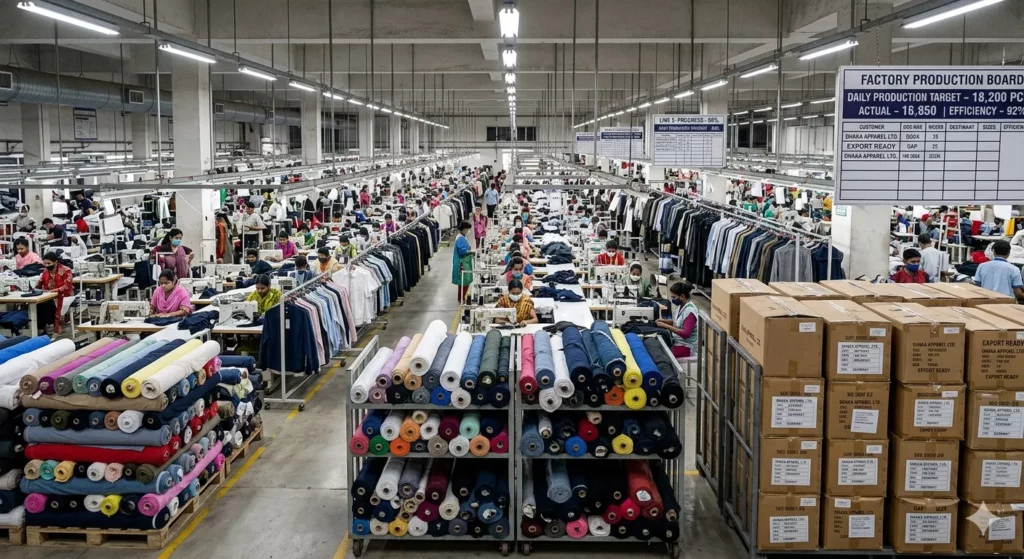
Competitive Production Costs Support Better Margins
Another major advantage of apparel manufacturing in Bangladesh is cost competitiveness. While Bangladesh is no longer viewed only as a low-cost destination, price efficiency still plays an important role in why global brands source there. Buyers constantly balance product quality with target retail pricing, margin requirements, and production budgets. Bangladesh remains attractive because it can often deliver a strong value combination of labor-intensive manufacturing, production scale, and supplier efficiency.
Cost competitiveness is particularly important for volume-driven categories such as basics, casualwear, knit tops, denim items, uniforms, and entry- to mid-market fashion. Bangladesh’s long-standing success in these segments means many factories have optimized their workflows around efficient bulk production. That efficiency can help brands maintain pricing targets without giving up production capacity.
It is also important to understand that Bangladesh’s pricing advantage is not only about labor costs. The broader apparel ecosystem contributes as well. When factories can coordinate with local or nearby vendors for packaging, washing, printing, embroidery, trims, and supporting services, the full production process often becomes more efficient. That ecosystem can make a meaningful difference for buyers trying to manage cost and consistency together.
Global Market Position of Apparel Manufacturer Bangladesh
Bangladesh’s apparel manufacturing sector has grown rapidly to become one of the highest in the world in terms of export volume and employment, driven by competitive labor costs, strong backward linkages, and improving compliance standards. Industry analysts predict a bright future as factories adopt more automation, diversify product lines, and move up the value chain, attracting global brands seeking reliable suppliers.
Policy reforms and infrastructure upgrades mean an investor has the right framework to expand operations, with incentives and preferential trade agreements making new projects more viable. Many firms plan strategic investments with payback horizons of around 4 to 6 years, aligning financing and capacity expansion timelines to capture rising demand.
When measured compared to other businesses, apparel manufacturing remains a cornerstone of Bangladesh’s economy, offering resilience and scale that support broader industrialization and inclusive growth.
Decades of Garment-Making Experience Improve Reliability
Experience is one of the most overlooked advantages in apparel sourcing and manufacturing. Bangladesh’s garment industry has been serving international buyers for decades, and that long history matters. BGMEA highlights more than 35 years of apparel manufacturing experience, which means many factories are highly familiar with export requirements, buyer specifications, quality expectations, and shipment procedures.
This experience helps at every stage of production. Factories that have worked with global buyers for years usually understand the importance of accurate tech pack execution, pre-production approvals, size consistency, label placement, carton markings, and inspection readiness. They are often more comfortable managing the detailed documentation and process discipline that export buyers expect.
For brands, this reduces risk. An experienced manufacturing base is more likely to understand how to move from sampling to bulk production with fewer avoidable errors. It also supports reorders. When factories are used to repeating styles for international clients, they tend to be better prepared for consistent production over time.
Bangladesh has been especially strong in categories such as knitwear, shirts, trousers, sweaters, and outerwear. That category familiarity is one reason many global brands continue to rely on Bangladeshi suppliers for core product lines.
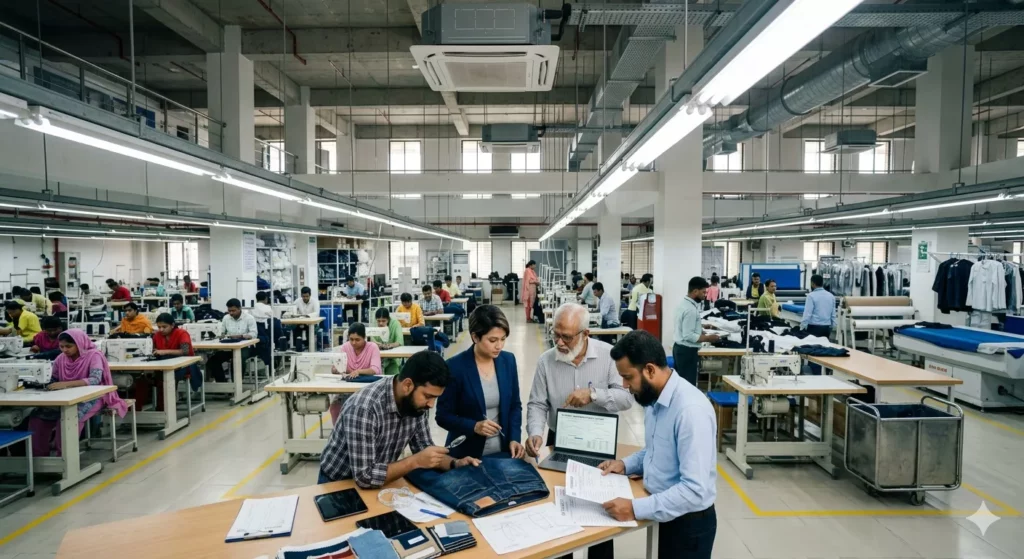
Extensive and productive labor force: A garments manufacturing hub
Bangladesh’s extensive and productive labor force underpins why many choose to invest in the Bangladesh apparel industry, where steady wage growth combines with skilled workers to make the country a compelling destination for apparel sourcing. As the world’s third-largest garment exporter, Bangladesh’s apparel sector and Bangladesh’s textile sector work together to supply fast, cost-effective, and scalable production for global brands. Industry stakeholders, including apparel manufacturers and exporters, align with initiatives like the alliance for Bangladesh Worker Safety and promote responsible manufacturing, while technical hubs such as the centre of excellence for Bangladesh foster skills and innovation to push excellence for the Bangladesh apparel industry. Public and private supports — from the Bangladesh Economic Zone Authority to data from the Bangladesh Bureau of statistics — highlight the practical reasons to invest in Bangladesh, including preferential market access as Bangladesh benefits from duty-free schemes, reinforcing its role as a global textile and apparel leader.
High Capacity Makes Bangladesh Ideal for Bulk Orders
For brands that need large production runs, Bangladesh offers a clear advantage: capacity. Some sourcing destinations are better suited to boutique production, low MOQ runs, or highly specialized small-batch development. Bangladesh, by contrast, has become known for handling large-volume programs efficiently, particularly in the textile industry.
This is especially useful for retailers, wholesalers, and growing fashion brands that need thousands or even hundreds of thousands of units across styles, sizes, and colors from bangladesh garment manufacturers. The country’s garment sector includes large manufacturing groups, composite knit factories, denim producers, sweater factories, and export-focused production units that are structured for significant output. IFC project and sector materials also reflect the presence of integrated apparel operations in Bangladesh with capabilities such as knitting, sewing, washing, and embellishment.
For buyers, high capacity improves business continuity. If a collection succeeds, the supplier base is more likely to support repeat orders and seasonal expansion. That makes Bangladesh especially valuable for apparel businesses focused on scaling.
What Global Brands Look for in Bangladesh Apparel Manufacturers
While Bangladesh offers many advantages as a sourcing destination, global brands still evaluate suppliers carefully before placing production orders. Choosing the right manufacturing partner is essential for maintaining quality, consistency, and reliable delivery.
Most international buyers typically evaluate Bangladesh garment factories based on several important factors.
Technical Expertise
Factories must demonstrate the ability to follow detailed tech packs, maintain accurate measurements, and deliver consistent garment construction across large production runs.
Quality Control Systems
Reliable suppliers usually conduct fabric inspections, inline quality checks during sewing, and final inspections before shipment to maintain consistent product quality.
Production Capacity and Lead Time Management
Global brands prefer factories that can handle bulk orders while maintaining clear production schedules and realistic delivery timelines.
Communication and Transparency
Clear communication during sampling, pre-production approvals, and bulk manufacturing helps reduce mistakes and improve coordination between buyers and suppliers.
Compliance and Sustainability Standards
Many brands prioritize suppliers that meet international compliance requirements and demonstrate responsible environmental and social practices.
When brands find suppliers that perform well across these areas, Bangladesh becomes an even stronger sourcing destination.
A Broad Supplier Ecosystem Supports End-to-End Manufacturing
Another strong advantage of apparel manufacturing in Bangladesh is the depth of the supporting ecosystem. Brands do not only need sewing lines. They also need access to fabric sourcing, trims, washing, printing, embroidery, packaging, quality control, and logistics support. Bangladesh has built a broad network around ready-made garments, making it easier for buyers to manage multiple parts of the supply chain within one sourcing region.
This ecosystem benefits both simple and complex production programs. A brand manufacturing knit basics may need efficient fabric sourcing and carton preparation. A more fashion-driven brand may need embellishment, specialized washing, print coordination, and detailed finishing support. Bangladesh’s mature garment industry makes these layers easier to coordinate than in more fragmented sourcing markets.
A strong ecosystem also gives brands more flexibility in supplier selection among the numerous garment manufacturers and exporters available. Buyers can often choose among different manufacturers based on category strength, product complexity, pricing level, compliance profile, or production capacity. That range is valuable for businesses looking to build long-term sourcing partnerships.
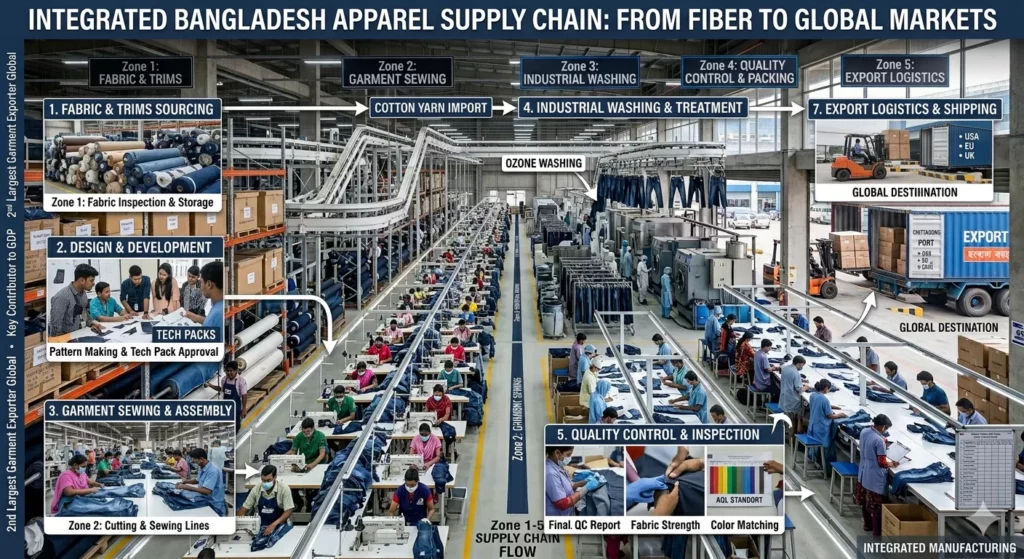
Strong Export Infrastructure Supports Global Shipping
Apparel brands need more than good factories. They also need a sourcing country that can support international trade reliably. Bangladesh’s export infrastructure is one of the reasons the country remains important to global clothing brands. Its garment industry has long been built around export demand, and its supplier base is accustomed to working with overseas documentation, shipping schedules, buyer compliance, and international order management.
The country’s trade relationships show how deeply apparel manufacturing is tied to export systems. The European Union identifies itself as Bangladesh’s largest trading partner, and notes that textiles accounted for almost 94 percent of the EU’s total imports from Bangladesh in 2024.
For fashion brands, this means Bangladesh is not an untested sourcing market. It is already deeply integrated into major international buying systems. That can make onboarding and coordination easier for companies that want a manufacturing base with established export experience in the global apparel industry.
Sustainability Is Becoming a Bigger Competitive Advantage
Sustainability is now a major sourcing consideration for global buyers, and this is one area where Bangladesh has strengthened its position significantly. BGMEA reported in August 2025 that Bangladesh had reached 258 LEED-certified green factories, demonstrating a strong national push toward greener industrial infrastructure.
This is an important advantage for apparel brands. Many buyers now face pressure from consumers, retailers, investors, and regulators to improve the environmental performance of their supply chains. A sourcing base with a large and growing number of green factories gives buyers more options for aligning manufacturing with sustainability goals.
IFC’s 2025 Bangladesh Country Private Sector Diagnostic also identifies Green Ready-Made Garments as one of the country’s key investment opportunity areas. That suggests the shift is not cosmetic. It is part of a broader competitiveness strategy tied to investment, compliance, and future growth.
For brands, this creates practical benefits as well as reputational ones in their apparel sourcing strategies. Greener facilities often invest in energy efficiency, water management, waste reduction, and better process systems, all of which can support more modern and responsible apparel manufacturing.
Safety and Compliance Improvements Have Strengthened Buyer Confidence
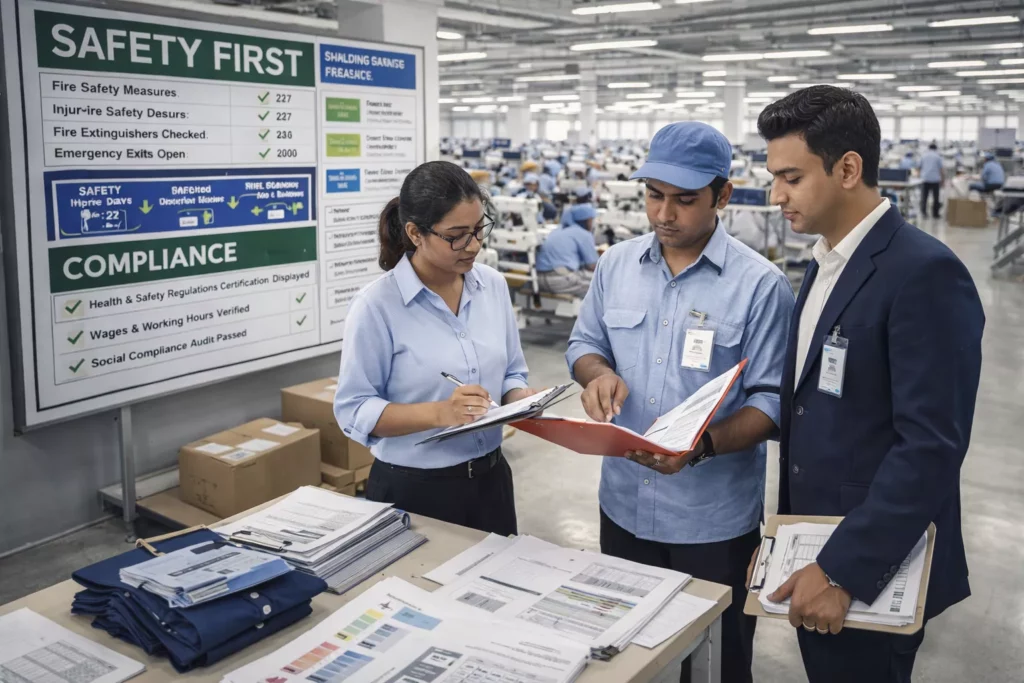
Another advantage of sourcing from Bangladesh today is that factory safety and compliance systems have undergone significant reform over the past decade. The International Accord continues to operate in Bangladesh, with public remediation and health-and-safety oversight mechanisms that remain relevant to the garment sector.
For global brands, compliance is not optional. Safety, labor standards, and reputational risk all affect sourcing decisions. Bangladesh’s reforms have helped many buyers maintain or expand their sourcing relationships with greater confidence than in the past. This does not mean every factory is automatically equal. Factory-level due diligence is still essential. But at the country level, the direction of reform has mattered.
Brands that value transparent compliance frameworks often see this as a meaningful advantage. A manufacturing base that has faced intense international scrutiny and responded with deeper safety systems can become more reliable over time for serious sourcing partnerships.
The Industry Supports Millions of Jobs and Broad Economic Impact
A major structural advantage of apparel manufacturing in Bangladesh is how central the sector is to the country’s economy. The World Bank notes that ready-made garments account for around 82 percent of exports in the global apparel industry come from countries with established garment manufacturers., while other official and multilateral materials point to roughly 4 million jobs linked to the sector.
That economic importance matters to buyers because industries that are central to national growth tend to attract continued policy attention, investment, and institutional focus. Apparel is not a side industry in Bangladesh; it is a vital part of the country’s economy and global apparel supply chain. It is one of the main engines of export earnings, industrial activity, and employment.
The sector’s employment impact is especially important for women. UN-linked and WTO-linked materials indicate that women make up a large share of the garment workforce, giving the industry a major role in employment and social mobility.
For global brands, this adds another layer to the sourcing decision, especially when considering bangladesh garment manufacturers and exporters. Bangladesh is not only a manufacturing location; it is a key player in the global apparel market. It is a major employment ecosystem shaped by decades of export-led growth in the global apparel industry.
Bangladesh Serves Core Categories Extremely Well
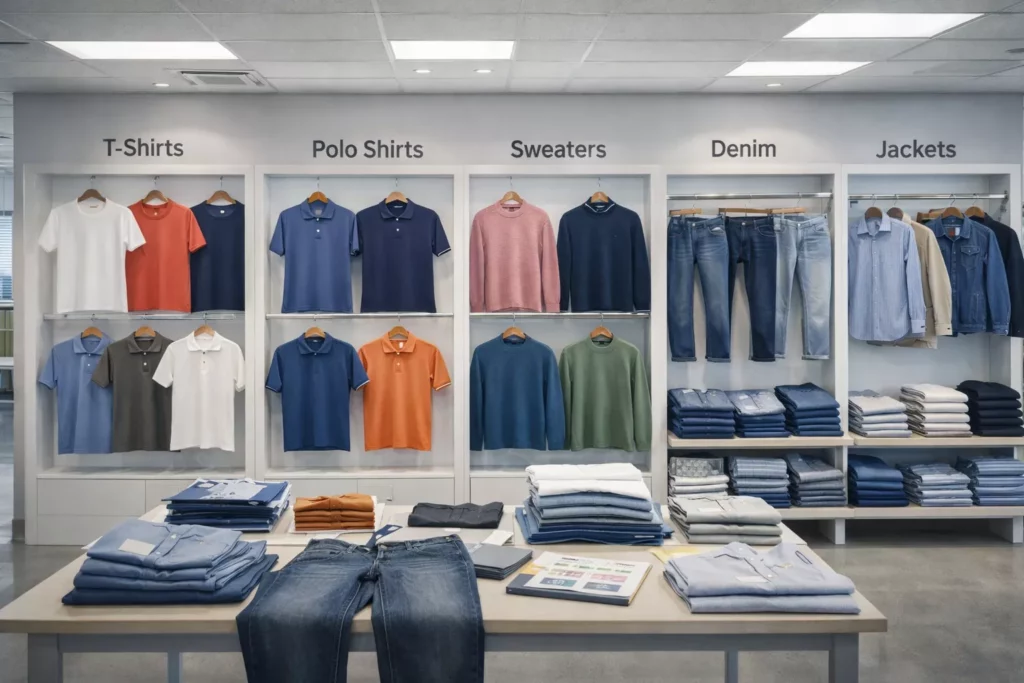
One reason so many brands continue manufacturing in Bangladesh is product-category strength. Bangladesh has built a strong reputation in high-volume apparel categories such as T-shirts, polo shirts, shirts, trousers, sweaters, denim, and jackets. BGMEA’s export performance data also highlights major product groups where Bangladesh is especially active in global trade.
This specialization matters because category familiarity improves execution. Factories that repeatedly produce similar product types usually have better operational flow, stronger technical understanding, and more stable quality systems for those categories. For a buyer, that can reduce development time and bulk production risk.
Bangladesh is particularly attractive for brands focused on mass-market, promotional, schoolwear, workwear, casualwear, and large-volume essentials. These categories often depend on efficient repetition, clear construction standards, and reliable bulk manufacturing, all areas where Bangladesh garment manufacturers have long experience.
Bangladesh Continues to Upgrade Beyond Basics
While Bangladesh is famous for basics and volume production, another advantage is that the industry is continuing to upgrade. IFC’s 2025 diagnostic notes that to stay competitive globally, Bangladesh’s ready-made garment sector needs to keep advancing in areas such as technology adoption and man-made fiber expansion. The fact that these are active strategic priorities shows that the sector is not standing still.
For buyers, this matters because fashion demand keeps changing. Brands increasingly want product diversification, better performance fabrics, more technical capability, and stronger development support. Bangladesh’s evolution toward higher-value production strengthens its long-term appeal as a sourcing destination.
This shift does not replace the country’s strength in basics. Instead, it adds to it. Bangladesh can remain highly competitive in core products while gradually improving in more sophisticated categories and production systems.
Major Market Access Strengthens Commercial Relevance
Bangladesh’s established trade relationship with large consumer markets is another important manufacturing advantage. The WTO reports that in 2024 the EU took around 40 percent of Bangladesh’s ready-made garment exports and the US took around 18 percent. The European Commission also confirms that the EU is Bangladesh’s largest trading partner and that textile imports dominate the trade relationship.
This gives brands confidence because Bangladesh is already aligned with the requirements of major apparel-buying regions. It is easier to source from a country that has spent decades serving the markets where your products will actually be sold, particularly through established garment manufacturers and exporters. This can influence documentation processes, compliance awareness, shipment planning, and buyer familiarity.
For startup brands and private label businesses, this established global positioning can also reduce perceived sourcing risk. Bangladesh is not emerging from the margins. It is already one of the core countries in world apparel trade.
Advantages of Apparel Manufacturing in Bangladesh for Different Types of Brands
The benefits of Bangladesh are not limited to one type of buyer. Different kinds of apparel businesses can gain different advantages from sourcing there.
For startup clothing brands, Bangladesh can be attractive when the goal is to find a manufacturing base capable of supporting growth after product-market fit is proven. The country’s supplier network makes it easier to transition into structured production once order volumes increase.
For private label brands, Bangladesh offers strong value in categories where repeatability, bulk consistency, and margin discipline matter. Buyers can often find suppliers experienced in handling branded labeling, packaging, and export-ready production processes.
For retailers and wholesalers, the biggest advantage is often scale. Bangladesh can support large seasonal runs and replenishment programs more effectively than many smaller sourcing markets.
For brands with sustainability goals, the growing number of green factories makes Bangladesh more attractive than before.
What Buyers Should Still Evaluate Carefully
Even with all these advantages, successful sourcing in Bangladesh still depends on careful supplier selection. Not every factory offers the same quality systems, communication level, compliance profile, or category strength. The country’s biggest advantages appear when brands work with suppliers that match their product type, order size, quality expectations, and timeline needs.
Buyers should still assess sample quality, technical execution, QC systems, production planning, communication speed, and export readiness before committing to a factory. Bangladesh offers a strong manufacturing base, but factory-level discipline is what turns country-level advantages into brand-level success.
This balanced approach is important for SEO readers as well as real buyers. The article’s point is not that Bangladesh is automatically perfect. It is that Bangladesh offers a very strong sourcing proposition when buyers choose the right manufacturing partners.
Top Apparel Manufacturer Bangladesh: Profiles and Capabilities
Top Apparel Manufacturer Bangladesh: Profiles and Capabilities — Bangladesh’s leading garment producers combine scale, skilled labor, and modern facilities to attract brands that invest in bangladesh apparel industry. Many manufacturers offer end-to-end services from product development and sampling to high-volume production and global logistics, maintaining compliance with international standards and sustainable practices to meet buyer demands.
Capabilities include advanced fabric sourcing, pattern engineering, automated cutting, and experienced quality assurance teams that enable rapid turnaround and consistent output. Strategic clusters near ports and improved infrastructure reduce lead times and enhance cost competitiveness for global retailers.
With ongoing investments in technology, worker training, and environmental management, top manufacturers are positioning Bangladesh as a reliable partner for global fashion. Their commitment to excellence for bangladesh apparel industry is reflected in certifications, ethical labor practices, and a growing portfolio of premium and technical apparel, reinforcing Bangladesh’s role as a major apparel hub.
The Bright Future of Apparel Manufacturer Bangladesh
The growth outlook for the Apparel industry in Bangladesh is promising as investment in technology and skills raises productivity and product quality. Local Manufacturers are adopting automation, digital design, and lean processes to meet global demand while shortening lead times and reducing costs. Sustainability and compliance are becoming central pillars, with many Apparel Manufacturers in Bangladesh implementing eco-friendly materials, water-saving practices, and responsible labour standards, which strengthens relationships with international buyers and improves brand reputation. Government support, improved infrastructure, and diversified export markets further enhance competitiveness, enabling small and medium Manufacturers to scale up, access financing, and integrate into higher-value supply chains, pointing to a bright and resilient future for Bangladesh’s Apparel sector.
Working with the Right Bangladesh Manufacturing Partner
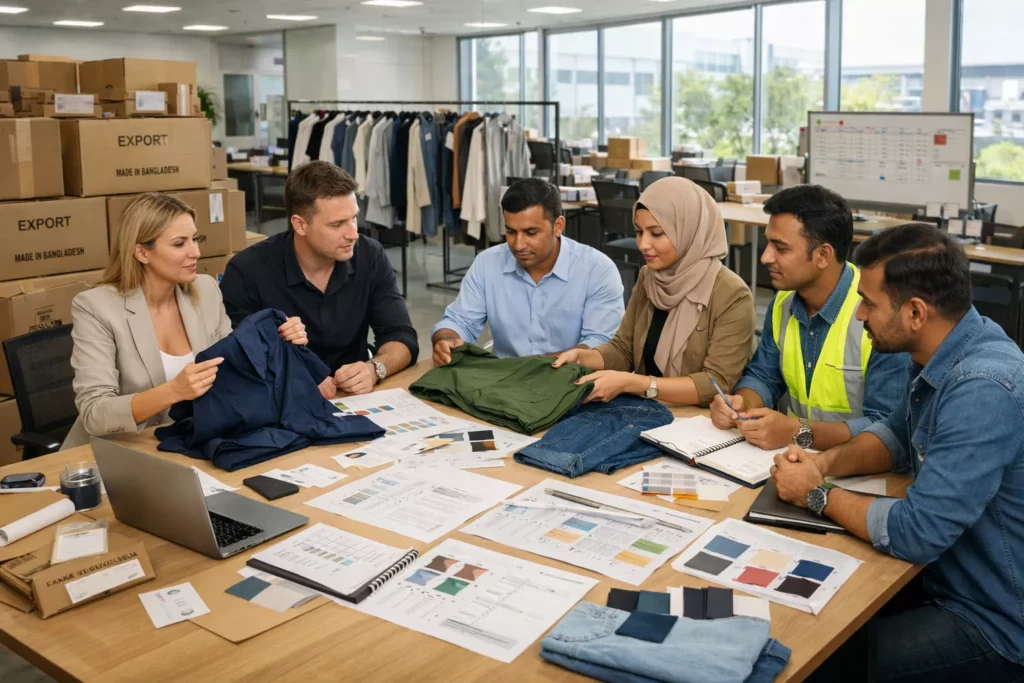
The advantages of apparel manufacturing in Bangladesh become even stronger when brands work with experienced production partners who understand international buyer expectations. Successful sourcing requires more than access to factories. It also requires structured sampling processes, accurate tech pack interpretation, strong quality control systems, and efficient export coordination.
Companies such as ApparGlobal.com help clothing brands connect with reliable Bangladesh manufacturing partners while supporting product development, fabric sourcing, production planning, and quality assurance. By aligning these elements early in the process, brands can move from sampling to bulk production with greater confidence and fewer operational risks.
Working with knowledgeable sourcing partners can help fashion brands take full advantage of Bangladesh’s manufacturing strengths while maintaining consistent quality and reliable delivery across production cycles.
Ready To Source From Bangladesh?
Bangladesh offers competitive costs, a skilled workforce, and a rapidly improving infrastructure that make it an attractive partner for global brands looking to invest in the Bangladesh apparel industry. By partnering with established manufacturers and newer sustainable ventures, buyers can tap into efficient supply chains, responsive production cycles, and a strong tradition of garment craftsmanship that supports consistent quality and delivery. With ongoing improvements in compliance, technology adoption, and worker training, the country is positioning itself as a hub of excellence for the Bangladesh apparel industry.
Brands prioritizing transparency and long-term collaboration will find opportunities to innovate in fabrics, ethical sourcing, and circular fashion initiatives, all while benefiting from cost-effective manufacturing. Thoughtful engagement, local partnerships, and investment in capacity-building will help realize the full potential of Bangladesh as a reliable, forward-looking apparel sourcing destination.
Conclusion
The advantages of apparel manufacturing in Bangladesh are clear: large production scale, competitive pricing, long industry experience, strong export infrastructure, broad supplier networks, category specialization, and growing sustainability leadership. Official export and trade data show that Bangladesh remains one of the world’s most important clothing manufacturing hubs, with apparel exports of about $38.48 billion in 2024 and deep integration with major markets such as the EU and the US.
For fashion brands, private label businesses, and retailers, Bangladesh offers more than a low-cost sourcing option. It offers a mature manufacturing ecosystem capable of supporting bulk production, repeat orders, and long-term supplier partnerships. Its growing base of green factories and continued sector upgrades make the country even more relevant for brands thinking beyond price alone.
In short, Bangladesh remains one of the strongest choices for apparel manufacturing when the goal is scalable production, global export experience, and reliable sourcing potential.
Frequently Asked Questions
Why is Bangladesh good for apparel manufacturing?
Bangladesh is good for apparel manufacturing because it combines large-scale factory capacity, competitive production costs, decades of export experience, and a strong garment supplier ecosystem in the textile industry. It also remains one of the world’s top apparel exporters.
What are the main advantages of manufacturing clothes in Bangladesh?
The main advantages include cost competitiveness, high production capacity, experienced factories, broad export infrastructure, strong core-category specialization, and growing sustainability investment.
Is Bangladesh suitable for bulk clothing production?
Yes. Bangladesh is especially well-suited for bulk apparel production because of its large factory base and strong experience in high-volume export manufacturing.
Is Bangladesh important for sustainable apparel manufacturing?
Yes. Bangladesh had 258 LEED-certified green factories as of August 2025, which makes sustainability a growing competitive advantage for its apparel sector.
Which markets buy the most clothes from Bangladesh?
The European Union and the United States are among the largest markets. WTO says that in 2024, around 40 percent of Bangladesh’s ready-made garment exports went to the EU and around 18 percent went to the US.
How big is the apparel industry in Bangladesh?
It is extremely large. BGMEA reports apparel exports of about $38.48 billion in 2024, and the World Bank material says the sector accounts for around 82 percent of Bangladesh’s exports.