

Bangladesh Garment Industry: Apparel, Big Brands & Textiles
Why do so many global fashion brands source their clothing from Bangladesh garment factories instead of making everything closer to their home markets? The answer is not just lower cost. Bangladesh has grown into one of the most important apparel manufacturing hubs in the world because it offers a rare combination of large-scale production capacity, deep garment-making experience, competitive pricing, export strength, and improving sustainability infrastructure. Today, Bangladesh-made apparel reaches more than 150 countries, and the sector remains the backbone of the country’s export economy.
For clothing brands, sourcing decisions are never based on a single factor. Buyers look at lead times, product category expertise, manufacturing reliability, workforce scale, compliance standards, sourcing ecosystems, and long-term partnership potential. Bangladesh performs strongly in many of these areas, especially for categories such as T-shirts, denim, sweaters, shirts, trousers, jackets, and other mass-market and mid-market apparel. Over time, the country has built a strong reputation for handling large volumes while continuing to expand into more value-added products and greener factory operations.
Bangladesh is also a major force in global clothing trade. BGMEA’s official export performance page shows apparel exports of about $38.48 billion in 2024, and multiple current trade summaries note that Bangladesh retained its position as one of the world’s top apparel exporters. WTO-related summaries and trade reporting around 2024 place Bangladesh second globally in apparel exports, behind China.
This matters because global brands do not keep sourcing from a country year after year unless the manufacturing base can deliver at scale. Bangladesh’s apparel sector supports millions of jobs, remains central to the national economy, and continues to attract buyers from the European Union, the United States, the United Kingdom, Canada, and other major markets. The country’s combination of scale, specialization, and improving compliance helps explain why it remains a trusted sourcing destination for retailers and fashion labels across the world.
In this guide, we will look at the real reasons global brands manufacture clothing in Bangladesh, what advantages the country offers apparel buyers, how the industry has evolved, and what brands should understand when evaluating Bangladesh as a sourcing partner.
Bangladesh Is One of the World’s Biggest Apparel Manufacturing Hubs
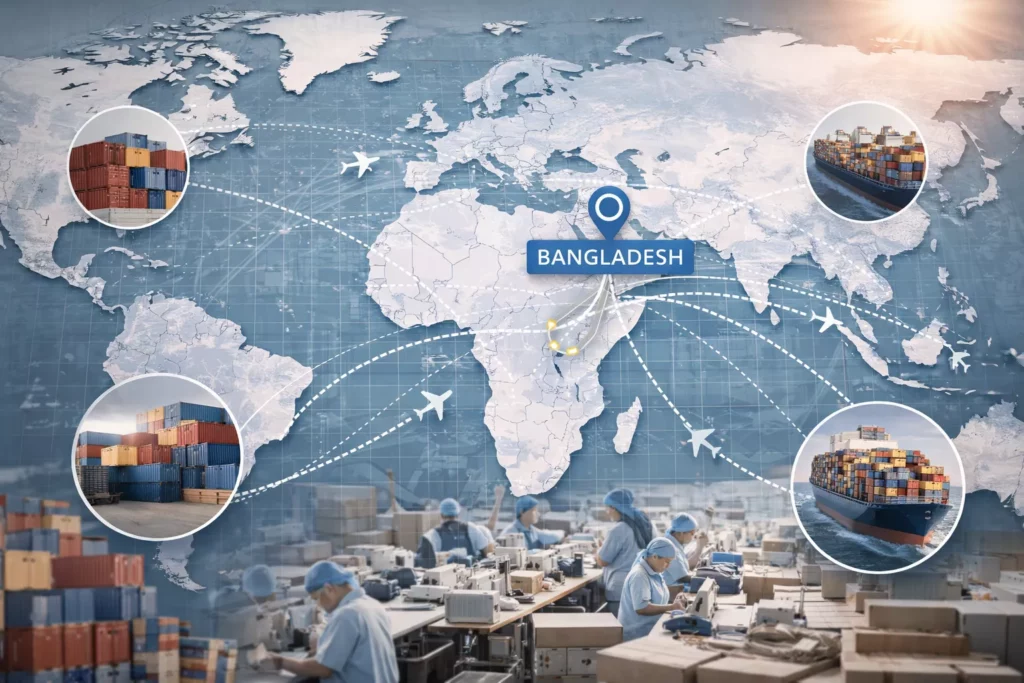
One of the strongest reasons global brands manufacture clothing in Bangladesh is scale. Brands that need large, repeatable production programs look for countries with proven capacity, experienced factories, and established export systems. Bangladesh offers all three. BGMEA states that the country has more than 4,000 factories serving major global fashion brands, and its garments reach consumers in more than 150 countries. That type of scale gives international buyers confidence that Bangladesh is not a niche sourcing market. It is a mature manufacturing ecosystem.
The country’s export numbers reinforce that scale. BGMEA’s export data shows that apparel exports reached about $45.7 billion in 2022, about $35.9 billion in 2023, and about $38.5 billion in 2024. These figures reflect both the size of the industry and its resilience through changing global demand conditions. Even when world apparel markets soften, Bangladesh remains a key production base because buyers already rely on its capacity and supplier network.
Scale matters especially for brands that need continuity across seasons and replenishment cycles. A factory base that can support high-volume runs, multiple styles, and complex shipment schedules is far more attractive than a fragmented or inconsistent sourcing environment. Bangladesh’s long development in ready-made garments has created precisely that type of infrastructure.
History of textile production in Bangladesh
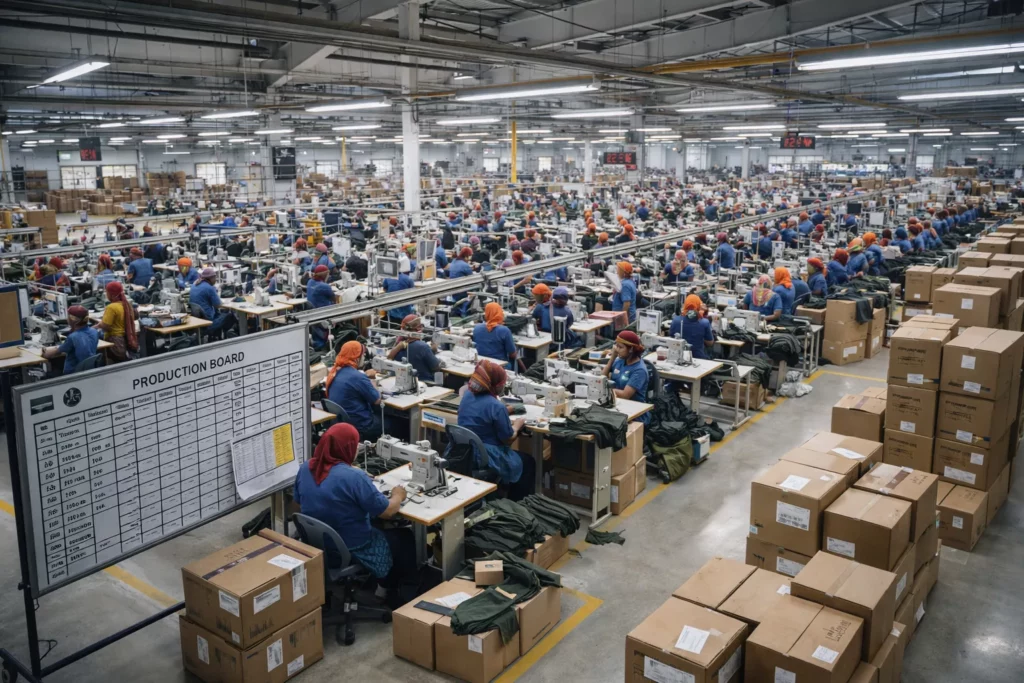
The history of textile production in Bangladesh traces how small handloom traditions evolved into a global powerhouse: Bangladesh has emerged from cottage weaving to an export-led boom when Bangladesh became known for competitive labor and scale. The textile and clothing industry expanded into the ready-made garment sector, with the ready made garments and rmg industry fueling the export industry as garment exporters and Bangladesh garment manufacturers and exporters joined global supply chains supplying major brands and big brands.
Institutions like the garment manufacturers and exporters association supported growth while concerns about fire and building safety and building safety in Bangladesh led to initiatives such as the circular fashion partnership. The rise of fast fashion brands and brands like h&m increased demand, spotlighting ethical fashion, the welfare of garment workers in Bangladesh, women garment workers, and textile workers across the garment industry in Bangladesh and the wider global garment market for Bangladeshi garment and RMG suppliers.
Why do global clothing brands manufacture in Bangladesh?
Many big brands and fast fashion brands source from Bangladesh because Bangladesh has emerged as a competitive hub for garment manufacturing and the textile and clothing industry, where Bangladesh became a global leader in low-cost ready made garments and the ready-made garment (RMG) sector. The apparel industry and fashion industry rely on efficient garment manufacturers and exporters and the dense network of the textile industry that makes Bangladesh attractive to brands like h&m and other major brands, helping the export industry and positioning Bangladesh as a major source of garment exporters and Bangladeshi garment output.
After tragedies such as rana plaza, attention to building safety, fire and building safety and the Bangladesh Accord improved conditions for garment workers in Bangladesh, women garment workers and textile workers. The garment industry in Bangladesh, including the rmg industry and readymade garment firms, balances cost, scale and evolving demands for ethical fashion, keeping the country central to the global garment and ready-made garment industry.
Is Clothing Manufactured in Bangladesh of Good Quality?
Clothing manufactured in Bangladesh has improved significantly over the past decades, and many pieces now meet international quality standards thanks to modernized factories, skilled workers, and stricter compliance checks. While some low-cost items still vary in durability and finish, a growing number of manufacturers produce garments with reliable stitching, consistent sizing, and fine fabric choices that global brands trust.
Consumers should consider brand reputation, certifications, and care instructions when judging quality, because labeled details often reflect better production practices and material sourcing.
Overall, the Bangladeshi garment industry offers a wide spectrum—from budget-friendly fast fashion to higher-end, well-made pieces—and many buyers find value in both affordability and acceptable longevity when they choose wisely.
Why you shouldn’t boycott brands and clothes just because they’re made in Bangladesh
Boycotting products simply because they are made in Bangladesh ignores complex trade and development realities: under the generalized system of preferences and because Bangladesh enjoys duty-free access to many markets, brands can source affordably from textile mills and large manufacturing units without excessive tariffs. The country’s huge garment workforce and growing cohort of textile graduates support efficient garment production, helping brands and Bangladeshi makers collaborate to manufacture their clothing ethically rather than simply switching to cheaper imports of cheap clothes.
Moreover, Bangladesh is currently entering a new era with investments in the textile recycling industry and the development of the textile recycling sector to tackle fashion waste. Many brands and retailers are working with leed-certified garment factories and large garment sites after Bangladesh amended regulations, so Bangladesh is likely to improve standards and stay competitive—just one reason to avoid broad boycotts of places like Bangladesh. Bangladesh ranked highly for export growth, underscoring why targeted engagement often works better than a blanket ban.
Which Luxury Brands Are Manufactured In Bangladesh
Bangladesh’s garment industry, famed for large-scale apparel manufacturing, produces items not only for mass-market retailers but also for several premium labels; through global supply chains and subcontracting, some luxury and designer brands have had products made there — for example, Ralph Lauren, Michael Kors, and Coach have been reported to source certain ready-to-wear lines or accessories from Bangladeshi factories.
Manufacturers in Bangladesh typically handle cut-and-sew, knitwear, and leather goods segments for these brands, supplying specific collections or companion products rather than flagship couture pieces — high-end houses may limit their Bangladesh exposure to seasonal items or lower-price lines.
Choice of supplier depends on compliance, quality controls, and auditing; as a result, the list of brands shifts over time as companies balance cost, ethics, and reputation, so reported names like Tory Burch or Burberry may appear intermittently in sourcing disclosures or investigative reports.
Which Fast Fashion Brands Produce In Bangladesh?
Bangladesh is a major garment-producing hub supplying many global fast fashion labels; well-known brands that manufacture there include Zara, H&M, Uniqlo, Primark and Mango. These companies often work with large factory networks in cities like Dhaka and Chattogram, where ready-made garments such as knitwear, denim and woven apparel are produced at scale. Other international names that source from Bangladesh include Gap, Topshop, Boohoo, ASOS and historically Forever 21. Production patterns shift over time, so brand lists can change with contracts, compliance decisions and market demand. Buyers typically partner with local manufacturers and global suppliers; many brands now publish supplier lists and factory disclosures to increase transparency about operations in Bangladesh and efforts on wages, safety and sustainability.
Competitive Manufacturing Costs Still Matter
Cost is not the only reason brands source from Bangladesh, but it remains one of the most important. Global brands operate in a market where price pressure is constant. Retailers want attractive margins, consumers expect affordable fashion, and sourcing teams must balance quality with cost efficiency. Bangladesh remains competitive because it combines labor-intensive production strength with large-scale efficiency and established sourcing processes.
For many apparel categories, especially basics and volume-driven products, Bangladesh gives buyers a cost structure that is hard to ignore. This is particularly relevant for items like knit tops, casual bottoms, sweaters, and denim where production know-how and operational flow can create strong value at scale. Bangladesh’s role as a labor-intensive export platform has long been recognized in trade analysis, and the country’s garments sector has remained central because it can produce competitively for global markets.
That said, cost competitiveness in Bangladesh is not only about wages. It is also about ecosystem efficiency. When factories, fabric mills, washing units, trim vendors, packaging suppliers, and logistics providers are all part of a functioning export chain, brands can often source more smoothly and predictably. That operational density helps support price competitiveness over time.
The Country Has Decades of Apparel Production Experience
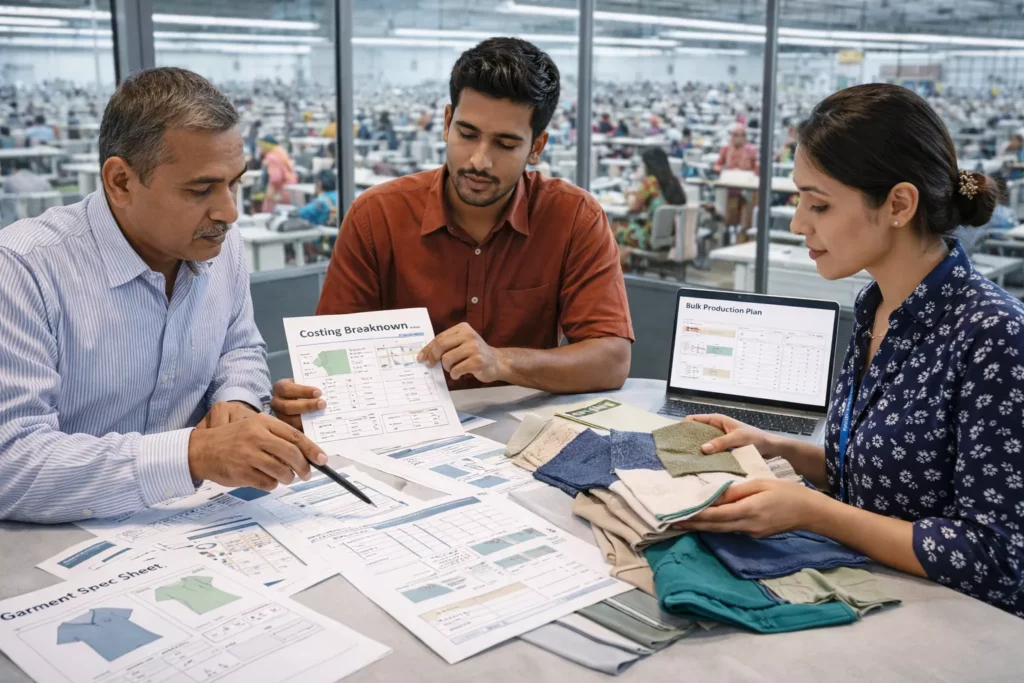
Global brands do not only buy capacity. They buy experience. Bangladesh has more than three decades of large-scale apparel manufacturing history, and that matters for both product development and bulk execution. Factories that have spent years producing for export markets understand buyer expectations around fit consistency, measurements, construction quality, packing requirements, inspection standards, and shipment schedules. BGMEA itself highlights more than 35 years of experience in apparel manufacturing.
This experience is especially valuable when buyers need dependable execution across repeated orders. A country that has handled millions of units for major retailers develops strong institutional knowledge. Teams become familiar with sampling cycles, pre-production approvals, inline quality management, and documentation standards expected by overseas customers. Over time, that makes sourcing less risky for brands.
Bangladesh’s product expertise has historically been strongest in cotton-based and volume-focused categories such as T-shirts, shirts, trousers, sweaters, and jackets. WTO analysis on Asian graduating LDCs notes that Bangladesh’s textile and clothing sector has been especially important in these categories and in low- to mid-market price segments. That specialization helps explain why international buyers continue to source core apparel programs from the country.
Bangladesh Offers Strong Capacity for Large Volume Orders
Another major reason global brands manufacture clothing in Bangladesh is the country’s ability to handle large orders. Some sourcing countries are good for boutique production, low MOQ development, or niche product categories. Bangladesh stands out for its ability to manage scale. For major retailers and global labels, this matters enormously. When a brand needs tens of thousands or hundreds of thousands of pieces across a style program, supplier capacity becomes a strategic issue, not just an operational one.
Bangladesh’s ready-made garment sector grew by serving exactly this need. Large vertically integrated factories, composite knit operations, denim units, washing plants, and export-focused manufacturing groups make it possible for brands to place sizable orders with confidence. IFC project disclosures on Bangladeshi apparel manufacturers also reflect the presence of integrated, large-scale export operations with knitting, sewing, washing, and embellishment capabilities.
For buyers, large capacity also supports business continuity. If a brand wants to repeat a successful item, extend colorways, or replenish a high-selling product, Bangladesh’s manufacturing base is often better positioned than smaller sourcing markets to respond efficiently. Capacity does not guarantee quality, but it gives brands the production depth needed for growth.
The Supplier Ecosystem Supports End-to-End Apparel Production
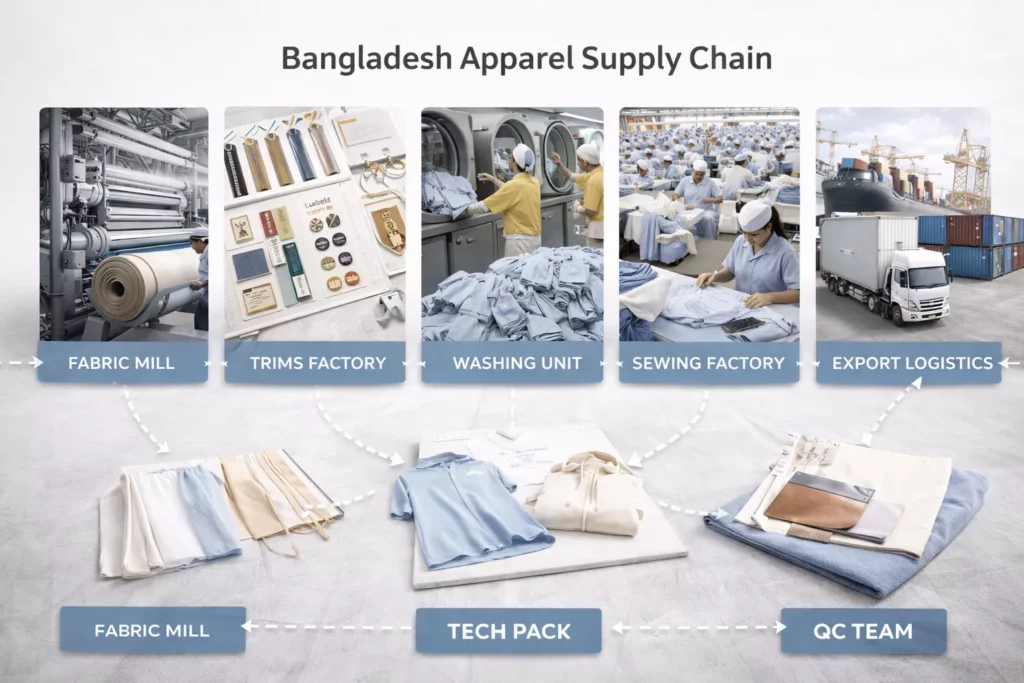
Global brands prefer sourcing destinations where the apparel supply chain is more complete. Bangladesh has built a strong ecosystem around ready-made garments, including manufacturers, textile processors, washing units, printing facilities, embroidery operations, trim suppliers, quality control systems, and export logistics. That supplier network makes production easier to coordinate and supports faster decision-making for buyers.
The ecosystem is especially strong in knitwear and many core apparel categories. It allows brands to develop and produce garments within a sourcing environment that already understands export expectations. This reduces friction in areas like sample correction, bulk planning, and shipment preparation. A mature garment ecosystem also gives brands more flexibility in supplier selection, category specialization, and cost negotiation.
WTO and World Bank materials both underscore how central the garments sector is to Bangladesh’s wider economy and development path. That centrality has encouraged the growth of linked industries and service capabilities around apparel manufacturing. In practical terms, that means many fashion buyers can manage more of their sourcing process through one country and one established network.
Bangladesh Has Become a Trusted Sourcing Base for Major Export Markets
Buyers want sourcing stability. Bangladesh’s long-standing export relationships with major markets make it easier for brands to keep producing there. WTO’s current Bangladesh sourcing overview notes that in 2024 around 40 percent of Bangladesh’s ready-made garment exports went to the European Union and another 18 percent went to the United States. The EU also identifies itself as Bangladesh’s largest trading partner in goods.
These market links matter because they show that Bangladesh is already deeply integrated into the purchasing systems of major apparel-consuming economies. Buyers in the EU, US, UK, Canada, and Japan are not experimenting with Bangladesh at the margins. They are using it as a core sourcing country. WTO’s Bangladesh profile also shows the historical importance of the EU and United States among Bangladesh’s top export destinations.
For global brands, that established trade pattern creates confidence. It suggests that export documentation, buyer compliance processes, shipping routines, and supplier expectations are already aligned with major international market needs. That kind of sourcing familiarity lowers entry barriers for new buyers and reinforces loyalty among existing ones.
Sustainability Has Become a Bigger Advantage
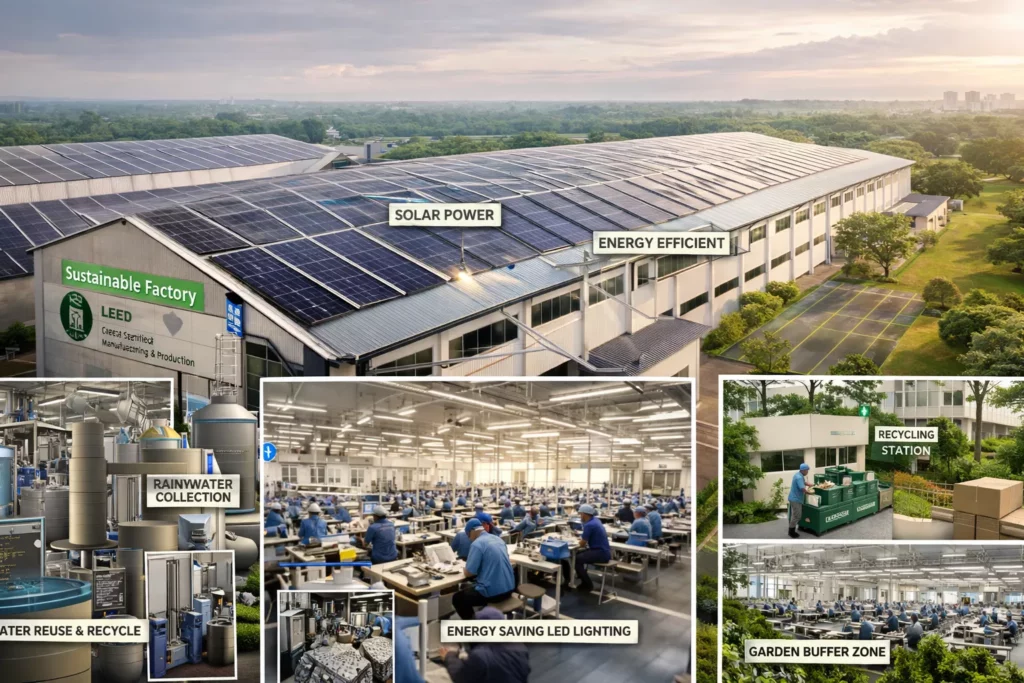
A major change in the Bangladesh apparel story is sustainability. Years ago, many global buyers thought of Bangladesh mainly in terms of cost and volume. Today, environmental performance is a bigger part of the conversation. Bangladesh has invested heavily in green factory infrastructure, and BGMEA reported in August 2025 that the country had reached 258 LEED-certified green factories. This is a significant signal for global brands that now face pressure from regulators, investors, and consumers to improve the environmental profile of their supply chains.
IFC’s 2025 Bangladesh private sector diagnostic also points to growing global preference for environmentally and socially compliant products and notes that Bangladesh’s green ready-made garment sector is one of the country’s key investment opportunities. That tells buyers something important: sustainability is no longer a side project in Bangladesh’s apparel sector. It is increasingly part of its competitive strategy.
This matters for brands because greener buildings, better energy use, water management improvements, and more structured environmental systems support modern sourcing expectations. Bangladesh’s sustainability progress does not mean every factory is the same, but it does mean buyers can find a growing number of suppliers that match stronger ESG and compliance goals.
Safety and Compliance Improvements Reshaped Buyer Confidence
Any honest discussion of Bangladesh apparel manufacturing has to acknowledge that the industry’s reputation was deeply affected by major safety failures in the past. But it is equally important to recognize that Bangladesh’s garment sector has undergone substantial safety reform since then. The International Accord continues to operate in Bangladesh, with public remediation progress tracking for covered factories and ongoing worker health and safety mechanisms.
For global brands, these reforms matter because sourcing decisions depend heavily on reputational risk and compliance credibility. A country that improves inspection systems, remediation programs, and buyer accountability becomes more attractive than one where safety remains unmanaged or opaque. Bangladesh’s post-crisis reforms helped preserve its role in global sourcing and, over time, strengthened buyer confidence that the manufacturing base was becoming more accountable.
That said, responsible buyers still need to evaluate individual factories carefully. Compliance progress at the country level does not replace factory-level due diligence. But the broader direction of reform is one reason many global brands stayed in Bangladesh and continued building long-term supplier relationships rather than exiting the country.
Bangladesh Supports Both Basics and Increasingly Higher-Value Apparel
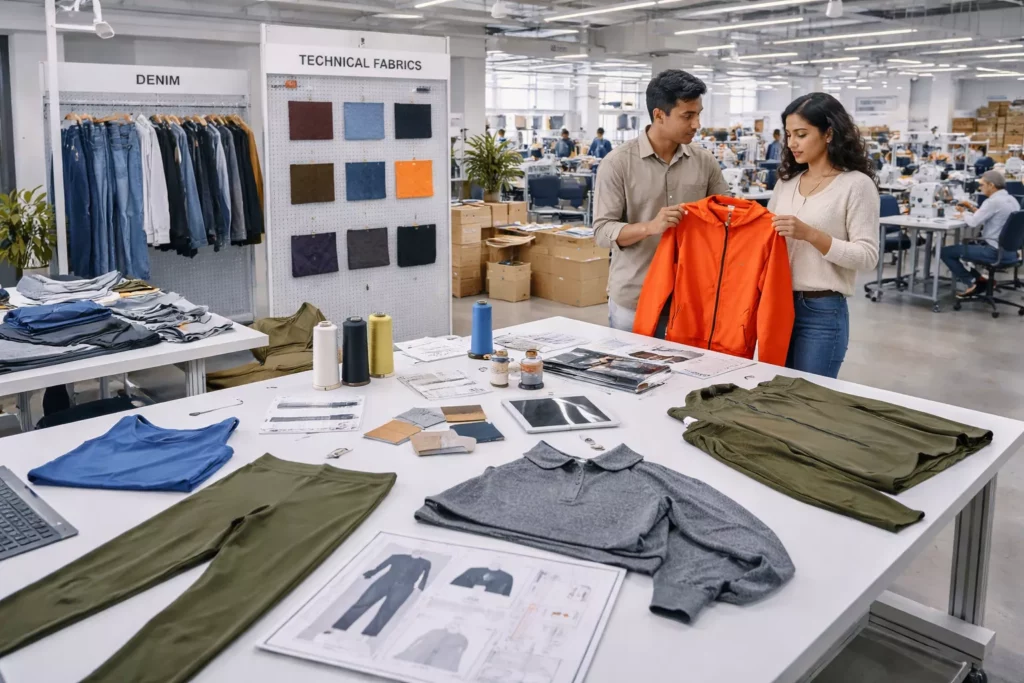
Another reason brands manufacture clothing in Bangladesh is that the country is not standing still. It remains very strong in core basics, but industry reports increasingly emphasize the need to move into more value-added products, especially man-made fiber categories and more advanced manufacturing. IFC’s 2025 diagnostic notes that to stay competitive, the RMG sector needs continued investment in advanced technologies and a stronger move into man-made fibers as global demand patterns shift.
This is important because global buyers are constantly adjusting their product mix. If a sourcing country can only serve old product categories, it becomes vulnerable. Bangladesh’s push into greener production, better technology, and higher-value segments signals that it wants to stay relevant to future sourcing needs, not just past strengths.
For brands, that creates a broader sourcing proposition. Bangladesh can still serve large programs in basics, but many suppliers are also improving in areas like design support, washing innovation, compliance documentation, and integrated production. That makes the country more attractive to brands that want both efficiency and evolution.
The Sector Is Economically Important, Which Reinforces Policy Attention
Bangladesh’s apparel sector matters so much to the national economy that it receives significant policy and investment attention. The World Bank notes that the RMG sector accounts for 82 percent of exports, while Bangladesh’s export policy framework identifies ready-made garments as the foundation for industrialization, GDP growth, export growth, and employment.
This kind of economic importance helps explain why the sector continues to attract attention from government, trade groups, development institutions, and foreign investors. When an industry is this central to national growth, it tends to benefit from ongoing efforts to improve export competitiveness, compliance systems, worker productivity, and investment conditions.
From a buyer perspective, this is reassuring. Brands generally prefer sourcing countries where the apparel sector is treated as a strategic economic pillar rather than an afterthought. Bangladesh clearly falls into the first category.
Women’s Employment and Social Impact Also Matter to Global Buyers
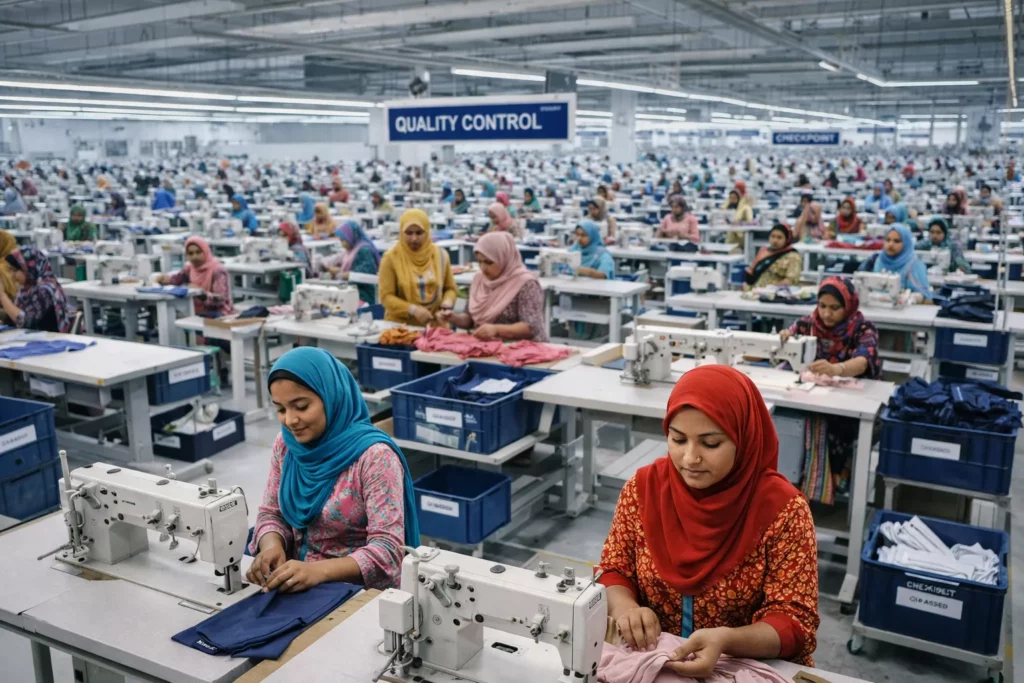
For many international brands, sourcing is not only about product and profit. It is also about social impact. Bangladesh’s garment industry has played a major role in women’s employment and economic participation. WTO analysis notes that the sector provides direct employment to over 4 million workers, with more than 60 percent women. Other recent coverage has often described women as the public face of the industry.
This social dimension matters because many global brands have public commitments related to women’s economic empowerment, responsible sourcing, and inclusive supply chains. Bangladesh’s garment sector has long been one of the clearest examples of export-led industrialization creating large-scale employment opportunities for women, even while serious labor and wage issues still remain part of the conversation.
Brands that source from Bangladesh often point to this combination of economic contribution and female employment as part of the broader case for long-term partnership. The sourcing decision is still commercial, but the social footprint of the sector adds another layer of relevance.
Why Bangladesh Stays Competitive Even as Other Sourcing Countries Grow
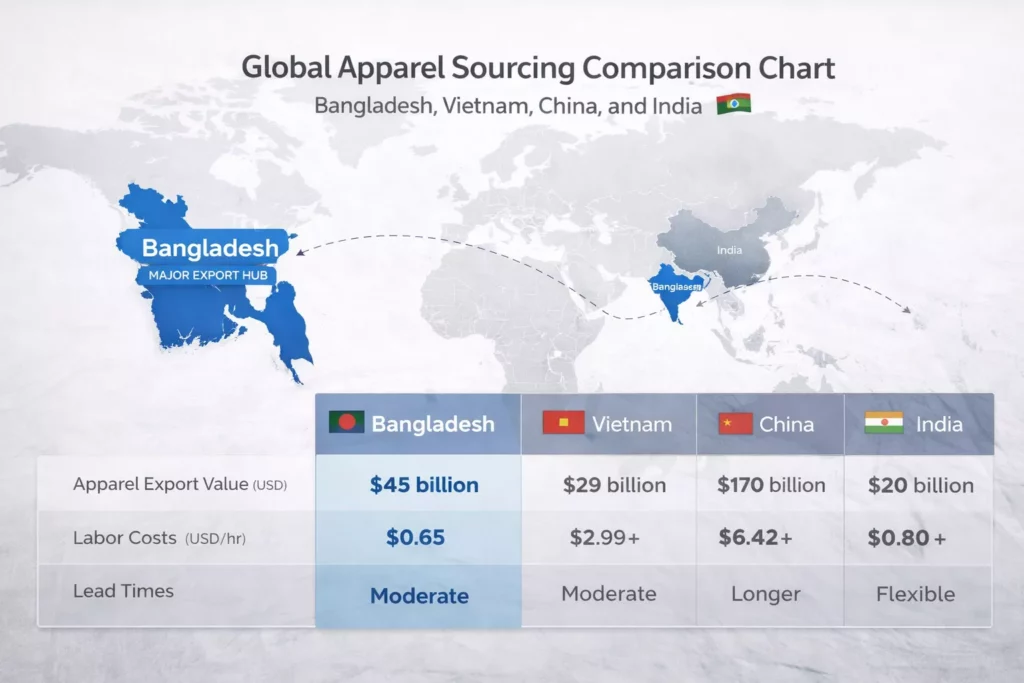
Bangladesh faces competition from countries such as Vietnam, India, Cambodia, and Turkey, and buyers increasingly diversify their sourcing. But Bangladesh remains highly competitive because it combines several strengths at once: scale, cost efficiency, export experience, supplier depth, and a large installed manufacturing base. Trade reporting around 2024 shows that Vietnam is gaining ground, yet Bangladesh still held the number two position in global apparel exports with about $38.48 billion in export value for 2024.
A country does not stay near the top of global apparel trade by accident. It stays there because buyers continue to find it commercially useful. Bangladesh’s challenge now is not whether it can remain relevant, but how quickly it can keep upgrading in sustainability, productivity, product complexity, and fiber diversification. If it does that well, its role in global sourcing could stay strong for years.
For brands, the practical takeaway is simple. Bangladesh is not just a low-cost option from the past. It is still one of the most important current sourcing destinations in global apparel, especially for brands that need reliable volume and strong supplier experience.
What Global Brands Look for When Choosing Bangladesh Suppliers
Even though Bangladesh offers many advantages, smart brands still choose suppliers carefully. The best results usually come from factories that combine strong compliance, clear communication, accurate tech pack execution, stable quality control, and category-specific expertise. Bangladesh’s broad supplier base gives buyers options, but it also means factory selection matters.
Global brands typically look for:
- consistent quality across repeat orders
- strong sampling and pre-production discipline
- reliable fabric and trim sourcing
- transparent compliance documentation
- realistic lead times and good communication
- sustainability progress where relevant
This is where Bangladesh’s maturity as a sourcing hub becomes useful. Buyers are not entering an unknown market. They can choose from experienced manufacturers, specialized product categories, and increasingly sophisticated factory groups.
Which Brands Are Manufactured In Bangladesh?
Bangladesh manufactures garments and goods for many global retailers; major apparel brands produced there include H&M, Zara, Primark, Gap, Nike, Adidas, Levi’s, and Marks & Spencer. These international labels rely on Bangladesh’s large textile industry and skilled workforce to make everything from basic T‑shirts to fashion collections, while export garments often carry the names of European and American brands rather than local makers.
At home, Bangladesh also supports notable domestic brands such as Aarong, Yellow, Walton (electronics), and pharmaceutical names like Renata that manufacture locally. In addition, lifestyle and accessory lines for labels like Tommy Hilfiger and Uniqlo are sometimes produced in Bangladeshi factories, reflecting the country’s broad role in global supply chains across apparel, electronics, and pharmaceuticals.
Readymade Garment (RMG) Industry In Bangladesh
The Readymade Garment (RMG) industry has transformed Bangladesh’s economy and global image; Bangladesh is a major exporter of affordable, diverse apparel, supplying brands worldwide and earning substantial foreign exchange. This sector focuses on making clothes at scale, combining skilled labor, competitive costs, and improving factory standards to meet international demand. Workers, many of whom are women, form the backbone of production, and employment in the RMG sector has driven social change, urbanization, and poverty reduction across the country.
Despite successes, the industry faces challenges such as the need for enhanced workplace safety, environmental sustainability, and higher value-added manufacturing to move up the global supply chain. Policymakers and factory owners are investing in training, compliance, and innovation to ensure that the majority of garment output remains competitive while improving wages and conditions, supporting long-term growth and resilience for Bangladesh in the global apparel market.
ApparGlobal
Many global fashion brands choose Bangladesh as their manufacturing base because the country offers a strong combination of production scale, skilled garment workers, established export infrastructure, and competitive pricing. However, the success of a sourcing strategy often depends on choosing the right manufacturing partner who understands international quality standards, tech pack accuracy, sampling discipline, and large-scale apparel production systems. Companies such as ApparGlobal.com support clothing brands by aligning product development, fabric sourcing, factory coordination, quality control processes, and export logistics so brands can produce garments in Bangladesh with greater consistency and confidence. When brands work with experienced partners who understand global buyer requirements, sourcing from Bangladesh becomes more efficient, scalable, and reliable.
Conclusion
Global brands manufacture clothing in Bangladesh because the country offers a powerful mix of production scale, competitive costs, deep garment expertise, export infrastructure, and growing sustainability leadership. It is one of the world’s biggest apparel sourcing hubs, and its role in global fashion supply chains is supported by decades of manufacturing experience and strong commercial relationships with major markets such as the EU and the United States.
Bangladesh is not perfect, and responsible sourcing still requires serious factory-level due diligence. But the country’s position in the global apparel trade is not based on one advantage alone. It is based on a full sourcing ecosystem that continues to matter to brands looking for dependable large-scale manufacturing. Add improving green factory credentials and sustained safety reform efforts, and it becomes easier to understand why so many global retailers and fashion labels continue to source there.
For apparel brands, Bangladesh remains one of the most important countries to consider when the goal is scalable clothing production, reliable export experience, and long-term sourcing potential.
Frequently Asked Questions
Why is Bangladesh famous for clothing manufacturing?
Bangladesh is famous for clothing manufacturing because it has a large export-focused garment sector, strong production capacity, competitive costs, and decades of experience serving global fashion brands. It is also one of the world’s leading apparel exporters.
Why do global brands source garments from Bangladesh?
Global brands source garments from Bangladesh for several reasons, including cost competitiveness, large-scale production capacity, experienced factories, established export systems, and improving sustainability infrastructure.
Is Bangladesh still a major apparel exporter?
Yes. Current trade summaries and official export figures show that Bangladesh remained one of the world’s top apparel exporters in 2024, with apparel exports of about $38.48 billion.
What products does Bangladesh manufacture the most in apparel?
Bangladesh has been especially strong in products such as T-shirts, shirts, trousers, sweaters, and jackets, particularly in cotton-based and volume-driven categories.
Is Bangladesh important for sustainable apparel manufacturing?
Yes. Bangladesh has made major investments in green apparel manufacturing, and BGMEA reported 258 LEED-certified green factories in 2025, making sustainability a growing sourcing advantage for the country.
Which markets buy the most clothing from Bangladesh?
The European Union and the United States are among the biggest markets for Bangladeshi apparel. WTO’s Bangladesh sourcing overview says that in 2024 around 40 percent of Bangladeshi ready-made garment exports went to the EU and around 18 percent went to the US