

Business Model: Starting a Clothing Brand, Clothing Business
A lot of apparel brands look exciting from the outside. They have strong visuals, attractive products, and polished social media. But behind the scenes, many of them struggle with weak margins, slow inventory turnover, rising customer acquisition costs, and inconsistent reorders. That is why building a profitable apparel business model matters so much. A clothing brand does not become sustainable just because people like the designs. It becomes sustainable when product, pricing, production, channel strategy, and cash flow work together.
That challenge is even more important in 2026. McKinsey’s State of Fashion 2026 says the global fashion industry is expected to remain in low single-digit growth, with value-conscious consumer behavior still shaping demand. The same report also notes that AI-driven product discovery and generative engine optimization are becoming more relevant as shoppers use new digital paths to find products. In other words, brands now need stronger fundamentals, not just better aesthetics.
Digital commerce is also evolving fast. The OECD’s 2025 e-commerce guidance says updated definitions now account for AI-assisted transactions and emerging digital ordering channels, which means modern apparel brands are operating in a more complex commerce environment than a simple website-plus-Instagram setup.
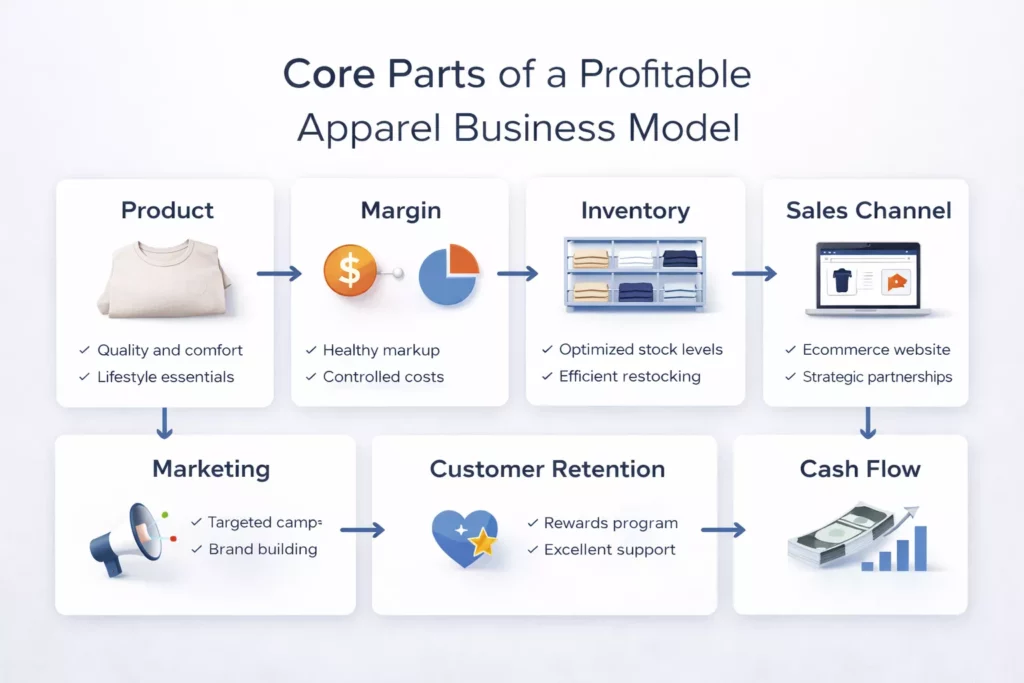
So what is a profitable apparel business model? It is a system where your clothing line generates enough gross margin and operating discipline to fund production, marketing, fulfillment, customer service, and future growth without depending on constant discounting or outside rescue cash. This guide explains how to build that system step by step.
Global Apparel Market Size and Growth
The global apparel industry produces over 100 billion garments every year, making fashion one of the largest consumer industries in the world.
Industry reports estimate that the global apparel market will continue growing steadily, although competition and consumer price sensitivity are increasing.
Because of these pressures, clothing brands must design business models that balance product quality, pricing strategy, and operational efficiency.
Apparel Business Model
An apparel business model describes how a clothing brand creates products, delivers them to customers, and generates profit.
A typical apparel business model includes:
- product category and target market
- sourcing and manufacturing strategy
- pricing structure and margin goals
- sales channels such as retail or wholesale
- marketing and customer acquisition
- inventory management and fulfillment
A profitable apparel business model ensures that each product sale contributes enough margin to cover operating costs and support long-term growth.
What Is an Apparel Business Model?
An apparel business model is the way a clothing company creates products, delivers them to the market, earns revenue, and keeps enough profit to survive and grow. It is not only about what you sell. It is about how the whole business works.
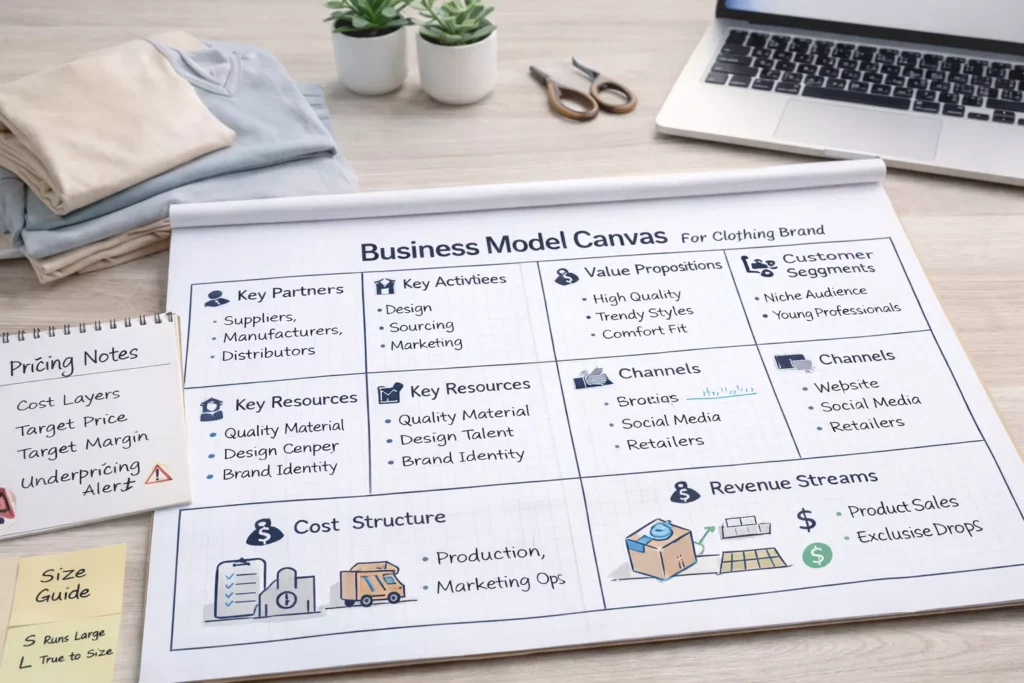
A real apparel business model includes:
- product category and target customer
- sourcing and manufacturing approach
- pricing strategy
- sales channels
- marketing and customer acquisition
- fulfillment and returns
- inventory management
- profit structure and cash flow
The reason this matters is simple. Two brands may both sell hoodies, but one may be profitable while the other struggles badly. The difference usually comes from business model design, not just product choice. One brand may have better margins, lower return rates, stronger repeat purchase, tighter SKU control, and better reorder planning. The other may have attractive products but poor inventory discipline and weak pricing logic.
A profitable model is not a single formula. It is a set of decisions that fit together properly.
Why So Many Apparel Brands Struggle With Profitability
A clothing brand can generate sales and still lose money. That is one of the biggest traps in fashion. Revenue looks exciting, but if margins are weak and operating costs are high, the business stays fragile.
Common reasons apparel brands struggle include:
- pricing too low
- overproducing too many styles
- weak gross margin
- high return rates
- high customer acquisition cost
- poor inventory turnover
- inconsistent product quality
- too much discounting
- unclear channel strategy
- weak repeat purchase behavior
This is part of why disciplined planning matters more now. McKinsey’s 2026 outlook highlights ongoing pressure from value-conscious consumers and a still-challenging growth environment, which means brands cannot rely on sloppy economics and hope that volume alone will fix it.
A profitable apparel business model protects against these risks by making sure the product is not only desirable, but commercially viable.

Ready To Start a Clothing Business?
Ready to start? If you want to start a clothing business or starting a clothing line, your business plan must define your brand identity, unique value proposition, target audience and customer needs. Decide whether to start a clothing brand, start a fashion business, or build an online clothing business with an online store or online marketplaces like shopify to set up an online store and start selling.
Consider upfront costs, sourcing a clothing manufacturer, managing the supply chain, and whether to follow fashion trends or offer secondhand clothing. Blend traditional business and new business models to create a strong fashion business model for long-term success.
Work with a fashion designer, an influencer, and focus on customer experience, shopping experience, and building a customer base. Whether starting your own clothing line or a retail business, choose a fashion brand name that fits the competitive clothing market and the clothing industry to achieve a successful clothing and running a successful apparel business future.
Start With a Clear Target Customer and Category
Profit usually starts with focus. A clothing brand that tries to serve everyone often creates weak products, weak messaging, and weak margins. A brand that serves a specific customer with a specific offer usually has a much better chance of building efficient growth.
You need clarity on:
- who the customer is
- what they buy regularly
- what problem or desire your product solves
- what price range feels natural to them
- where they discover and purchase clothing
- what level of quality they expect
A premium basics brand, a boutique womenswear label, a modest fashion line, a kidswear business, and a technical activewear brand all need different business models. Their margins, return behavior, content strategy, and reorder patterns will not be the same.
A narrower target customer usually helps profitability because it improves product-market fit and reduces wasted marketing spend. When the customer is clear, fabric choice, fit logic, price point, and channel strategy become easier to define.

Choose the Right Product Strategy
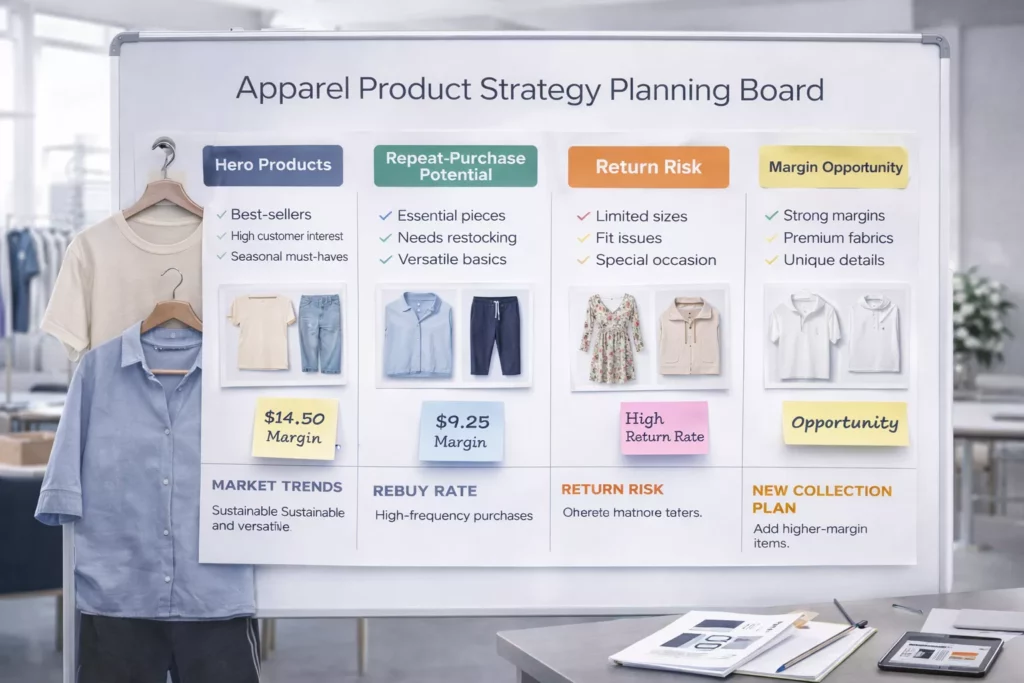
Not every clothing product creates the same profit potential. Some products are easy to sell but hard to make money on. Others may have stronger margins but lower purchase frequency. That is why profitable apparel brands think carefully about product strategy instead of launching random assortments.
A strong product strategy asks:
- is this item easy to reorder?
- does it support healthy gross margin?
- is it easy to fit and size consistently?
- does it have low or high return risk?
- does it support strong average order value?
- can it create repeat purchase?
- does it require high or low development complexity?
For example, premium basics often work well because they can support repeat buying if fit and fabric are strong. Highly trend-driven products may create short bursts of demand but can also increase markdown risk. Complex occasionwear may support stronger price points but may also bring higher return rates and more fit sensitivity.
The most profitable apparel businesses usually build around products that are both emotionally attractive and operationally manageable.
Understand Your Cost Structure Before You Scale
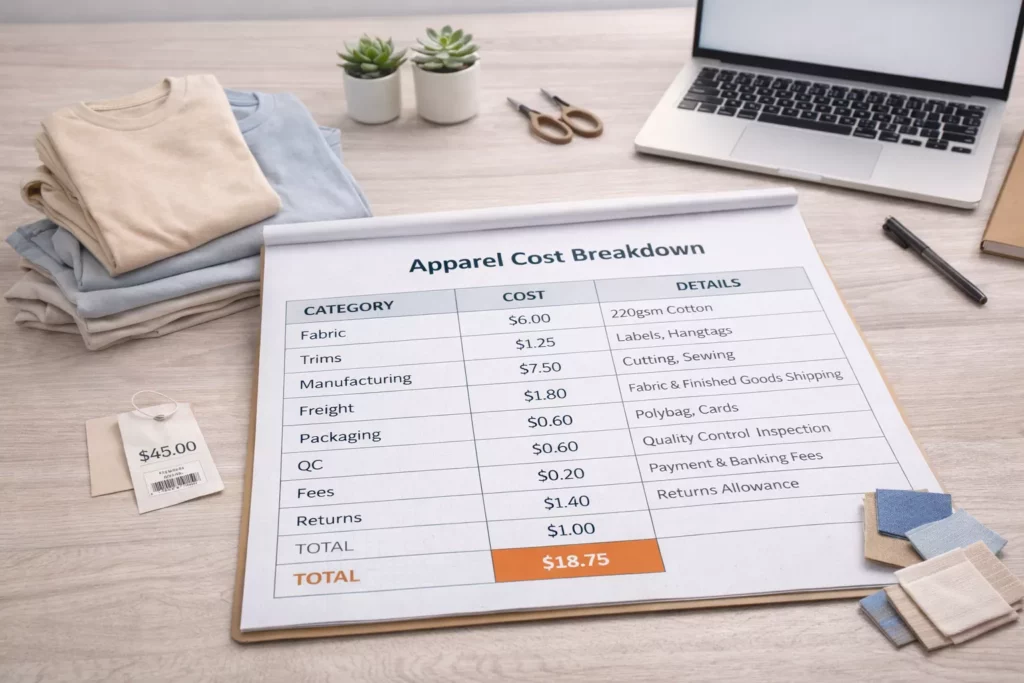
You cannot build a profitable model without understanding cost clearly. Many fashion founders know their factory quote, but not their real product cost.
A realistic apparel cost structure usually includes:
- fabric and trims
- manufacturing cost
- labels and packaging
- freight and duties if applicable
- quality control
- sampling cost allocation
- storage and handling
- payment fees
- shipping materials
- returns allowance
- marketing allocation if analyzing contribution margin
The U.S. Small Business Administration advises founders to calculate startup costs so they can estimate profit, understand funding needs, and plan for sustainability. That advice applies strongly to apparel because clothing brands often underestimate how many cost layers sit between production and profit.
A profitable apparel business model begins when you stop thinking in simple factory cost and start thinking in fully loaded product cost.
Create a Clothing Business Plan
Creating a successful plan to start a clothing line or start a fashion business begins by defining your fashion business model, choosing whether to operate an online clothing store or a hybrid online business and physical retail approach; this decision informs your business needs, retail price strategy, and how you will set up an online store. Your marketing plan should build brand awareness through the right look and feel and consistent clothing designs that promise high-quality garments, from formal clothing to casual lines, while recognizing opportunities in secondhand clothing and new business models alongside traditional business models.
To start a clothing line or consider starting your own clothing line and start a fashion business, research the clothing market and competitive fashion industry to choose a strong fashion brand name and the right retail price point for a successful clothing venture; understanding how to run and grow an online clothing business is essential for running a successful apparel business in the modern clothing industry.
Build Around Healthy Gross Margin
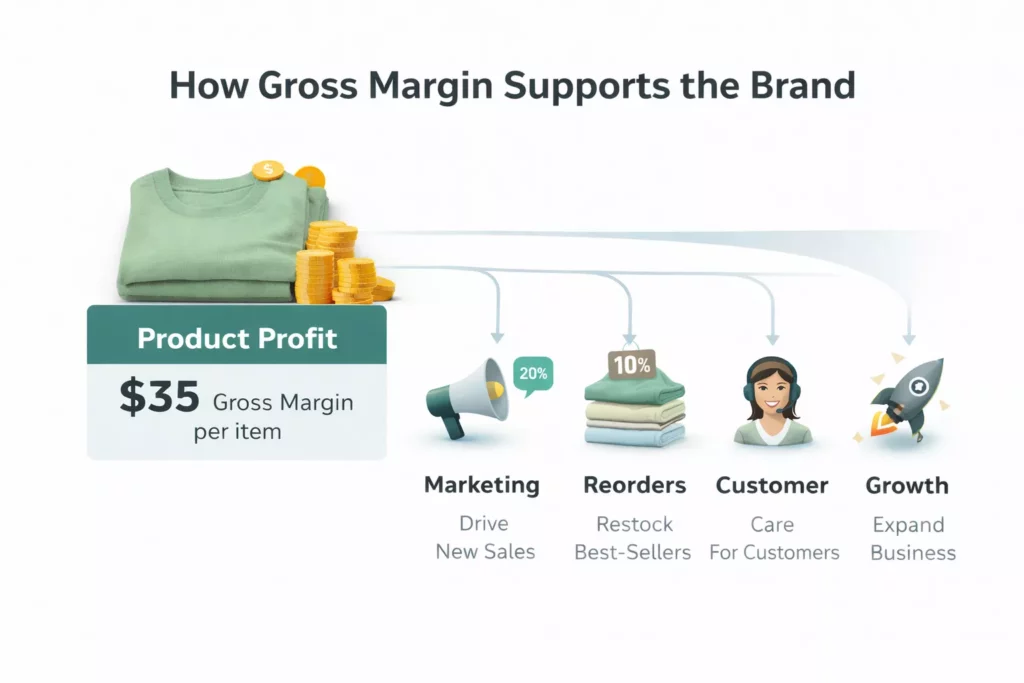
Gross margin is one of the most important foundations of apparel profitability. It is not your final profit, but it tells you whether your product has enough financial room to support the rest of the business.
A healthy gross margin helps cover:
- Marketing
- Platform fees
- Creative production
- Fulfillment mistakes
- Returns and exchanges
- Team costs
- Future inventory buys
- Seasonal markdowns
This is where many brands get stuck. They price too low, create beautiful sales volume, and then realize there is no real oxygen left in the business. That is why a profitable clothing brand needs enough margin not only to sell, but to survive normal retail reality.
Good gross margin also gives you strategic flexibility. It lets you run promotions carefully, test paid acquisition, improve packaging, and reinvest in stronger inventory without panic.
Price for Profit, Not for Fear
A profitable apparel business model depends heavily on pricing. Many founders underprice because they are afraid customers will not buy. Others copy competitor prices without understanding their own costs. Both approaches can damage the business.
Your pricing should reflect:
- fully loaded cost
- target gross margin
- customer expectations
- category norms
- brand position
- sales channel
- discount tolerance
McKinsey’s 2026 fashion outlook emphasizes that consumers remain value-conscious, which means pricing needs to feel credible and aligned with the product experience. That does not mean cheap. It means coherent.
A profitable brand usually prices with discipline. It knows what the garment must contribute, not only what sounds attractive. That is especially important if you want the product to survive returns, promotions, or future wholesale expansion.

Choose a Sales Channel Model That Matches Your Brand
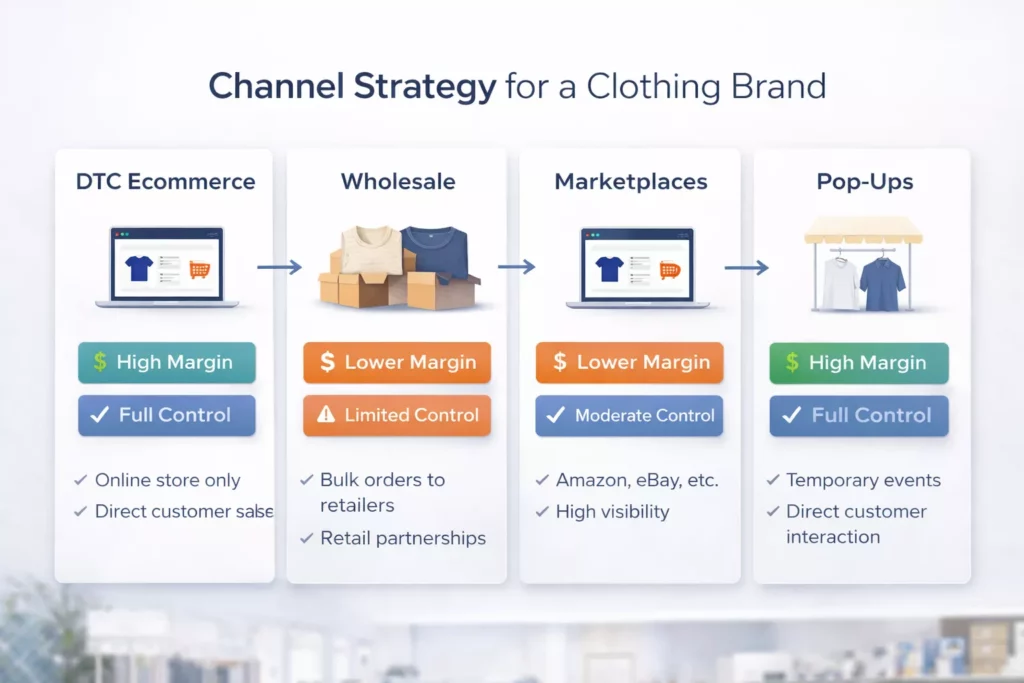
Your business model changes dramatically depending on how you sell. The main channel options usually include:
- direct-to-consumer ecommerce
- wholesale
- marketplaces
- pop-ups and events
- hybrid channel models
The OECD’s 2025 e-commerce update notes that modern commerce measurement now includes AI-assisted transactions and emerging digital ordering channels, which reflects how much channel behavior is evolving. For clothing brands, that means the route to purchase is broader than before, but channel complexity is also higher.
A DTC brand usually keeps more control over pricing, customer data, and brand presentation. A wholesale-led business may move larger volume through retail partners but usually with tighter unit margin. Marketplaces can add reach but often reduce brand control. Pop-ups can support discovery and local validation but are not always scalable as a main channel.
A profitable apparel business model picks the channel that fits the product, margin structure, and founder strengths, not just the channel that looks exciting on social media.
Direct-to-Consumer Can Be Powerful, but Only if Marketing Works
A lot of modern fashion founders prefer direct-to-consumer because it allows brand control and stronger gross margins on paper. But DTC is only profitable when customer acquisition, conversion, and retention are managed well.
A DTC apparel business model usually depends on:
- strong product pages
- compelling content
- clear fit and fabric communication
- email and SMS retention
- paid ad efficiency
- repeat purchase behavior
- manageable return rates
This is why DTC is not simply “more profitable” by default. If customer acquisition cost rises too far, much of the margin advantage can disappear. That said, DTC can become very powerful when a brand has a strong niche, clear product-market fit, and repeat purchase behavior.
DTC works especially well for brands that rely on story, identity, and direct customer trust.

Way To Set Up An Online Clothing Store
To choose a business model, start by researching your niche in the fashion world, deciding whether you want a modern clothing business or a more classic approach; many aspiring fashion entrepreneurs find success blending fashion design with smart marketing.
Consider sourcing through wholesale clothing or developing creating clothing lines to avoid competing with existing clothing giants, and evaluate whether a small clothing business or a larger operation is right for you. Learn how to learn how to start building a popular online presence using platforms like instagram to shape the online shopping experience.
Decide if a fast fashion-style timeline or a sustainable, quality-first approach fits your values; the key to long-term success is consistency and customer loyalty. A hybrid model combines direct-to-consumer sales with wholesale partnerships to make your business profitable and ultimately successful fashion in a crowded market.
Wholesale Can Improve Volume and Predictability
Wholesale can be a strong part of a profitable apparel business model when the product is commercially solid and the brand can support delivery requirements. Instead of selling one unit at a time, wholesale lets the brand place larger orders through retail buyers.
This can improve:
- inventory movement
- production efficiency
- cash conversion through account orders
- brand exposure in existing stores
- sales without full direct marketing burden
But wholesale works only if your costing can support it. Retailers need their own margin, which means your wholesale price must still leave enough room for your business to operate safely. A lot of brands fail here because they want retail-level product execution but wholesale-level pricing flexibility without the necessary cost discipline.
Wholesale is often best for brands with boutique-friendly product lines, stronger production systems, and clear B2B sales capability.

Hybrid Models Often Become the Long-Term Goal
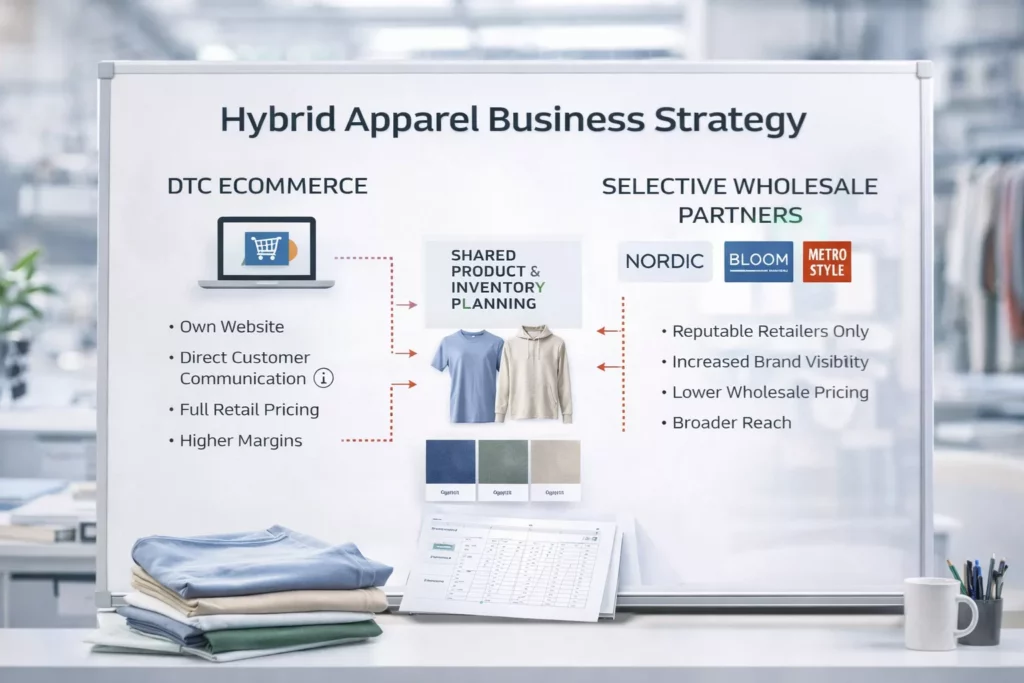
Many successful apparel businesses eventually combine channels. They may use direct retail for margin and customer data while using selective wholesale for reach and brand visibility. That can be a powerful long-term structure because it balances control with distribution.
A hybrid model can help a clothing brand:
- diversify revenue
- reduce overdependence on one channel
- build brand equity through DTC
- gain broader visibility through stockists
- learn from both customer feedback and buyer behavior
But hybrid models are not automatically simple. They require stronger inventory planning, price consistency, and channel discipline. A brand that discounts heavily in DTC may upset wholesale partners. A brand that overcommits stock to wholesale may weaken its own ecommerce experience.
Hybrid works best when the business is already organized enough to manage channel tension intelligently.
Traditional Fashion Business Model
The traditional fashion business model centers on seasonal collections, where designers and brands plan months ahead to produce garments through established supply chains. Production often involves bulk manufacturing, relying on predictable inventory cycles and long lead times to fill orders placed by multi-brand wholesalers and department stores. Retailers, both physical and online, then sell to consumers at marked-up prices that cover costs, margins, and promotional expenses.
Distribution depends heavily on relationships between designers, manufacturers, and retail buyers, making the model sensitive to forecasting errors and changing trends. The emphasis on brick-and-mortar presence, seasonal marketing campaigns, and clear price tiers supports brand positioning but can lead to excess stock and markdowns.
Despite risks, this model rewards scale, brand recognition, and efficient logistics, with established players leveraging buying power and historical data to optimize production, pricing, and placement across multiple market channels.
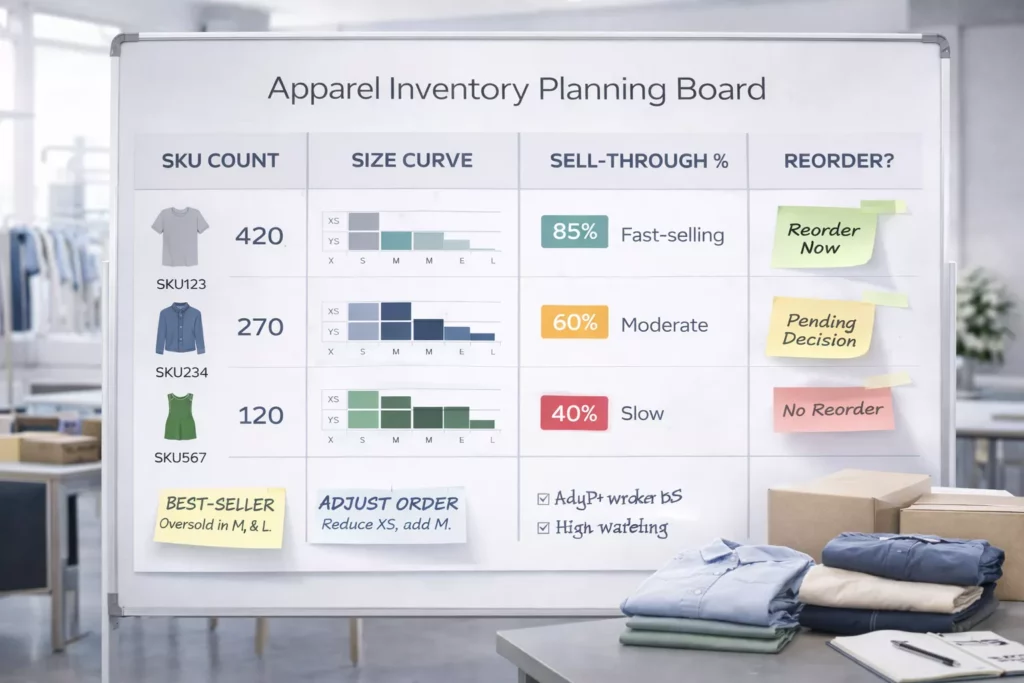
Inventory Discipline Is a Profit Engine
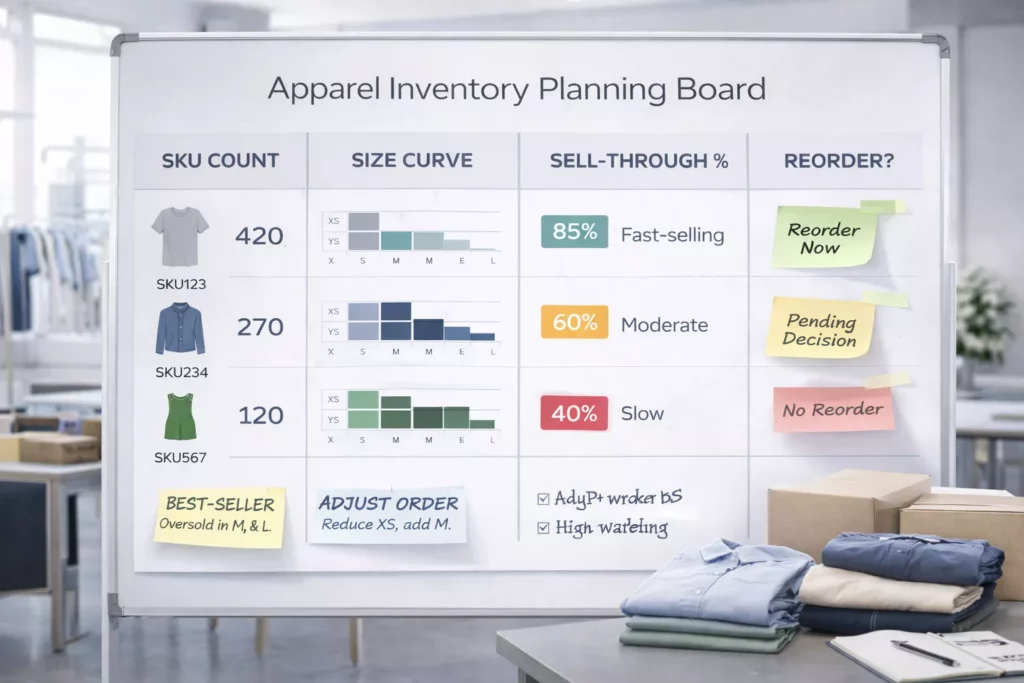
A profitable apparel business model is not only about selling well. It is about buying and producing wisely. Inventory is one of the biggest places where fashion businesses lose money.
Common inventory mistakes include:
- launching too many styles
- ordering too deep without demand proof
- carrying too many colors
- weak size planning
- poor sell-through analysis
- delayed markdown decisions
- slow reorders on winning products
This is why profitable brands usually start narrow. They focus on hero products, controlled assortments, and repeatable winners. Inventory discipline improves cash flow, reduces dead stock, and makes content and forecasting easier.
In fashion, one of the biggest profit leaks is not bad design. It is excess stock that never sells at full price.
Build for Repeat Purchase, Not Just First Sales
The most profitable apparel businesses usually do not survive on first orders alone. They build systems that increase customer lifetime value. That means they think beyond launch hype and focus on what brings buyers back.
Repeat purchase is often stronger when the brand has:
- reliable fit
- strong fabric quality
- easy category extension
- consistent product experience
- effective post-purchase communication
- strong basics or replenishable products
- trust in delivery and returns
This is especially important because direct customer acquisition can be expensive. If every sale requires a completely new customer, profitability gets harder. If customers return naturally, the economics improve.
A profitable apparel business model usually includes products or collections that customers can buy again, not only once.
Keep Returns Under Control
Returns are one of the biggest threats to apparel profitability, especially in ecommerce. Even a product with good gross margin can become much weaker if return rates are high.
Returns often rise because of:
- poor sizing communication
- weak product photography
- inaccurate fabric or fit descriptions
- quality inconsistency
- damaged deliveries
- customer expectation mismatch
That is why profitable apparel business models usually invest in:
- better size guides
- clearer product descriptions
- honest fit notes
- stronger QC
- better imagery
- lower product complexity where possible
Reducing returns is not only an operations task. It is a profit strategy. Every avoided return protects margin, time, and customer trust.

Align Product Development With Profitability
Product development is where many future margin problems begin. Brands often approve garments because they look exciting, without asking whether the product is actually efficient to build and sell.
A profitable development process looks at:
- fabric cost
- trim complexity
- labor intensity
- fit risk
- category return behavior
- MOQ impact
- price ceiling in the market
- whether the product supports brand goals
For example, a highly complex garment with custom details may feel premium, but if the price required for profitability is higher than the market will accept, the product may not belong in the first collection. Sometimes profitability comes from simplifying without losing identity.
This is one reason profitable brands usually balance creative ambition with commercial discipline. They do not remove product character. They design with business logic in mind.

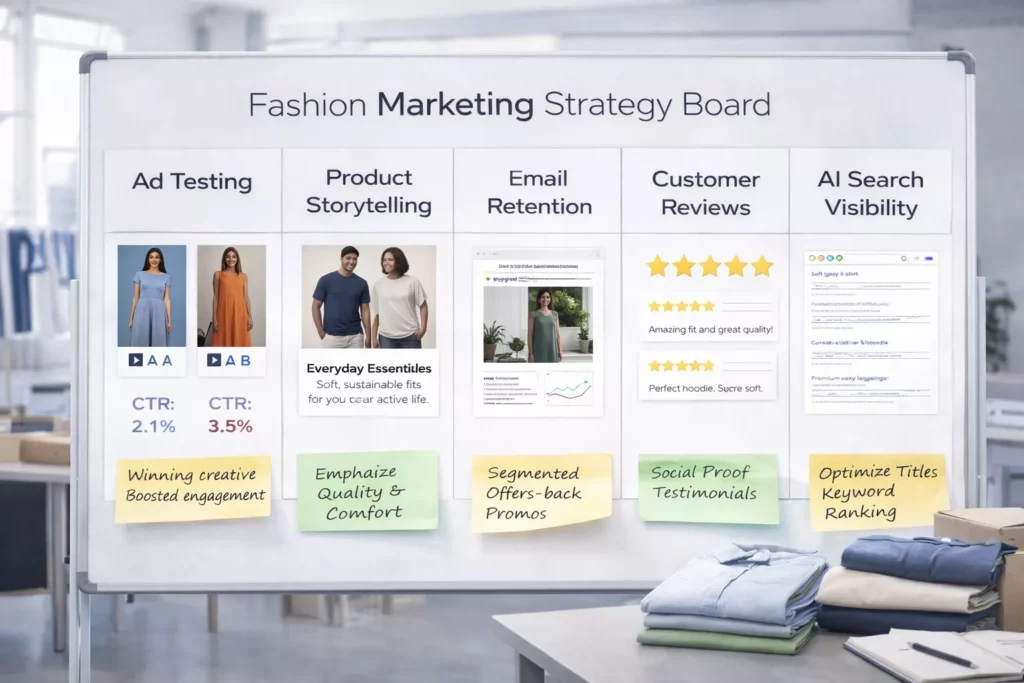
Marketing Must Be Efficient, Not Just Attractive
A profitable apparel business model needs marketing that creates sales without wasting budget. Beautiful content alone is not enough if it does not convert. At the same time, performance marketing alone is not enough if the brand has no identity or trust.
Effective apparel marketing usually combines:
- strong product storytelling
- clear niche targeting
- direct-response testing
- retention marketing
- customer reviews and social proof
- founder or brand-led content
- product education around fit, fabric, and use case
McKinsey’s 2026 report highlights how product discovery is shifting through AI-driven paths and new digital behaviors, which makes clarity and structured content more important for modern fashion brands.
A profitable business model does not overspend to look loud. It uses content and targeting to make each customer interaction more efficient.
E-commerce Clarity Is Part of Profitability
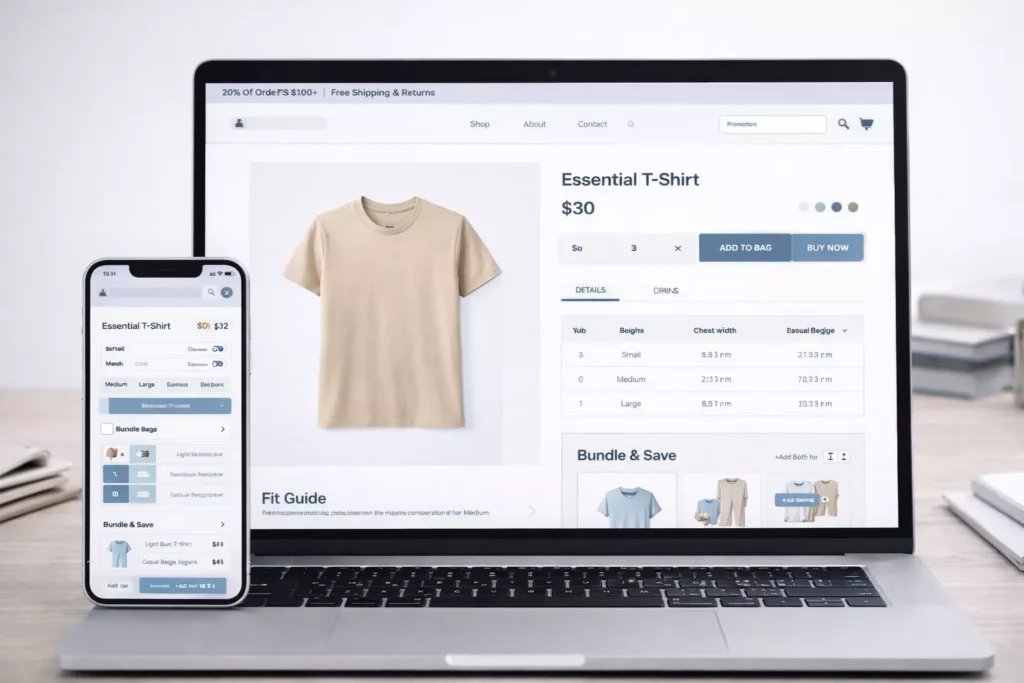
Because digital commerce is changing, your website and product presentation are part of the business model, not just design assets. The OECD’s updated e-commerce guidance shows how digital ordering pathways are broadening, which reinforces how important clear online product communication has become.
A profitable apparel ecommerce setup usually has:
- strong product titles
- clear fit guidance
- fabric descriptions that actually help
- accurate shipping and return information
- easy navigation
- upsell and bundle logic
- mobile-friendly experience
- conversion-focused imagery
When e-commerce clarity improves, returns often decline, conversion often improves, and paid traffic becomes more efficient. That directly supports profitability.
Create Your Brand Identity
Create Your Brand Identity starts with a clear understanding of your values and the promise you make to customers; define your mission, target audience, and the emotional impact you want to deliver. Establishing a distinct voice and visual language—logo, color palette, and typography—helps your brand stand out and become recognizable across touchpoints.
Consistency is essential: apply your visual and verbal guidelines consistently across web, social, packaging, and customer service to build trust and familiarity. Develop a concise brand story that communicates why you exist and how you solve problems, making it easy for people to connect and remember you.
Finally, evolve intentionally by collecting feedback and measuring engagement, then refine your identity without losing core values. A strong brand identity is not just a logo but an experience that aligns aesthetics, messaging, and behavior to create lasting loyalty.
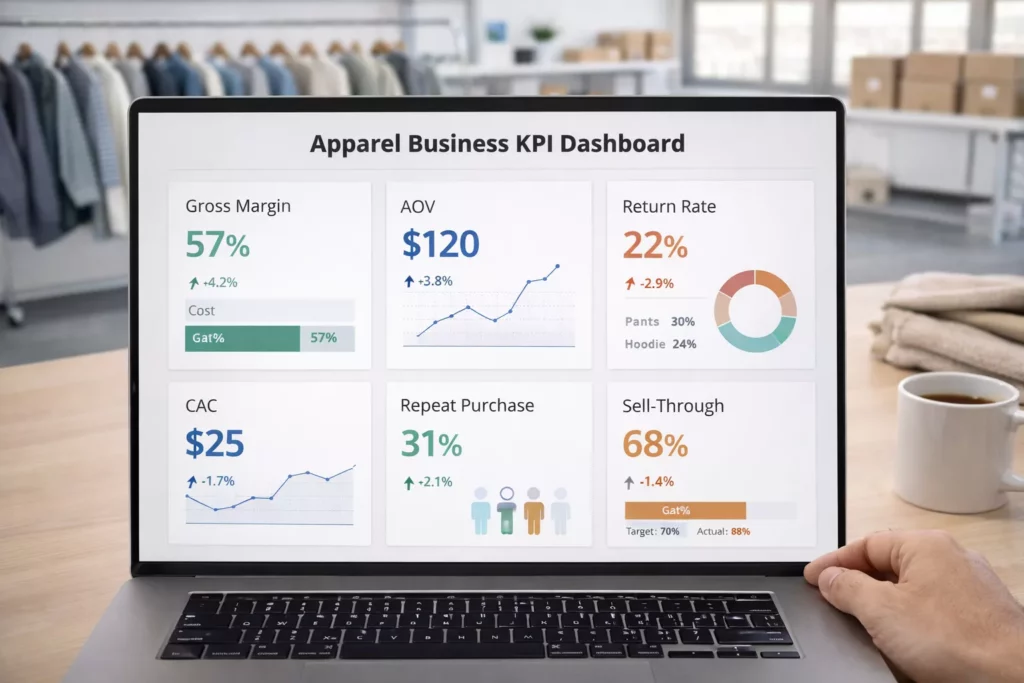
Watch the Key Metrics That Actually Matter
A profitable apparel business model is built on measurement. Founders should know more than top-line revenue. They need visibility into the metrics that reveal whether the model is getting healthier.
Important apparel business metrics often include:
- gross margin
- contribution margin
- average order value
- return rate
- inventory sell-through
- customer acquisition cost
- repeat purchase rate
- reorder rate on hero products
- discount rate
- cash conversion timing
When these metrics are watched consistently, you can spot problems early. You may notice a product category with weak repeat purchase, a return problem tied to one fit block, or a collection that looks strong but sells too slowly at full price.
Profitability usually improves when the brand gets sharper with metrics, not only more creative with product.
Cash Flow Is as Important as Profit
A brand can be technically profitable on paper and still struggle if cash flow is poorly managed. Apparel businesses often tie up money in inventory before revenue comes back. That is why a profitable model also needs healthy timing.
Cash flow pressure usually appears around:
- bulk production payments
- freight and import timing
- slower inventory sell-through
- delayed wholesale payments
- high marketing spend before revenue returns
- heavy discounting
- weak reorder planning
The SBA emphasizes startup cost calculation as a way to understand profit timing and funding needs. In apparel, that matters because fashion inventory often absorbs cash early and releases it slowly.
A profitable apparel model should be designed to keep cash moving, not just margin looking good on spreadsheets.

Choosing a Clothing Manufacturer and Business Model
Choosing the right clothing manufacturer is a strategic decision that shapes everything from cost and quality to lead times and brand identity; weigh factory capabilities, minimum order quantities, communication speed, and compliance certifications against your target price point and desired production volume, especially if your plan leans into fast fashion with rapid seasonal turns.
Equally important is selecting a business model that aligns with your values and resources — direct-to-consumer, wholesale, private label, or made-to-order each require different workflows, margins, and marketing tactics, so map operational needs to expected customer experience.
Be realistic about what the fashion business takes: strong supplier relationships, testing samples, contingency planning for delays, and ongoing quality control are essential investments that protect brand reputation and ensure scalable growth while you refine pricing, inventory strategies, and sustainability commitments.
Common Apparel Business Models That Can Be Profitable
There is no single profitable apparel model, but some common patterns work well when executed properly.
Premium Basics Brand
Works well when fit, fabric, and repeat purchase are strong.
Niche Activewear Brand
Can be profitable if customer identity is clear and performance claims are real.
Boutique Wholesale Label
Can work well with commercially strong collections and disciplined production.
DTC Community-Led Brand
Works when content, brand loyalty, and repeat purchase reduce dependence on cold acquisition.
Private Label Essentials Business
Can be profitable through streamlined product development and controlled assortment.
The key is not copying the label of the model. It is designing the actual economics and operations behind it properly.
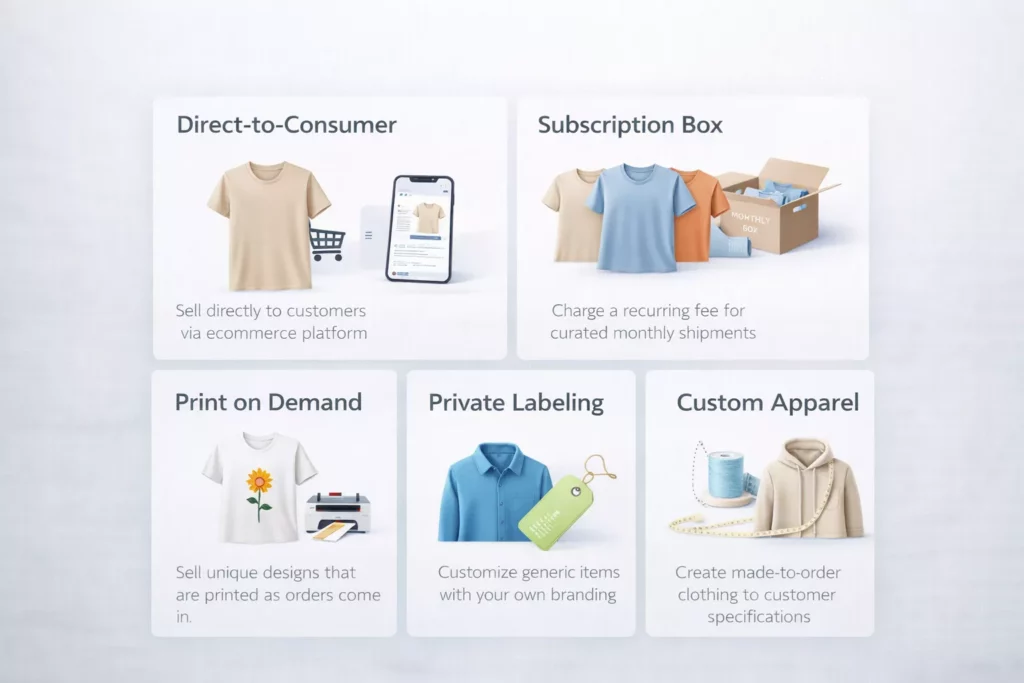
Common Revenue Models in Apparel Businesses
| Revenue Model | Description |
| Direct-to-consumer ecommerce | Brands sell products directly through their website |
| Wholesale distribution | Products sold to retailers and boutiques |
| Marketplace selling | Products sold through platforms like Amazon or Etsy |
| Subscription apparel | Recurring clothing delivery services |
| Private label manufacturing | Producing garments for other brands |
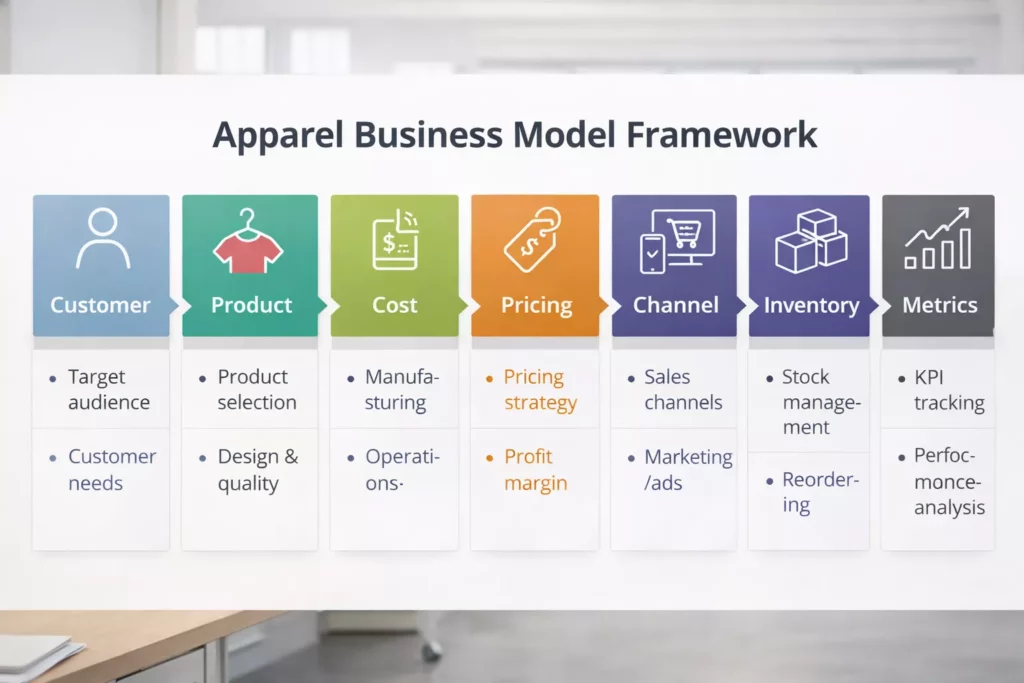
A Simple Framework for Building Your Apparel Business Model
If you want a practical structure, use this framework:
Define the Customer
Know exactly who the product is for.
Choose the Product Logic
Build around categories with commercial potential, not random inspiration.
Calculate Fully Loaded Cost
Use landed and operational reality, not only factory quote.
Set a Margin-Safe Price
Make sure the product supports profit after normal business friction.
Choose the Right Channel
DTC, wholesale, or hybrid should match your strengths and current stage.
Keep the Assortment Focused
A smaller, sharper collection is usually easier to profit from.
Protect Return Rate and Reorder Potential
Build for repeat trust, not one-time hype.
Watch Metrics and Cash Flow
Profitability improves when the model is measured honestly.
This framework sounds simple, but it is exactly where many brands go wrong by skipping steps.
Key Components of a Profitable Apparel Business Model
| Component | Purpose |
| Product strategy | Defines what garments the brand sells |
| Manufacturing strategy | Determines sourcing and production cost |
| Pricing model | Ensures profitable margins |
| Sales channels | Defines how products reach customers |
| Marketing system | Generates traffic and demand |
| Inventory management | Controls stock and cash flow |
ApparGlobal
Many clothing brands become more profitable when they work with apparel partners that understand product development, cost control, MOQ planning, sourcing strategy, and scalable production systems. Companies such as ApparGlobal help clothing brands align garment specifications, fabric choices, pricing logic, and manufacturing workflows so the business model becomes more practical, more margin-aware, and more growth-ready from the beginning.

Apparel Business Profitability Checklist
Before scaling your clothing brand, confirm that:
- Your product pricing supports healthy margins
- Inventory levels match real demand
- Return rates remain manageable
- Customer acquisition cost is sustainable
- Your brand has repeat purchase potential
Brands that monitor these factors are far more likely to build long-term profitability.
Conclusion
Learning how to build a profitable apparel business model is really about building a clothing brand that works financially as well as creatively. That means choosing the right customer, the right product strategy, the right pricing structure, the right channel mix, and the right inventory discipline. It also means understanding that margin alone is not enough. The business must also handle marketing, returns, cash flow, and repeat purchase in a healthy way.
The strongest apparel brands are rarely the ones doing the most things at once. They are usually the ones doing a few important things very well. They know what they sell, who they sell it to, why the customer buys, and how each sale contributes to the next stage of growth. In a fashion market that remains competitive and value-conscious, that kind of clarity matters more than ever. If you build your apparel business model with that level of discipline, your brand has a much better chance not only to launch, but to last.