

Clothing Size Guide for Your First Fashion Collection Launch
One of the most common mistakes new clothing fashion brands make is assuming that a strong first clothing collection needs to look big. Founders often believe more styles will make the brand feel more established, more impressive, or more complete. In reality, the opposite is usually true. A large first collection can create confusion, increase sampling costs, raise inventory risk, weaken your brand story, and stretch your cash too thin before the market even tells you what it wants.
Your first collection does not need to prove that you can make everything. It needs to prove that you understand your customer, that your product has a clear point of view, and that your brand can deliver something worth buying again. The strongest first collection is rarely the one with the most pieces. It is the one with the clearest direction.
This is why the question is not simply, “How many styles should I launch?” The real question is, “How many styles can I launch well, market clearly, produce confidently, and sell without losing control of cost, quality, and focus?” That answer depends on your niche, budget, production model, price point, and launch strategy.
In this guide, you will learn how to decide the right number of styles for your first collection, why smaller launches often perform better, what factors should influence your assortment size, how many SKUs different brand types usually need, and how to build a collection that feels intentional rather than overcrowded.
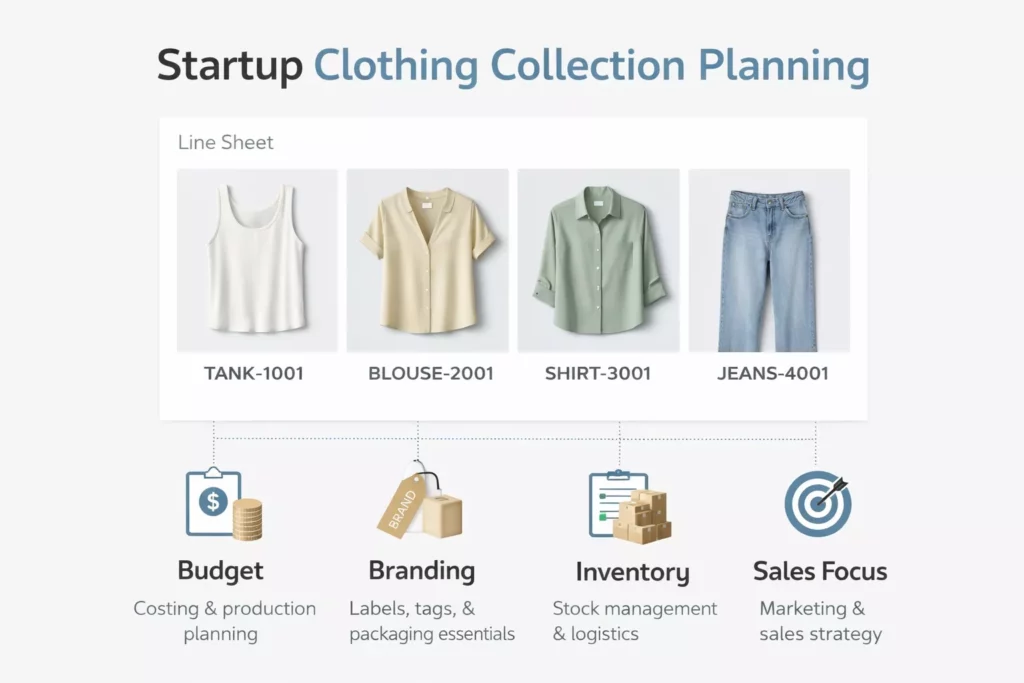
Fashion Industry Product Volume
The global apparel industry produces more than 100 billion garments each year, making it one of the most competitive consumer product markets in the world.
Because of this high level of competition, successful startup brands often focus on narrow product categories and strong hero items rather than launching large collections immediately.
Why This Question Matters More Than Most Founders Realize
Many new founders treat assortment size as a creative decision only. It is actually a strategic business decision. The number of styles in your first collection affects almost every part of your launch. It changes your development cost, sample count, MOQ pressure, inventory depth, photography workload, website complexity, content planning, and how easily customers understand your brand.
If you launch too many styles, your budget spreads across too many products. That usually means less inventory depth per style, weaker product photography, slower decision-making, and more chances for sizing or quality issues. It also makes marketing more difficult because the customer does not know what the brand is really known for.
If you launch too few styles without a clear strategy, the brand may feel incomplete or too narrow to attract attention. So the goal is not automatically to go tiny. The goal is to choose an assortment that matches your current stage.
Your first collection is not a final statement. It is a market test, a brand introduction, and a business experiment. The right number of styles helps you learn faster and spend more intelligently.
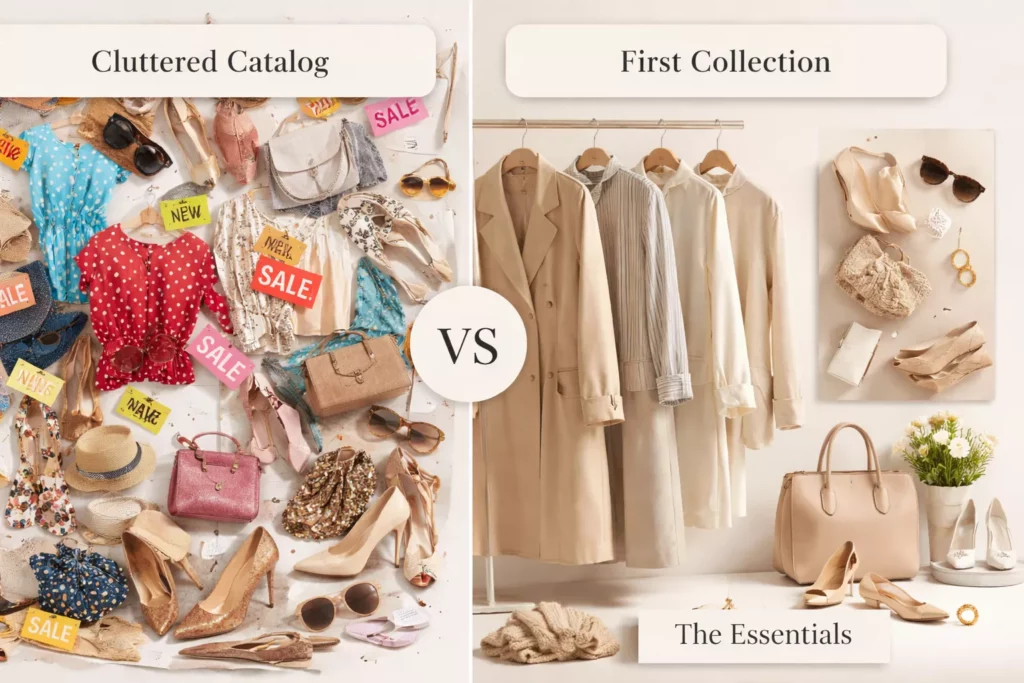
The Biggest Mistake: Confusing a Collection With a Catalog
A first collection is not supposed to function like a department store. It is not meant to offer every possible silhouette, color, and use case. It is supposed to present a point of view.
A catalog says, “We have many options.” A first collection should say, “This is who we are.” That difference matters. When founders build a first collection like a catalog, they usually add too many categories too early. They might include hoodies, t-shirts, cargo pants, caps, jackets, knitwear, and accessories all at once without a clear reason why those products belong together. The result is a scattered brand identity.
A focused collection, on the other hand, creates coherence. It may include only a few styles, but those styles work together visually and commercially. The colors support one another. The fabrics make sense together. The silhouettes feel connected. The customer quickly understands the brand’s taste and position. This is what makes smaller first collections powerful. They are easier to understand, easier to produce, and easier to market. They feel curated rather than random.
Secrets of Successful Fashion Brand Positioning
Successful fashion brand positioning begins when a designer or label can clearly define the target customer and target demographic, then determine how to represent aspiration while solving real needs like clothing sizes and body shape variation. A practical guide is to start small, specialize in a niche, and calculate production capability across wholesale, retail, and online stores so the production process can measure quality and grading to reach the right size for diverse shoppers.
Another crucial tip for managers and engineers is to factor in the constraint of cost and the learning curve when scaling: participate with trusted retailer partners to boost popularity, offer occasional discounts, and keep many options while covering variation. A smart manager will measure demand, shopper feedback, and subsequent metrics to adapt labels and catalogs across e-commerce and physical shop formats.
What “A Style” Actually Means in Fashion Planning
Before deciding how many styles you need, define what counts as a style. In apparel terms, a style usually means one distinct garment design or silhouette. A heavyweight oversized tee is one style. A cropped hoodie is another. A relaxed wide-leg trouser is another.
Colorways are not always separate styles. Sizes are not separate styles. This matters because new founders often confuse style count with SKU count. A collection with three styles can still produce many SKUs if each style comes in three colors and five sizes.
For example, imagine this simple first collection:
- One oversized t-shirt
- One heavyweight hoodie
- One relaxed sweatpant
That is only three styles. But if each style comes in three colors and five sizes, you are already managing 45 SKUs. That is a very different level of complexity than “just three products” sounds like at first.
This is why style planning must be connected to SKU planning. A collection can look small on paper and still become operationally heavy if color and size options multiply too quickly.
For Most New Brands, Fewer Styles Is Usually Better
In most cases, the safest and smartest first launch is smaller than the founder originally imagined. That is because early-stage clothing brands need to focus more on breadth.
A smaller collection gives you several advantages. It reduces sampling expense because there are fewer garments to develop. It lowers production risk because you can concentrate quality control on a tighter range. It improves your content because every style can receive better photography and stronger storytelling. It helps sales because the customer can understand the brand faster. And it protects cash flow because you are not splitting your opening budget across too many uncertain bets.
There is also a hidden strategic benefit: a small first collection makes it easier to identify your hero product. That matters because many successful clothing brands do not grow because the full first collection works equally well. They grow because one or two products clearly outperform the rest. A focused assortment helps you see that faster.
When brands launch too broadly, it becomes harder to know what is actually resonating. The data gets messy. The content gets diluted. The product story gets weaker.
Image Prompt:
Minimal first collection display featuring a few carefully selected garments with strong visual consistency, premium editorial studio look, 16:9.
The Best First Collection Size for Most Startup Brands
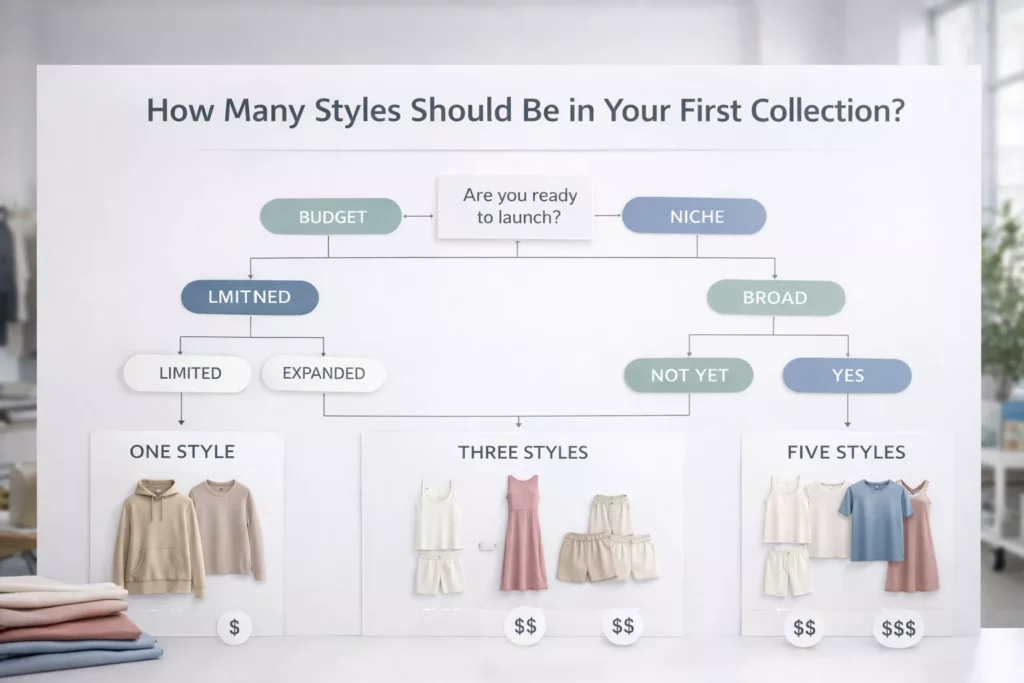
There is no universal rule, but for many startup clothing brands, the ideal first collection often falls in the range of one to five styles, depending on category, budget, and complexity.
A one-style launch works well when the product is distinctive and the brand is built around a clear hero item. This is common for specialty brands, premium basics, or product-first startups with a strong flagship design.
A two-to-three-style launch is often the strongest sweet spot for many new brands. It gives you enough assortment to look like a collection without overcomplicating operations. It also creates styling opportunities and stronger visual storytelling.
A four-to-five-style launch can work if the products are highly coordinated, the production setup is solid, and the founder has the budget and discipline to manage development, content, and inventory carefully.
Once you go beyond that, the risk starts rising fast unless you already have strong product development skills, manufacturing confidence, and working capital.
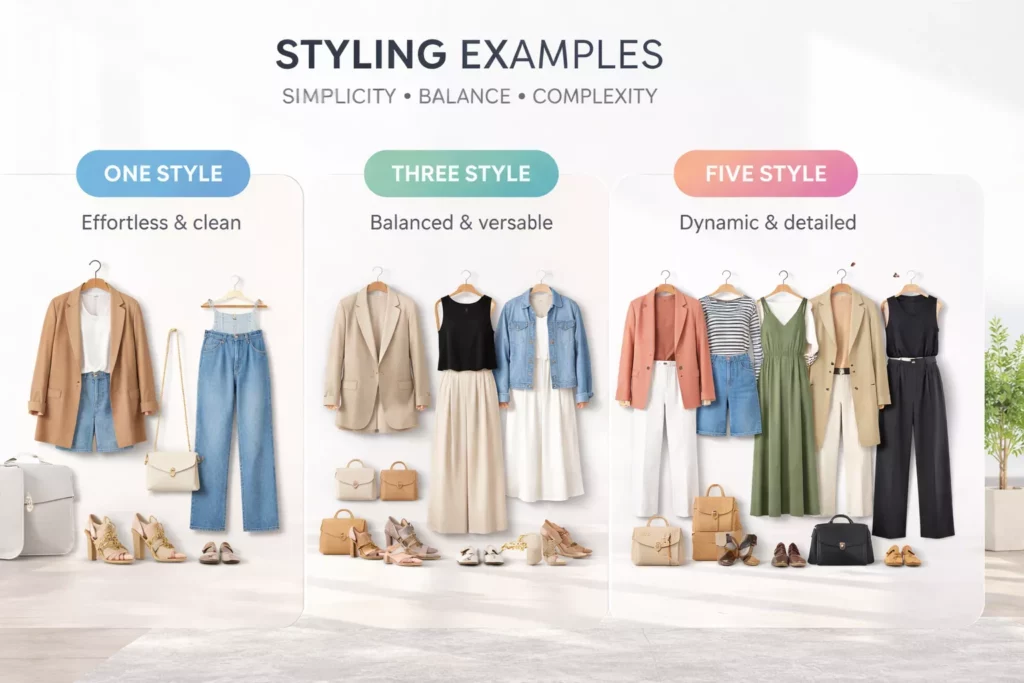
First Collection Size Comparison
| Collection Size | Best For | Risk Level |
| 1 style | Product-focused brands or hero-item launch | Low |
| 2–3 styles | Most startup clothing brands | Low–Moderate |
| 4–5 styles | Small capsule collections | Moderate |
| 6+ styles | Established brands with larger budgets | High |
One-Style Launch: When a Hero Product Is Enough
Some of the most effective startup launches begin with just one hero product. This approach works best when the product has a strong identity, a clear customer need, or a sharp point of differentiation.
A one-style launch can work especially well for:
- Premium blank essentials brands
- Niche performance products
- Statement signature pieces
- Product-led social media brands
- Test launches with limited capital
If your hero product is strong enough, one style can actually feel more confident than a weak multi-style collection. It tells the market that you are focused. It also allows you to pour your energy into fit, fabric, branding, photography, and messaging around a single item.
The risk is that the product must truly carry the brand. If it feels ordinary, a one-style launch can look too thin. That is why this model works best when the founder has real conviction about the product angle and knows how to tell the story well.
A one-style launch is not “small” in a weak sense. It is concentrated. That can be powerful when executed properly.
Two to Three Styles: The Strongest First-Collection Formula for Most Brands
For many new clothing brands, two to three styles is the most balanced starting point. It gives the collection enough shape to feel intentional, but not so much complexity that the brand loses focus.
This structure works because it allows one product to lead and the others to support. For example, a streetwear basics brand might launch with an oversized tee, hoodie, and sweatpants. A women’s resortwear brand might launch with a dress, a matching set, and a lightweight layering shirt. A modest fashion startup might launch with a tunic, trousers, and an outer layer.
This type of assortment gives you flexibility in photography, styling, and average order value. Customers can buy one item or build a small look. The brand also feels more complete without becoming operationally chaotic. Most importantly, two to three styles are usually enough to communicate your aesthetic clearly. That is often all a first collection really needs to do.
Four to Five Styles: When It Works and When It Becomes Risky
A first collection with four to five styles can work well if the brand has a strong concept, a stable budget, and a clear production plan. This size gives more room for range building and layered storytelling. It can also support stronger merchandising if the products are highly connected.
For example, a five-style collection might include:
- One hero top
- One bottom
- One layering piece
- One alternative silhouette
- One statement or styling piece
That structure can feel complete and professional. But it becomes risky when founders use five styles as an excuse to expand into unrelated categories or too many price points. The more styles you add, the more every mistake multiplies. More patterns, more sample rounds, more colors, more fit issues, more size charts, more photography, more inventory decisions.
A five-style collection is not automatically too large. It is only too large when the founder cannot support it well. Collection size should be earned by clarity, not driven by excitement alone.
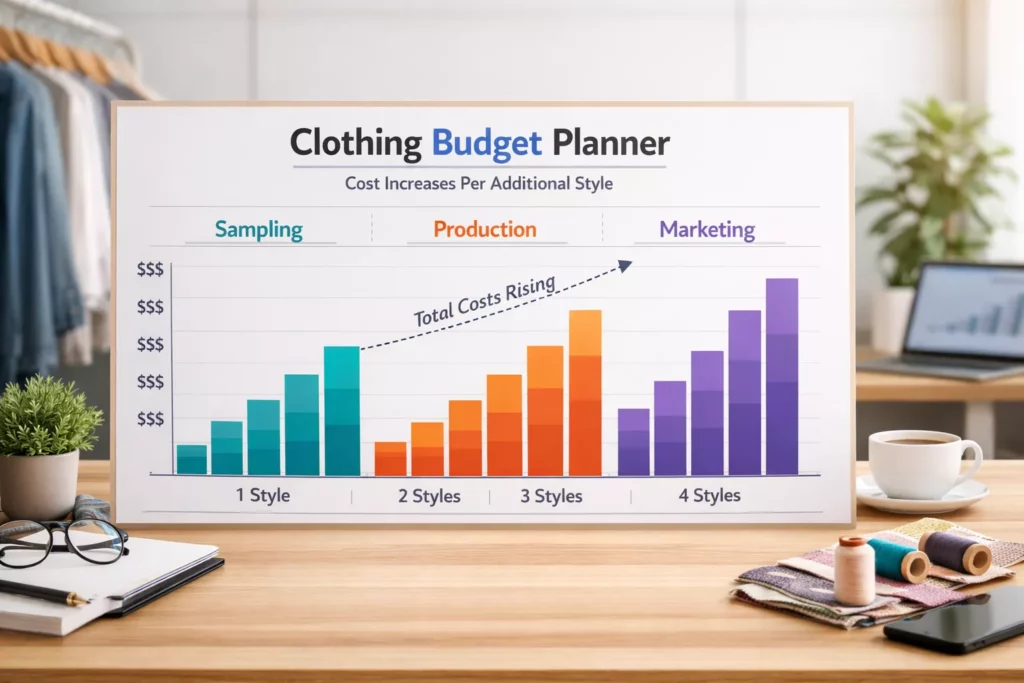
Your Budget Should Help Decide the Number of Styles
Creative ambition should never be separated from budget reality. If your first-collection budget is limited, the number of styles should stay limited too.
Each additional style adds cost in multiple ways:
- More tech pack work
- More sample development
- More fit revisions
- More fabrics or trims
- More photography time
- More website setup
- More inventory commitment
- More chances for leftover stock
This is why a three-style collection is not three times the work of one style. It can feel like much more than that because of the operational layering involved.
If your budget is tight, your first priority should be product strength and launch clarity, not visual abundance. A smaller collection with better execution almost always performs better than a bigger collection done halfway.
A simple budgeting mindset can help: if adding a new style weakens your ability to sample properly, photograph properly, market properly, or stock properly, that style should probably wait for collection two.
Your Niche Also Changes the Right Collection Size
Not every niche needs the same first assortment size. The right number of styles depends on how your customer shops and how your category behaves.
A basic brand can often launch with very few styles because repetition and fit are part of the value. A single excellent tee can carry serious weight if the fabric, cut, and branding are right. A fashion-forward occasionwear brand may need slightly more variety because customers expect more visual differentiation and styling options. An activewear brand may need at least a top and bottom to create a stronger purchase experience, especially if the brand is promoting sets or performance use.
A children’s wear brand may need tighter coordination across sizes and use cases, which can make even a small style count operationally intense.
So while many founders want a fixed formula, the smarter approach is this: choose the smallest number of styles that still make your niche feel credible and your customer feel understood.
Colorways Can Quietly Make Your Collection Too Big
Many founders reduce style count but then overload the collection with color. That creates the same complexity problem in a different form.
Every added colorway affects:
- Fabric sourcing
- Dye consistency
- MOQ planning
- Inventory count
- Photography workload
- Website presentation
- Customer decision fatigue
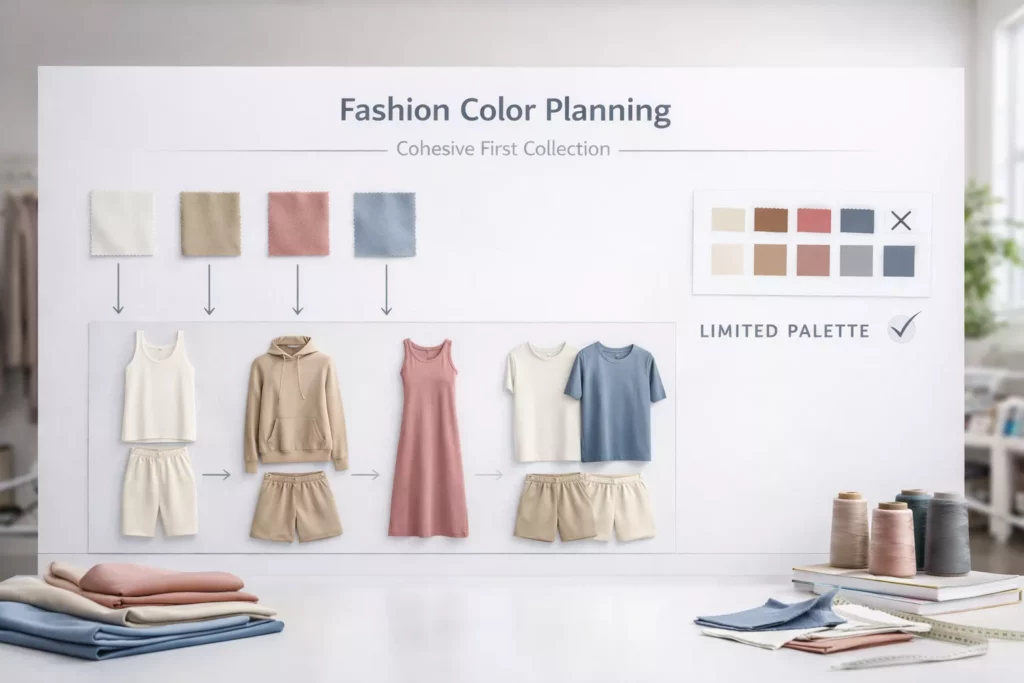
A simple first collection can quickly become complicated if one style comes in six colors. That is why a smart launch often keeps color tightly controlled. One to three colors per style is often more than enough for an early collection, especially when the palette is coordinated.
A limited color strategy can actually strengthen your brand. It creates a cleaner visual identity, makes photos more cohesive, and helps customers understand the collection faster. It also supports merchandising because pieces can be mixed more naturally.
In most first collections, color restraint is a strength, not a weakness.
Sizes Multiply Complexity Too, Even When Styles Stay Small
Another reason first collections grow faster than expected is size planning. Even if your style count is low, broad size runs increase inventory pressure and production decisions.
This does not mean brands should avoid inclusive sizing. It means founders should understand the operational effect of each decision. A three-style collection with seven sizes across multiple colors is a much bigger opening than it first sounds. That affects MOQ, stock depth, forecasting, and risk of uneven sell-through.
Your sizing strategy should be thoughtful. It should reflect your customer, product fit logic, and production realities. For some categories, a smaller initial size range with a plan to expand after validation may be practical. For others, launching with a broader range is a core part of the brand promise and should be budgeted seriously from the start.
The key lesson is this: style count is only one part of collection size. Color count and size depth matter just as much.
A First Collection Should Feel Cohesive, Not Just Complete
The goal of your first collection is not to answer every possible customer need. It is to create a cohesive brand entry point.
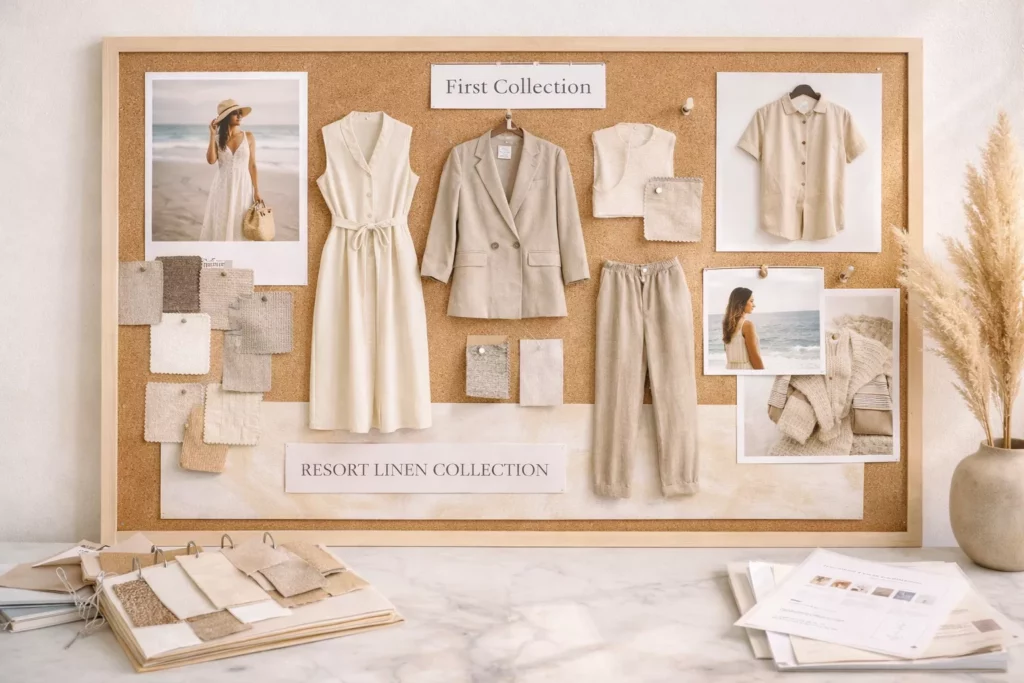
Cohesion means the products belong together. They share visual language, mood, materials, proportions, and intent. When a collection feels cohesive, even a small number of styles can appear strong and complete.
This is one reason some large first collections still feel weak. They may have many pieces, but they do not feel connected. Meanwhile, a three-style launch can feel premium and intentional when every product supports the same brand idea.
When planning your first collection, ask:
- Do these products tell one story?
- Would they look natural together in one campaign?
- Do they target the same customer mindset?
- Do they fit within one price logic?
- Can I market them under one clear message?
If the answer is no, your collection may be too broad even if the style count looks modest.
The Role of Your Hero Product in Assortment Planning
Most great first collections are not flat. They have one hero product and supporting styles around it.
Your hero product is the piece that most clearly expresses the brand. It is the one customers are most likely to remember, share, or ask about. It may be your best visual item, your most commercially useful item, or your strongest fit-and-fabric combination.
Once you identify the hero, the rest of the assortment becomes easier to plan. Supporting styles should strengthen the hero, not compete with it. They should make the collection easier to style, easier to photograph, and easier to upsell.
For example, if your hero is a structured oversized hoodie, the support pieces might be a matching sweatpant and a heavyweight tee. If your hero is a tailored modest dress, the support pieces might be a layering outerwear item and a tonal underpiece.
When founders cannot identify the hero product, that is often a sign the collection is too scattered.
How Manufacturing and MOQ Should Influence Your Collection Size
Assortment planning should never be separated from manufacturing logic. Your factory’s MOQ structure affects how many styles you can realistically launch without overbuying.
If every new style requires a separate MOQ, then each added garment increases inventory risk. If each color also carries its own MOQ, risk rises again. This is why simple first collections are often easier to produce well. They allow more concentration of order volume into fewer items.
For example, ordering 300 units of one strong style is often less risky than ordering 50 units across six styles with uneven size breaks. The second option may look broader, but it often creates messy stock positions and lower confidence in production.
Your manufacturer may also be more helpful when the collection is focused. Fewer styles often mean clearer development, simpler line planning, and better consistency.
Founders should ask manufacturers practical questions early: What MOQ applies per style? Per color? Can fabrics be shared? Can trims be shared? Those answers should directly shape the collection plan.

How Many Styles Are Too Many for a First Collection?
There is no perfect cutoff, but for most startup brands, once the first collection moves beyond five or six distinct styles, the risks rise noticeably. That does not mean six styles are always wrong. It means the founder should justify every added product clearly.
A first collection is probably too large if:
- You cannot fund all styles properly
- You are compromising on sample quality
- The products do not feel tightly related
- Your content budget cannot support all of them
- Your inventory depth per style becomes too thin
- You cannot describe the collection simply
- You are adding products mainly to look bigger
A useful rule is this: if you need a long explanation to justify why all the products belong together, the collection may already be too broad. Customers do not reward complexity for its own sake. They reward clarity, quality, and trust.
How Many Garments Should Be in Your First Fashion Collection?
Deciding how many garments to include in your first fashion collection is a crucial step; a practical guide is to start small so you can manage the production process, control cost, and learn the learning curve. As a designer or label you should specialize in a coherent range that can be easily graded across clothing sizes with accurate measurement and engineering support from your manager. Consider your target demographic, body shape variation, and how many options you need to cater to diverse shoppers while keeping the right size consistency.
For retailers, wholesalers, or e-commerce and online stores, calculate demand to solve inventory constraints and your manufacturing capability. A good tip is to offer limited SKUs to boost popularity, allow subsequent drops, participate in discounts and discount strategies, and let real-world sales calculate which variations to expand—this helps your shopper feel covered while you grow.
The Best Assortment Structures for Different Startup Brand Types
Different brand models benefit from different first-collection structures.
A premium basics startup often does best with one to three styles. The focus should be fit, fabric, and consistency rather than a broad range. A streetwear startup often performs well with two to four styles, usually anchored by one statement or hero garment and supported by strong essentials. A women’s fashion startup may need three to five styles if the goal is to present a styled mini-wardrobe rather than one single product angle.
An activewear startup may need at least two to four styles so the customer can build outfits or sets, especially if matching pieces are part of the value proposition. A kids’ wear startup may need fewer silhouettes than expected, because operational complexity rises fast with size ranges and parent buying logic.
These are not hard rules. They are planning patterns. The smartest founders choose the smallest assortment that still feels natural for their category.
Your Marketing Strategy Should Also Shape the Number of Styles
Marketing is often the hidden reason why a focused first collection performs better. Every extra style needs messaging, photography, product page content, social content, email placement, and launch storytelling.
If your content budget or time is limited, a smaller collection will almost always market more effectively. You can repeat the hero message across channels instead of trying to split attention across too many garments.
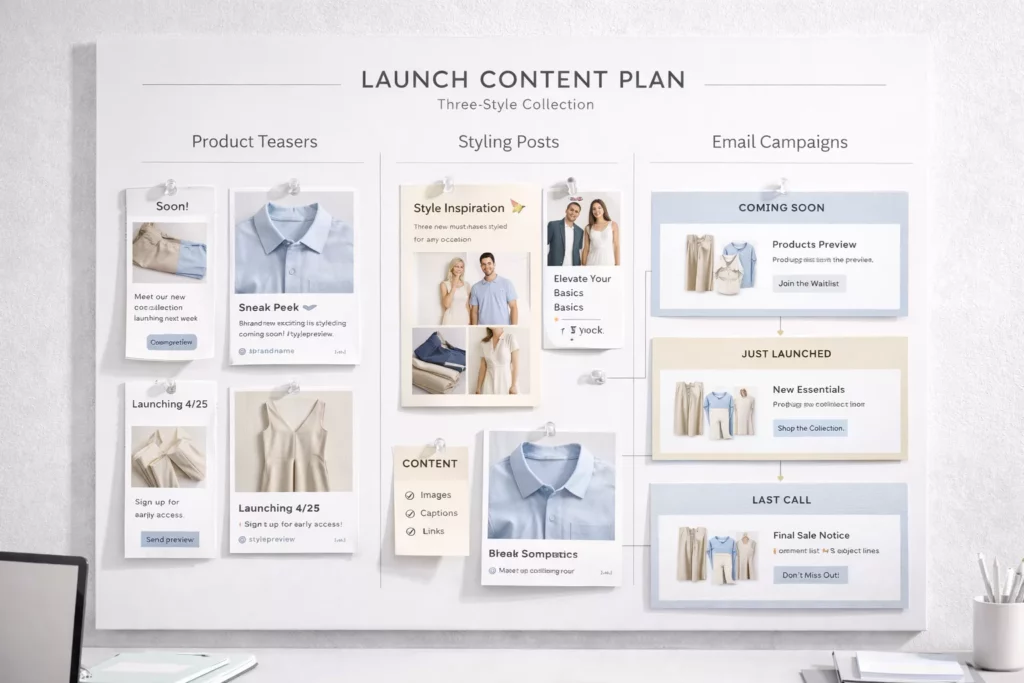
A three-style collection also makes launch content easier to structure. One product can lead to teaser content. Another can support styling content. Another can support bundle or layering content. Everything still feels connected.
A large first collection often creates weak marketing because the founder tries to talk about everything at once. That usually dilutes the strongest message. In early-stage branding, repetition is more valuable than variety. The market needs to remember what you stand for before it wants a broader range from you.
When to Expand Beyond the First Collection
Many founders try to launch their future roadmap inside Collection One. That is rarely necessary.
A better approach is to launch small, learn fast, and expand based on evidence. Once you see what customers respond to, what sizes move best, what colors perform, and what product gets the most organic attention, you can build collection two with far more confidence.
Expansion should usually happen when one or more of these is true:
- Your hero product is selling consistently
- Customers are asking for related products
- You have a clearer understanding of size demand
- Your content is performing and building traction
- You have enough cash flow to support more development
- Your manufacturer relationship is stable
The right time to expand is not when you feel bored with the first drop. It is when the business has earned complexity.
A Practical Formula for Deciding the Right Number of Styles
If you want a simple decision-making framework, use this formula:
Start with your budget, then identify your hero product, then define the minimum number of support styles needed to make the brand feel complete.
Ask yourself:
- What is the one product this brand should be known for first?
- What supporting product, if any, makes that hero easier to style or sell?
- What collection size can I sample, produce, and market without compromising?
- What assortment can my manufacturer realistically support at my budget?
- What can my customer understand immediately?
For many founders, that process leads naturally to one, two, or three styles. And in most first launches, that is enough.
The best collection formula is not based on ego, trend pressure, or how many pages your website can show. It is based on clarity, discipline, and the ability to execute well.
First Collection Planning Checklist
Before finalizing the number of styles, ask yourself:
- Does each product support the same brand identity?
- Can your budget support development and production for every style?
- Will your manufacturer handle the MOQ across all styles?
- Can you produce high-quality photography for each product?
- Will your marketing clearly communicate the hero product?
If the answer to several of these questions is no, the collection may be too large for a first launch.
ApparGlobal Internal Link Section
Many startups make better first-collection decisions when they work with apparel partners that understand tech pack planning, MOQ realities, sample development, and scalable product launches. Companies such as ApparGlobal help clothing brands align assortment size, material choices, manufacturing workflows, and production strategy so first collections feel more focused, more practical, and more growth-ready from the beginning.

Conclusion
So, how many styles should be in your first collection? For most new clothing brands, the answer is fewer than you think. A focused first collection usually performs best when it includes only the number of styles you can develop properly, produce confidently, brand clearly, and market effectively. In many cases, that means one to three strong styles. In some cases, four to five can work. But very few first launches benefit from going broad too early.
Your first collection is not a final proof of everything your brand might become. It is the first clear message your brand sends to the market. Make that message easy to understand. Build around one strong hero. Add only the support pieces that truly strengthen the story. Keep the assortment cohesive. Let real customer response guide what comes next. The brands that grow well are usually not the ones that launch the biggest. They are the ones that launch the clearest.
Read more about: Fashion Brand Mistakes: Common Traps New Brands Make