

How Much Does It Cost to Start a Clothing Line or Brand?
A clothing line can start with a relatively lean setup or grow into a capital-heavy business very quickly. The difference usually comes down to your model, your product complexity, your manufacturing plan, and how disciplined you are with budgeting. That matters even more in 2026, when the fashion industry is still expected to post only low single-digit growth and value-conscious customer behavior remains a major factor. In other words, founders cannot afford sloppy cost planning.
The challenge is that many new founders budget only for production and forget the rest. They think about fabric and manufacturing, but miss sampling, labels, packaging, website costs, photography, ads, legal setup, shipping supplies, returns, and working capital. The U.S. Small Business Administration specifically recommends calculating startup costs before launch so you can estimate profits, run a break-even analysis, secure funding, and understand the full capital picture.
That advice matters because underestimating startup costs is common. Business.org reports that in its survey of 700 small-business owners, more than half said they underestimated how much they would need to spend in their first year, and online-only businesses in that survey spent an average of $35,000 in the first year. That average is not a rule for clothing brands, but it is a useful warning that first-year costs often extend far beyond the first production run.
This guide breaks down the real startup cost categories for a clothing line from scratch. It covers product development, samples, manufacturing, branding, ecommerce, marketing, legal setup, operations, hidden costs, and realistic budget scenarios. The goal is not to scare you away from starting. The goal is to help you start with numbers that make sense.
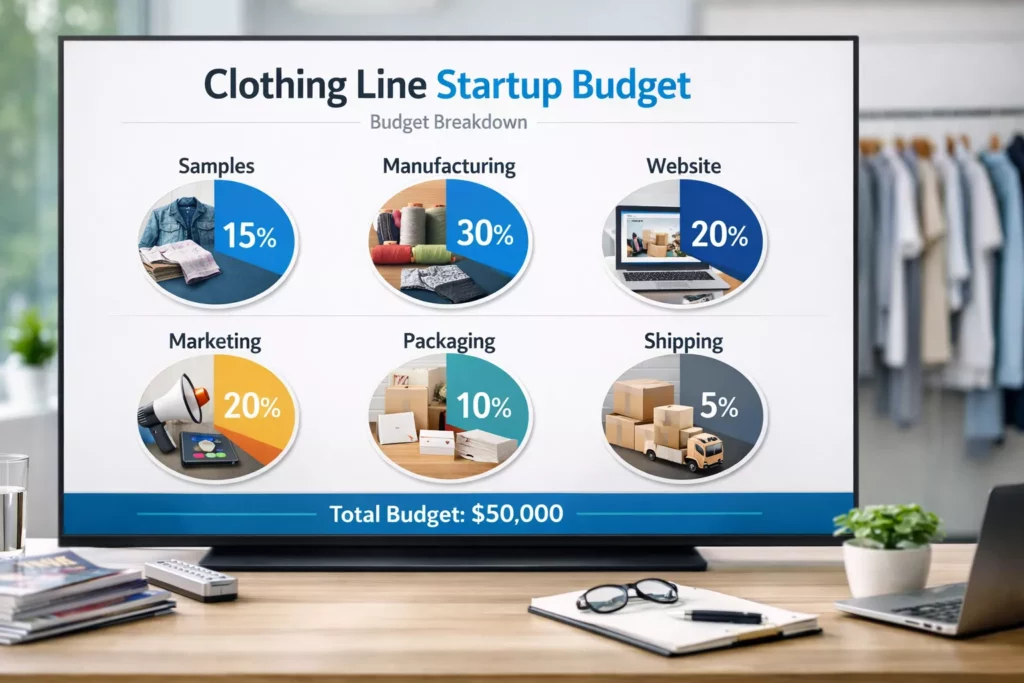
What “Clothing Line Startup Cost” Actually Means
A clothing line startup cost is the total amount of money required to move from idea to a functioning brand that can sell and fulfill products. That includes both one-time setup expenses and the cash you need to operate until revenue becomes stable enough to support the business.
The SBA separates startup costs into one-time expenses and monthly expenses, and it also notes that common startup categories for online businesses can include inventory, advertising and marketing, making a website, licenses and permits, insurance, professional fees, and market research. That framework fits clothing brands very well because fashion startups usually have both upfront creative costs and recurring operating costs from day one.
For a clothing line, startup cost should usually be viewed in three layers. The first layer is brand setup, which includes naming, logo, packaging direction, domain, and store setup. The second layer is product creation, which includes tech packs, samples, materials, and manufacturing. The third layer is launch and operations, which includes photography, marketing, software, fulfillment, and contingency cash. If you only budget for one layer, your plan is incomplete.
How Much Does It Cost to Start a Clothing Line?
The cost to start a clothing line can vary widely depending on production scale, product complexity, and marketing strategy.
For many small startup brands, the typical range is:
- Lean startup clothing line: $2,000 – $10,000
- Small professional launch: $10,000 – $50,000
- Large-scale fashion brand launch: $50,000+
The largest cost categories usually include product development, manufacturing, branding, e-commerce setup, and marketing.
Why Clothing Brands Miscalculate Startup Costs
Most clothing lines do not overspend because founders are reckless. They overspend because the cost chain is longer than it first appears. A founder may estimate the manufacturing cost per unit correctly, but forget that the business also needs sample revisions, packaging inventory, payment processing fees, product photos, and customer acquisition money.
That is why startup cost planning should not begin with the question, “What does it cost to make one hoodie?” It should begin with, “What does it cost to get one hoodie designed, sampled, produced, photographed, sold, packed, shipped, and supported as a real brand?” That broader view is what protects cash flow.
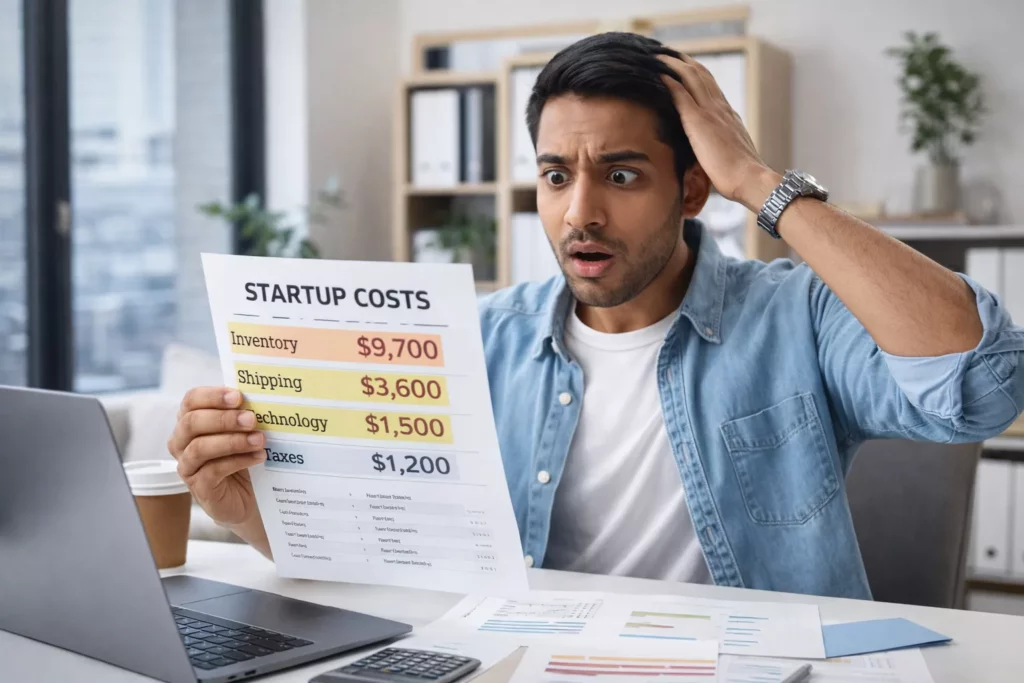
Business.org’s survey highlights this exact issue from a different angle. Beyond underestimating total startup spending, the same survey found that inventory was the biggest first-year expense category for many businesses, followed by equipment and location-related costs, while taxes, technology, and shipping were among the expenses that surprised owners. For a clothing line, inventory, technology, and shipping are especially easy to underestimate.
The Biggest Factors That Change the Clothing Line Startup Cost
Your startup budget depends on choices you make before the first sample is sewn. A print-on-demand brand, a private label basics brand, and a custom cut-and-sew fashion label can all call themselves clothing lines, but their cost structures are completely different.
The biggest variables are your business model, number of SKUs, number of colors and sizes, fabric complexity, MOQ, production location, packaging standard, ecommerce setup, and marketing intensity. If you launch one hero product with simple packaging and a lean content strategy, your cash requirement can stay much lower. If you launch eight SKUs with custom dye, custom trims, premium packaging, and influencer-heavy marketing, your budget rises fast.
In 2026, this matters even more because fashion brands are operating in a market where consumers remain value-conscious and discovery behavior is changing. McKinsey’s State of Fashion 2026 says the industry is expected to grow only in low single digits, while shopping-related searches on generative AI platforms grew 4,700 percent between 2024 and 2025. That means new brands need tighter budgeting and sharper go-to-market execution rather than broad, expensive launches.
How To Keep Your Costs Low When Starting a Clothing Business?
Start by creating a tight business plan and brand story that define your brand voice and brand guidelines, because marketing strategies and social media marketing will amplify recognition without higher upfront costs. Understand how much does it cost and much it costs to start a clothing brand—the cost of starting a clothing or a clothing line business can vary. List the costs involved, including major startup costs, hidden and ongoing costs, labor costs, shipping costs, pos systems, and inventory management.
Choose small batch vs bulk production to control inventory management and overall costs, and decide whether to focus on an online store or a hybrid model since costs can vary depending on your approach. Prioritize organic content creation, active social media accounts, and selective paid ads in your marketing plan to protect profit margins while you launch a clothing line or launch a clothing collection and grow into a successful clothing line and successful brand as fashion entrepreneurs and entrepreneur owners of a new clothing company or fashion business—understanding the cost implications of clothing production helps launch your fashion brand successfully.
Cost-Saving Tips for New Fashion Entrepreneurs
Start by mapping major startup costs and understanding much it costs to start a fashion line so you can control overall costs and prioritize savings. Research clothing production options—small batch vs larger runs—to compare unit price and shipping costs, and account for hidden and ongoing costs like warehousing and returns. Track labor costs closely and consider freelancers to reduce payroll while building a brand voice.
When launching, identify key cost areas such as marketing costs, prototypes, and samples; knowing the cost implications of each decision helps you launch your fashion brand successfully. Estimate what is involved in starting a clothing venture and remember that starting a clothing line requires patience and careful budgeting.
For a fashion business or clothing company aiming to become a successful clothing line, clarity on costs to consider and understanding the costs tied to brand guidelines boosts efficiency. Note that clothing brand can vary regionally and that clothing brand vary by materials—plan accordingly to build brand recognition without overspending in your clothing line business.
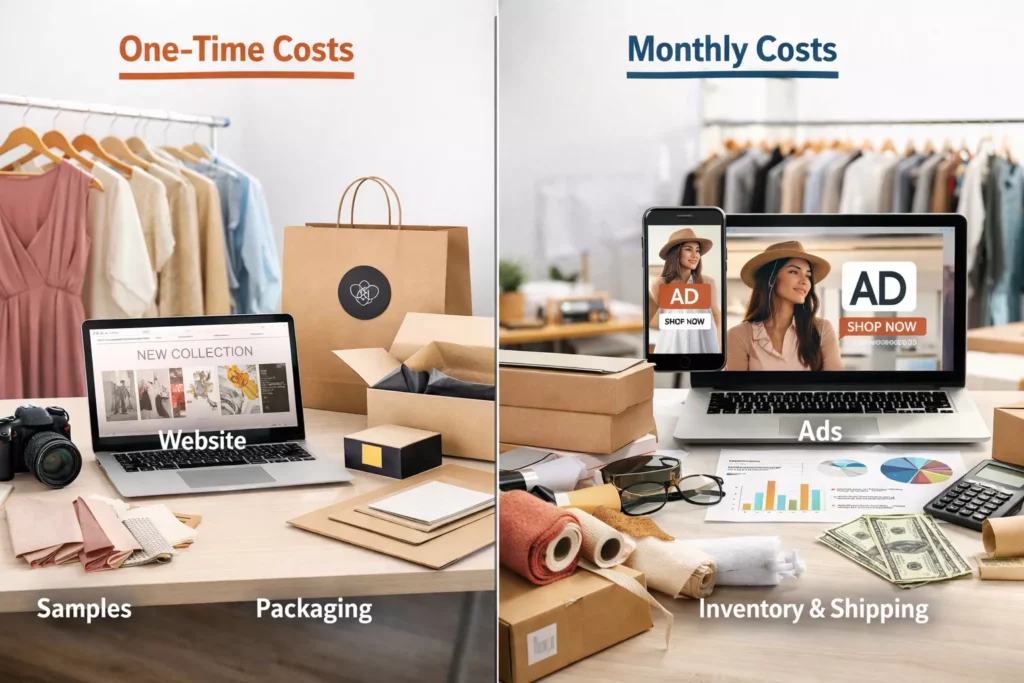
One-Time Costs vs Monthly Costs
A strong startup budget separates one-time expenses from recurring expenses. This sounds simple, but it changes how you plan your capital.
One-Time Startup Costs
One-time costs are the setup expenses required to get the clothing line ready to launch. The SBA gives examples such as logo design, permits, licenses, and major equipment as one-time expenses. For a clothing line, this category usually includes brand identity design, tech packs, sample development, first inventory order, initial packaging design, product photography, website build, and legal formation.
Monthly Operating Costs
Monthly costs are the expenses that continue after launch. The SBA notes that salaries, rent, and utilities are typical monthly expenses, but for a fashion ecommerce brand, the list usually shifts toward platform fees, app subscriptions, email software, ad spend, payment fees, storage, fulfillment materials, contractor retainers, and customer service costs.
The practical takeaway is simple: do not spend all your capital on the first production run. Your business also needs money to operate after inventory arrives.
Research and Brand Setup Costs
Every clothing line starts before the first sample. Research and brand setup costs may look small compared with manufacturing, but they shape everything that follows.
This stage often includes market research, competitor review, naming, domain purchase, logo design, basic brand identity, and initial packaging direction. If you do most of this yourself, the cost can stay low. If you hire specialists for naming, branding, and visual identity, the cost can rise substantially.
A practical planning range for this category is often $150 to $2,000+ depending on whether you bootstrap the brand identity or outsource it. That is a planning estimate for this article, not a universal market rate. The exact number depends on your creative process and quality expectations.
You should also include business registration and essential setup costs here. Shopify’s 2025 startup cost guide cites incorporation costs in the range of roughly $480 to $1,180 depending on business structure and state, though those numbers are U.S.-specific and can vary widely by location. If your brand is based elsewhere, use local filing costs instead.
Product Development and Tech Pack Costs
This is where many first-time founders start to feel the difference between “having an idea” and “building a product.”
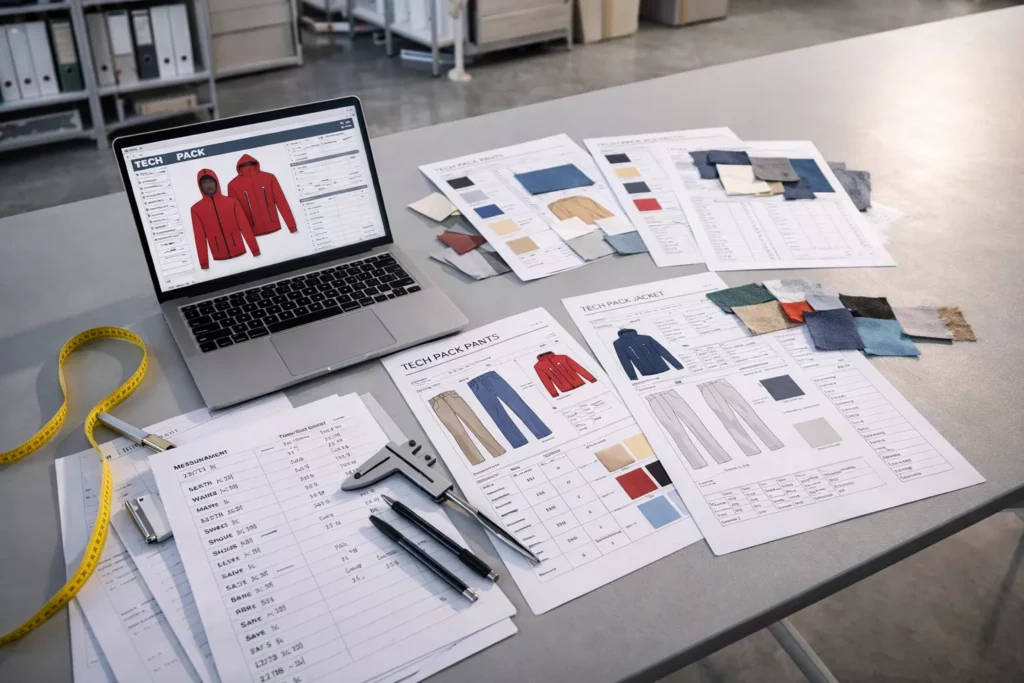
Product development usually includes sketching, garment design refinement, tech pack creation, construction planning, fit notes, material decisions, and revision rounds. If you are working with private label blanks, this cost can be low. If you are building original cut-and-sew garments, it becomes a core startup expense.
A realistic planning range for tech packs and early product development might be $100 to $700 per style if outsourced, though founders who can create accurate spec documents themselves can reduce that significantly. For a very small startup launch, many founders keep the first collection to one to three styles precisely to limit this cost.
The key mistake here is approving weak documentation to save money. Bad tech packs often create expensive errors later in sampling and manufacturing. In other words, cheap development can become expensive production.
Sample Development Costs
Sampling is one of the most underestimated parts of clothing line startup cost. It is also one of the most important.
A clothing line rarely moves from concept to bulk production with one perfect sample. Most brands go through at least one prototype, one fit revision, and one pre-production approval, especially if the product is custom. That means founders need to budget for both the sample itself and the revision cycle.
A practical range might be $50 to $300+ per sample for simpler products and much more for complex garments, specialty fabrics, or premium outerwear. Again, that is a planning framework, not a fixed industry rule. The real number depends on product category, country, and factory.
The better your tech pack and communication, the fewer sample rounds you usually need. This is why startup cost planning and product clarity are closely connected. A sloppy concept often costs more than a clear one.
Manufacturing and Inventory Costs
For most clothing lines, inventory is the biggest startup expense. Business.org’s survey found inventory was the single largest first-year cost category for many small businesses, accounting for about 30% of first-year spending in its poll. That does not mean every clothing brand will match that percentage exactly, but it confirms something most founders already discover fast: stock ties up cash.
Your inventory cost depends on unit cost, MOQ, number of SKUs, and how deep you go on size and color. If your first product costs $8 landed and your opening order is 300 units, inventory alone is $2,400. If your product costs $18 landed and your first order is 600 units across multiple SKUs, inventory can move into five figures quickly.
For a small startup clothing line, manufacturing and opening inventory often fall somewhere between $1,500 and $15,000+, depending on model and complexity. A lean private label launch may sit near the low end. A custom cut-and-sew collection with multiple styles can go much higher.
The strategic lesson is to launch narrower than your ego wants. One strong product usually beats six products that drain cash.
Fabric, Trims, Labels, and Packaging Costs
A surprising number of founders think manufacturing cost is one number. In reality, clothing unit cost is made up of multiple components, and some of them are easy to underestimate.
Fabric is often the biggest driver. Trims include labels, hangtags, zippers, drawcords, elastic, buttons, and thread. Packaging adds polybags, tissue, inserts, stickers, mailers, cartons, and branded unboxing materials. If you want premium packaging from the start, your cost per order goes up immediately.
For a lean startup, you can keep packaging relatively simple and still look professional. A clean mailer, one branded insert, accurate labels, and a consistent brand tone are often enough for the first phase. Expensive custom rigid packaging is usually better saved for later unless your positioning absolutely depends on it.
This is also where private label brands can gain efficiency. If you use standard packaging sizes and common trim logic across products, your budget becomes easier to manage.
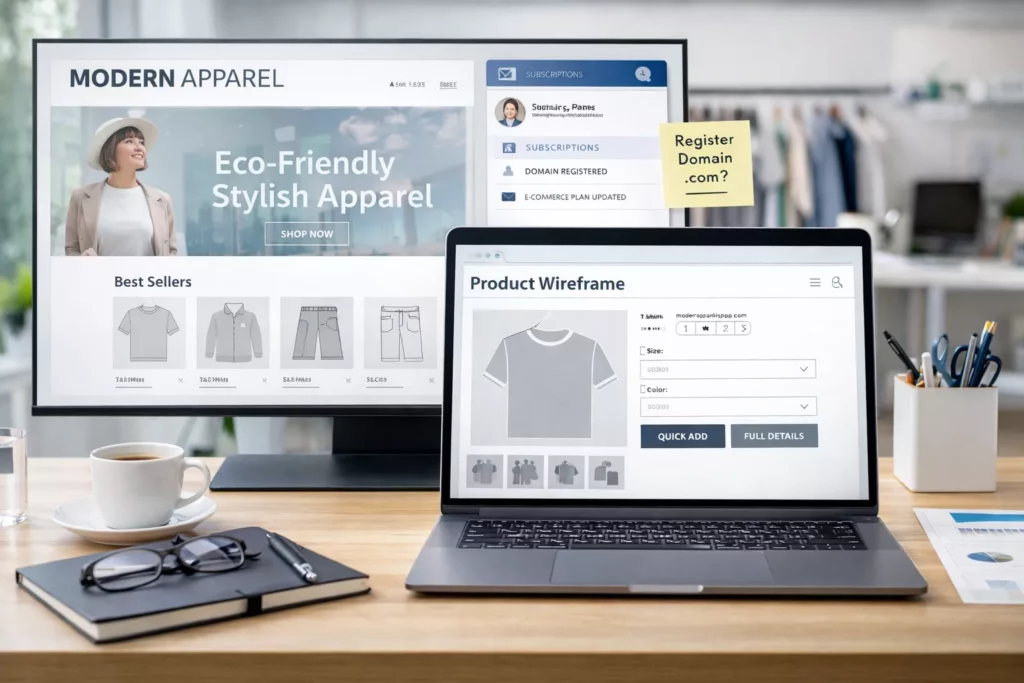
E-commerce Website Costs
Every clothing line in 2026 needs a digital storefront, even if you also sell through pop-ups or wholesale. Shopify’s 2026 ecommerce website cost guide says a basic ecommerce website can start at around $29 per month, while overall ecommerce website costs can range from about $29 per month on the low end up to $10,000 as a store grows and adds features.
That wide range is important. A bootstrap clothing brand can launch with a relatively low monthly platform cost, but additional design work, premium themes, apps, custom development, and ongoing optimization can push the total much higher. Shopify’s pricing page also notes that plans are generally month to month and that additional transaction fees can apply if you use third-party payment providers.
For startup planning, a practical first-year website budget might include your platform subscription, domain, theme, app stack, and light design support. For many early-stage brands, that may mean roughly $100 to $2,500+ in launch-stage website costs depending on whether you build it yourself or hire help.
Photography and Content Production Costs
A clothing line sells visually, which means content is not optional. It is part of the product experience.
At minimum, most brands need product photos, simple lifestyle imagery, and short-form video or motion content for launch. If you try to save money here by publishing weak imagery, the whole brand can look cheaper than it is. That hurts conversion even if the garment itself is strong.
A realistic startup content budget can range from $200 to $3,000+ depending on whether you self-shoot, use friends and natural light, or hire photographers, models, studios, and editors. A founder who understands visual direction can often keep this lean at the beginning, but it still needs a budget line.
In 2026, this matters even more because product discovery is happening across search, social, and AI-assisted journeys. McKinsey reports that generative engine optimization is becoming a critical counterpart to SEO as AI’s role in product discovery grows, which means clean, descriptive, well-structured product content has more value than ever.
Marketing and Launch Costs
A clothing line with no marketing budget is not really saving money. It is usually just delaying the moment when customer acquisition becomes a problem.
Your launch budget should include content distribution, email setup, ad testing, creator gifting or seeding, and post-launch remarketing. For many new brands, this category determines whether the first inventory batch moves or sits.
Business.org’s survey notes that marketing was among the common startup costs for small businesses, while the SBA includes advertising and marketing in its standard startup expense categories. That is a strong reminder that promotion should be part of the launch budget from the beginning, not an afterthought.
A lean startup clothing line might begin with $300 to $1,500 for launch marketing, while a more aggressive approach could easily exceed that. The important part is not the exact number. It is budgeting for testing. Your first ads and creator partnerships are usually data-gathering tools as much as sales tools.
Legal, Admin, and Software Costs
This category often gets ignored until the founder is forced to deal with it in a rush.
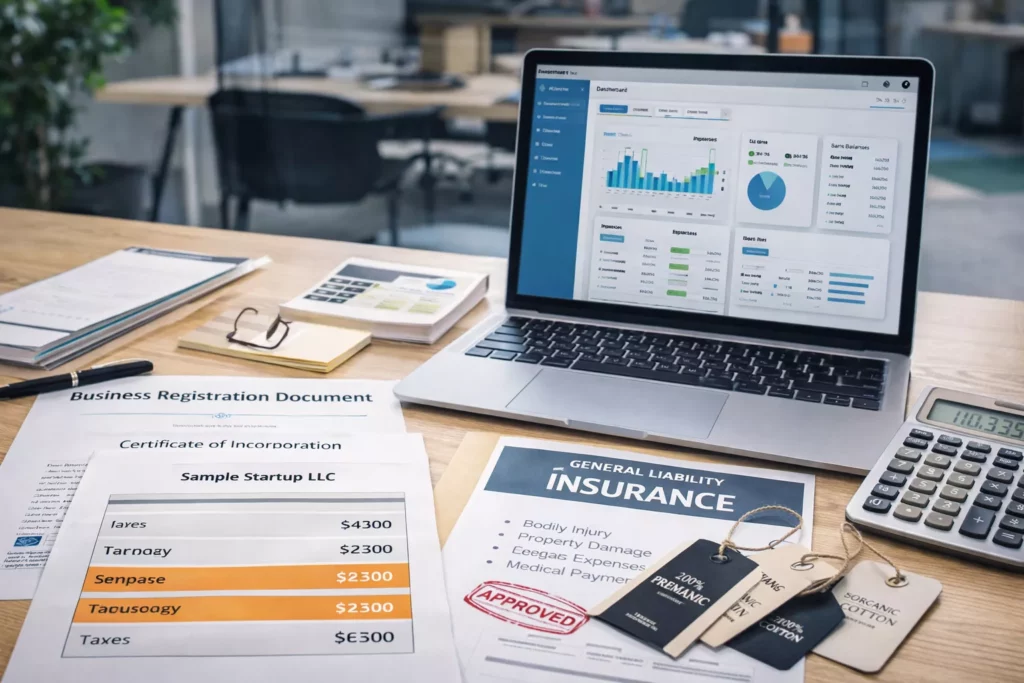
Legal and admin costs can include business formation, permits where needed, accounting software, bookkeeping help, contracts, trademark work, insurance, and tax setup. Shopify’s startup cost guide cites general liability insurance at around $42 per month or about $500 per year in its broader small-business startup breakdown, though the actual number for a clothing brand depends on country, coverage, and risk level.
The SBA also highlights common startup categories such as licenses and permits, insurance, lawyer and accountant, and making a website. For a clothing line, this means legal and admin should not be treated as a side note. Even a small brand benefits from basic documentation and bookkeeping discipline early.
A reasonable planning range for this category might be $200 to $2,000+ in the launch phase, depending on how formal and protected you want the business to be from day one.
Fulfillment, Shipping Supplies, and Returns
Shipping starts costing money before the first customer order goes out. You need mailers, labels, tape, inserts, storage supplies, and a workflow for exchanges or returns.
This category is easy to underbudget because founders tend to think only about postage. But your actual per-order fulfillment cost also includes packaging materials, handling time, damaged shipments, replacement units, and return processing. Business.org’s survey found that shipping was one of the expenses that surprised many first-time owners, which aligns closely with what ecommerce clothing brands experience in practice.
A startup should usually set aside a launch-stage budget for shipping supplies and a separate contingency line for returns or reshipments. Even if your return rate is low, the cash effect can be real during the first months.
Hidden Costs Most Founders Miss
Hidden costs are not usually dramatic on their own. They become dangerous because they stack.
These may include extra sample rounds, courier fees, customs on samples, import duties on bulk orders, labeling mistakes, packaging reprints, size-set corrections, app subscriptions, transaction fees, discount codes, warehouse receiving fees, content revisions, and emergency air shipping when timelines slip.
The SBA recommends organizing expenses into one-time and monthly buckets and then adding them up for a full financial picture. That is smart advice because hidden costs often live in the gap between those two categories. They are not always obvious at first, but they still need cash.
A useful rule is to create a contingency line of 10% to 20% on top of your core startup budget. That is not a sourced industry standard. It is a practical planning buffer for this article. If your business model is more complex, your buffer should be larger.
A Practical Clothing Line Startup Budget Table
Below is a simple planning framework you can adapt. These are example planning ranges created for this blog, not fixed industry rates.
| Cost Category | Lean Startup Range | Growth-Oriented Startup Range |
| Brand setup and business basics | $150 to $1,000 | $1,000 to $3,000 |
| Product development and tech packs | $150 to $1,500 | $1,500 to $4,000 |
| Samples and revisions | $200 to $1,500 | $1,500 to $4,000 |
| First production run / inventory | $1,500 to $6,000 | $6,000 to $20,000+ |
| Labels, trims, and packaging | $200 to $1,500 | $1,500 to $5,000 |
| Website and apps | $100 to $1,000 | $1,000 to $5,000 |
| Photography and launch content | $200 to $1,500 | $1,500 to $6,000 |
| Marketing and ad testing | $300 to $1,500 | $1,500 to $8,000+ |
| Fulfillment supplies and shipping setup | $100 to $700 | $700 to $2,500 |
| Legal, admin, and software | $200 to $1,500 | $1,500 to $5,000 |
| Contingency buffer | $500 to $2,000 | $2,000 to $10,000 |
For many founders, this means a lean but real clothing line can often start in the low thousands, while a more polished and inventory-heavy launch can move into the mid to high five figures quickly. That general conclusion also fits the broader startup-cost reality described by Shopify, SBA, and Business.org: startup costs vary dramatically by model, scale, and business type.
Lean, Mid-Range, and Premium Startup Scenarios
Lean Clothing Line Launch
A lean launch usually means one hero product, limited colors, controlled packaging, self-managed branding, template-based website setup, and very targeted marketing. The founder trades polish for efficiency, but still protects product quality. This is often the smartest route for first-time brands because it reduces inventory risk.
Mid-Range Startup Launch
A mid-range launch usually adds better creative execution, more structured sampling, stronger photography, broader size coverage, and a more polished website and email system. It still requires discipline, but it gives the brand more room to look established from day one.
Premium Startup Launch
A premium launch often includes custom fabrics or trims, stronger brand identity work, higher-end packaging, larger opening inventory, professional campaigns, and more aggressive acquisition spending. This can work well when the founder has capital and a clear strategy, but it becomes dangerous if demand is not validated first.
The right choice depends less on ambition and more on whether your cash structure can support the model.
How to Lower Startup Costs Without Damaging the Brand
Reducing startup cost does not have to mean reducing brand quality. It usually means reducing complexity.
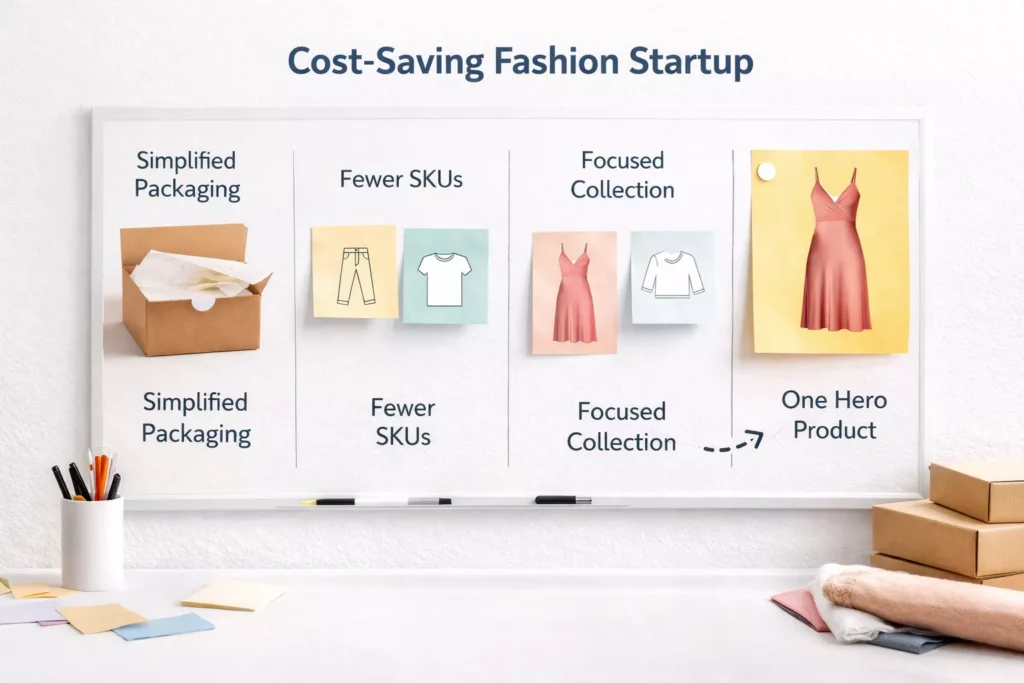
The easiest savings usually come from narrowing the opening assortment, limiting color options, using available materials, simplifying packaging, reducing custom trim requirements, and building the first store on a solid template instead of custom development. You can also cut cost by investing in one strong hero product instead of splitting budget across too many styles.
Another smart move is to separate what the customer truly feels from what only the founder notices. If a premium mailer adds cost but little conversion value, simplify it. If a better fabric improves retention and reviews, keep it. The goal is not cheapness. It is intelligent allocation.
This approach also aligns with the broader 2026 market context. Value-conscious consumers and slower industry growth make disciplined cost planning more important, not less.
The Cash Flow Mistake That Hurts Most Clothing Startups
The most dangerous startup mistake is not always overspending. It is spending all available cash before the brand has room to operate.
If you spend nearly everything on samples and inventory, you may have little left for launch content, paid testing, reorder deposits, or return handling. That can leave you in the frustrating position of having product but not enough working capital to actually grow the brand.
This is one reason the SBA emphasizes using startup cost calculations to estimate when you will turn a profit and how much capital you will need before launch. A clothing line does not become healthy when the inventory arrives. It becomes healthy when it can sell, fulfill, reorder, and continue operating without panic.
A good rule for many small founders is to avoid using 100% of available cash on product. Hold back operational runway.
A Simple Startup Cost Worksheet You Can Use
If you want a practical way to estimate your own number, use this structure:
One-Time Setup
Add business setup, logo and identity, domain, website theme, initial photography, tech packs, and sample costs.
Product and Inventory
Add manufacturing deposit, bulk production balance, labels, packaging, shipping to you, import costs if applicable, and quality control.
Launch and Operations
Add app subscriptions, payment fees, email tools, ad testing, creator seeding, shipping supplies, and contractor help.
Contingency
Add a separate line for mistakes, delays, and surprises.
The SBA offers a startup cost worksheet for small businesses, which can be helpful as a basic planning structure even if you customize the categories for a fashion brand.
Working With the Right Manufacturing Partner Can Change the Budget
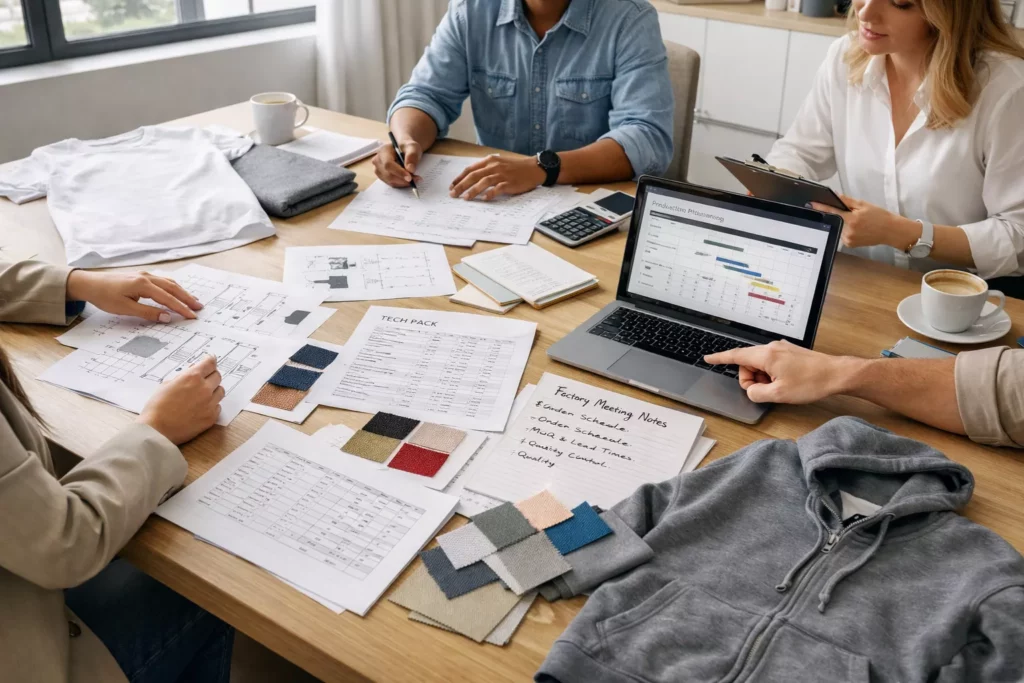
Your manufacturer choice affects more than product quality. It affects MOQ, sample rounds, lead times, packaging efficiency, and the amount of capital tied up in stock.
A factory that understands startup brands may help you avoid overproduction, simplify trims, improve tech pack clarity, and build a smaller first run that still looks professional. A poor-fit supplier can create extra sample costs, delays, quality failures, and inventory waste.
That is why startup cost breakdown should always include supplier strategy. A brand that chooses the right production partner often saves money in ways that never appear on the first quote.

Example Cost Breakdown for a Single Garment
| Cost Component | Example Cost |
| Fabric | $3.50 |
| Trims (labels, thread, packaging) | $0.80 |
| Labor (cutting, sewing, finishing) | $2.50 |
| Washing or finishing | $0.70 |
| Packaging | $0.40 |
| Factory overhead and margin | $1.10 |
| Estimated Total Production Cost | $9.00 |
ApparGlobal
Many founders control startup costs more effectively when they work with apparel partners who understand product development, sampling discipline, manufacturing coordination, and scalable production planning. Companies such as ApparGlobal help clothing brands align tech packs, materials, production workflows, and quality standards so early-stage cost decisions become more practical, structured, and growth-focused.
FAQ: Clothing Line Startup Costs
What is the cheapest way to start a clothing line?
The cheapest way is usually print-on-demand or private label basics, which reduce inventory risk and startup costs.
Why do clothing startups need marketing budgets?
Even a great product will struggle to sell if customers never discover it. Marketing costs cover ads, creator collaborations, and launch campaigns.
Can you start a clothing brand with $1,000?
It is possible with print-on-demand or extremely small runs, but most brands require several thousand dollars to launch properly.
What is the biggest cost for a clothing startup?
Manufacturing and inventory are typically the largest startup expenses.
Conclusion
A real clothing line startup cost breakdown is much bigger than manufacturing alone. It includes brand setup, product development, sample revisions, inventory, packaging, website costs, photography, launch marketing, legal admin, fulfillment setup, and the operating cash required to keep the business moving after launch.
The exact number depends on your model, but the pattern is consistent. Narrower brands with tighter assortments and smarter planning usually need less cash and learn faster. Broader launches with too many SKUs, too much packaging complexity, and too little demand validation usually tie up capital too early.
The smartest way to budget a clothing line is to think like both a creative founder and an operator. Protect product quality. Protect cash. Launch smaller than your ego wants. Keep a contingency buffer. And make sure your budget covers not just getting inventory made, but getting the brand sold.