

Small Batch vs. Mass Production: Which Batch Type is Right for You?
What really changes when a clothing brand moves from producing a few hundred pieces to manufacturing thousands? For many fashion startups and growing apparel brands, this is one of the most important stages in the business journey. Small-batch production often feels manageable. You can watch every detail closely, make quick changes, speak directly with the factory, and catch problems before they spread too far. But once demand increases and the brand begins preparing for bulk production, the process changes in major ways.
This shift is not only about making more garments. It changes how fabrics are sourced, how patterns are prepared, how quality is controlled, how timelines are planned, how packaging is organized, and how much financial risk is involved. A style that works well in a small order may face unexpected issues in large-scale manufacturing. Fit can shift, fabric can vary by lot, communication becomes more complex, and minor errors that were easy to manage in small runs can become expensive problems in bulk.
That is why fashion brands need to understand the difference between small batch and bulk production before scaling. Growth in clothing manufacturing should not be approached as simply increasing quantity. It should be approached as moving into a new operational stage with new requirements, new systems, and new risks. Brands that understand this transition early are usually in a much better position to protect quality, manage costs, and keep customers satisfied through standardized processes.
In this guide, we will break down exactly what changes when moving from small batch to bulk production. You will learn how development expectations shift, why raw materials become more important, how quality control becomes more structured, what happens to lead times and costs, and how brands can prepare for scaling without losing consistency. Whether you are launching your first larger order, planning to grow your private label clothing line, or working with an apparel manufacturer to expand capacity, understanding this production shift is essential for long-term success.

What Defines Small Batch vs Mass Production?
When deciding what defines small batch vs mass production, consider that mass production relies on standardized processes and large orders to lower per-unit costs through economies of scale, while small batch production or small-batch products focus on smaller production runs and limited quantity of products. Production refers to the overall production process and production methods used; batch production sits between, enabling some customization and moderate production volume. Choosing the right production strategy means balancing cost efficiency and flexibility: large orders favor rapid, rapid production and lower per-unit price, whereas small batch manufacturing and smaller runs let you offer customization options and fewer items per run.
Small batch production offers advantages like limited production reduces waste and better alignment with product design iteration, but often at a higher cost per unit, so choose small batch only if it’s right for your business and your market values tailored manufacturing products over pure cost efficiency. One is right when your goals and resources match the chosen manufacturing approach.
What Small-Batch Production Means in Apparel Manufacturing
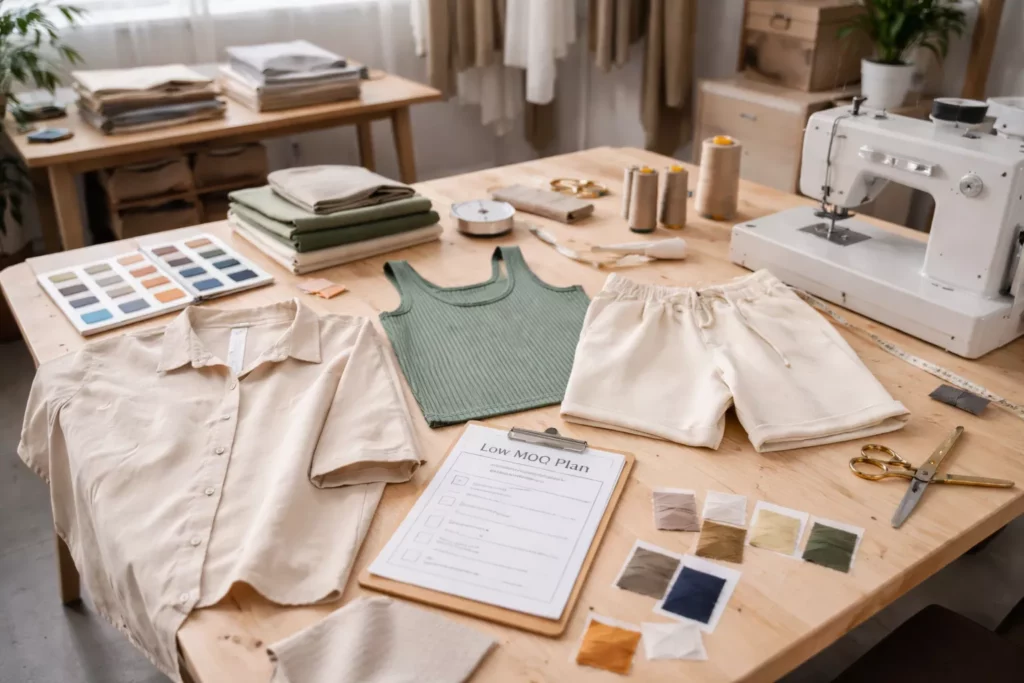
Small-batch production usually refers to producing limited quantities of a garment style, often for testing the market, launching a new collection, validating fit, or reducing inventory risk. For startups and emerging brands, this stage is valuable because it allows flexibility. A brand can introduce products without making a huge financial commitment, gather customer feedback, and refine designs based on real-world results.
In small-batch clothing manufacturing, brands often work with lower minimum order quantities. Production may involve fewer colors, fewer size combinations, and shorter runs of each style. Because the volume is lower, manufacturers may give closer attention to the order, and the brand may have more direct control over approvals and adjustments. Sampling and production can sometimes feel closely connected, especially when the factory is small or communication is very direct.
This stage is often ideal for testing new ideas, but it can also create a false sense of simplicity. Many brands assume that if a small batch went well, bulk production will simply be the same process on a larger scale. In reality, bulk manufacturing introduces different levels of sourcing coordination, workflow complexity, production planning, and quality control. Small-batch success is important, but it is not the same as bulk production readiness.
Another key point is that small-batch production can hide system weaknesses. A factory may manually solve issues during a limited run that would be much harder to manage at scale. The brand may accept minor inconsistencies because the order is small, or the production team may rely on extra attention rather than standardized systems. This is why brands must evaluate small-batch performance carefully before moving into larger orders.
What Bulk Production Means for a Growing Brand
Bulk production is the stage where a style moves beyond testing and into full-scale manufacturing. Instead of producing a small quantity to validate the product, the brand is now manufacturing larger volumes for wider sales, repeat orders, wholesale distribution, seasonal launches, or stronger inventory availability. This stage usually means more pieces, more materials, more operational coordination, and more pressure on consistency.
In bulk apparel production, the factory must manage larger quantities of fabric, trims, labeling, cutting, sewing, finishing, packing, and shipment handling. The production system becomes more structured because volume leaves less room for informal correction. A small mistake in bulk does not affect ten garments. It may affect hundreds or thousands.
Bulk production also means the brand must operate with stronger technical discipline. Tech packs must be clearer, approvals must be more complete, measurement tolerances must be well defined, and timelines must be more realistic. Once production reaches scale, guessing becomes very expensive. The manufacturer needs precise instructions, stable raw material standards, and clear quality expectations.
From a business point of view, bulk production often signals confidence in the market. The brand believes demand is strong enough to justify greater inventory commitment. That can support growth, but it also increases financial exposure. If the product is not ready, if the factory is not capable, or if planning is weak, the losses in bulk are much larger than in small-batch manufacturing.
This stage is where apparel brands move from experimentation to operational discipline. The brands that prepare properly often build momentum. The brands that rush into bulk without systems often face costly setbacks.
When Should Small Batch Production Be Chosen?
Choosing between small batch vs small batch manufacturing and mass production depends on production volume, product design, and market needs. Smaller production runs or a limited quantity of products are right for your business when you value customization options, quick feedback, and when limited production reduces waste. While per-unit costs in small-batch products are often higher cost than small batch and mass production comparisons, the trade-off is lower inventory risk and more agile production methods.
If your production strategy prioritizes scale and cost efficiency, mass production may be better; if you need flexibility, choose small batch. For niche lines or prototypes, smaller runs enable rapid iteration and rapid production of manufacturing products with tailored features. Ultimately the best manufacturing approach matches your expected production process, acceptable per-unit expense, and whether one is right for your business needs: sometimes one is right, sometimes a hybrid works best.
How Limited Production Reduces Waste
Limited production can reduce waste because batch production allows firms to make smaller quantities tailored to proven demand, so they don’t have to overproduce while still keeping costs manageable. In contrast, mass production often creates surplus when forecasts are wrong, especially when businesses need to adapt to changing market preferences; a strategy where demand is proven before scaling means production has a higher likelihood of matching real needs and avoiding excess inventory.
Choosing the right manufacturing approach involves weighing advantages and disadvantages: limited runs can mean longer lead times compared with factories making millions of units, but they also offer shorter lead times for iterative redesigns when working with the right manufacturing partner. Aligning methods with business goals and making adjustments based on customer feedback lets companies make the choice between small and large runs, focus on quality, apply strict quality control to ensure consistent quality across batches, and still keep costs reasonable across large product lines.
For Whom Small-batch Production Is Ideal
Small-batch production is ideal for artisans, startups, and niche brands that prioritize quality, customization, and quick adaptation over mass output. These makers value personal relationships with customers and the ability to iterate designs rapidly without being locked into large minimum orders. Because smaller runs typically face lower economies of scale, businesses can experiment with premium materials, limited-edition releases, and bespoke options that attract discerning buyers willing to pay for uniqueness and provenance.
This approach also suits companies testing new product concepts or entering specialized markets where demand is uncertain; short runs reduce financial risk and inventory burden. Additionally, small-batch methods align with sustainable practices, as producers can better control waste, source local supplies, and respond to customer feedback, making them a strong fit for eco-conscious entrepreneurs and makers seeking agility and authenticity.
The Biggest Shift: Flexibility Decreases and Precision Increases
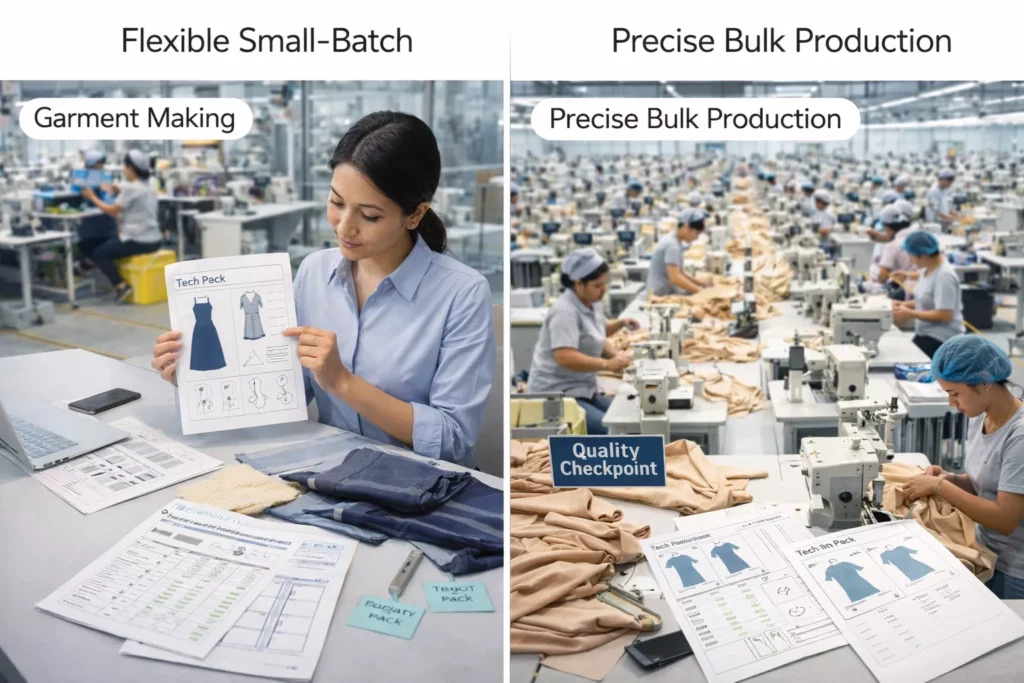
One of the most important changes from small batch to bulk production is that flexibility goes down while the need for precision goes up. In small-batch manufacturing, a brand may still be adjusting details. Measurements may be refined slightly, trim choices may change, and production staff may be able to adapt on the go during small batch production. In bulk production, this kind of fluidity becomes risky.
Once fabric is booked in large quantities, trims are ordered, patterns are finalized, and cutting begins, making changes becomes more expensive and more disruptive. A small update to sleeve length, neckline shape, label position, or packaging detail can affect hundreds of units, material consumption, workflow, and timing. That is why brands must finalize decisions much earlier before bulk starts.
Precision is also required because volume magnifies variation, especially in mass production. If one sewing operator interprets a seam one way and another interprets it differently, that inconsistency becomes visible in a large shipment. If one fabric lot shrinks slightly more than another, the size consistency may be affected across the order. If tolerances are unclear, the brand may receive a bulk shipment that technically passed factory judgment but still feels inconsistent to the customer.
This is why bulk production requires better documentation, better approvals, and better process discipline than small-batch production. The brand must be more exact, and the factory must follow more structured systems. The larger the quantity, the less room there is for last-minute improvisation.
Product Development Must Be More Complete Before Bulk Starts
In small-batch production, brands sometimes enter manufacturing while still learning about the product. They may be testing fit, market demand, fabric response, or trim preferences. In bulk production, that approach becomes much more dangerous. Product development needs to be more complete before the order begins.
This means the style should already have an approved sample, finalized measurements, confirmed fabric and trim selections, construction details, labeling instructions, and packing requirements. Any unresolved issue at development stage tends to become much more expensive in bulk. If the fit is slightly off in sampling, the brand may be able to correct it on the next small run. If the same fit problem is discovered after thousands of units are made, the cost is much higher.
Pre-production samples become more important at this stage. These samples should reflect the actual bulk fabric, trims, wash methods, and construction standards as closely as possible. Size sets may also be necessary for brands with broader grading ranges. This helps confirm that the product works across sizes before full production begins.
Bulk production is not the place to continue product experimentation. It is the place to execute a product that is already technically ready. Brands that confuse these two stages often face avoidable quality issues, delays, or inventory that does not fully match expectations in mass production.
Fabric and Trim Management Becomes Far More Important
Raw material handling changes significantly when moving from small batch to bulk production. In a small run, a factory may source fabric from a single lot or use available trims in a relatively simple way. In bulk, the quantities are much larger, and material consistency becomes more important.
Fabric variation is one of the biggest challenges in bulk apparel manufacturing. Different lots may have slight changes in shade, stretch, shrinkage, texture, or hand feel. These differences may not be obvious at first, but they can affect fit, appearance, and customer satisfaction. That is why brands moving into bulk need clearer fabric standards, proper approvals, and material inspection procedures.
The same is true for trims in small batch production contexts. Buttons, zippers, elastics, labels, drawcords, snaps, care labels, and packaging materials all need to be confirmed carefully. If a trim is unavailable or substituted late in the process, it can alter both function and brand presentation. In a small batch, these substitutions may feel manageable. In bulk, they can create inconsistency across a full launch, particularly when comparing small batch vs mass production.
Bulk production often requires earlier booking of materials because the lead time is longer. Mills and trim suppliers need time to prepare larger quantities. Brands must plan this well in advance, especially if they need custom colors, branded trims, sustainable materials, or imported components. The sourcing stage becomes more strategic, not just operational.
Material Priorities That Increase in Bulk Production
Fabric Lot Consistency
Brands must pay closer attention to shade, shrinkage, weight, and performance consistency across bulk fabric orders.
Trim Standardization
All trims should be approved clearly so that substitutions do not weaken garment quality or branding.
Earlier Material Booking
Larger orders require more lead time for sourcing, especially for custom or specialty components.
Incoming Inspection
Bulk raw materials should be checked before cutting to reduce defects later in production.

Quality Control Becomes a System, Not Just a Check
In small-batch production, brands often rely on close visual review and hands-on checking. Since the quantity is lower, it is easier to inspect many pieces individually and catch issues through direct attention. In bulk production, quality control must become more systematic.
This means quality is no longer something checked only at the end of the production runs. It must be built into each stage, from fabric inspection and cutting to inline sewing checks, finishing review, and final random inspection. The reason is simple: in larger quantities, defects spread faster. If an issue is only discovered after thousands of garments are completed, the cost of rework can be severe.
Inline quality control becomes especially important in bulk. Inspectors review garments during production so recurring problems can be corrected early. This may include checking stitch quality, seam accuracy, measurement consistency, label placement, print alignment, and construction details. End-of-line inspection then helps confirm finished pieces before packing.
Final inspection is still critical, but it is no longer enough by itself. Bulk production requires layered quality control, not just one checkpoint. Brands that want stable scaling must understand that quality needs to be managed as a process, especially in batch production.
Production Planning and Timelines Change Significantly
Small-batch production often moves faster because the quantities are lower and there are fewer moving parts. Bulk production, however, requires deeper planning. Lead times become longer, scheduling becomes more important, and delays become more costly.
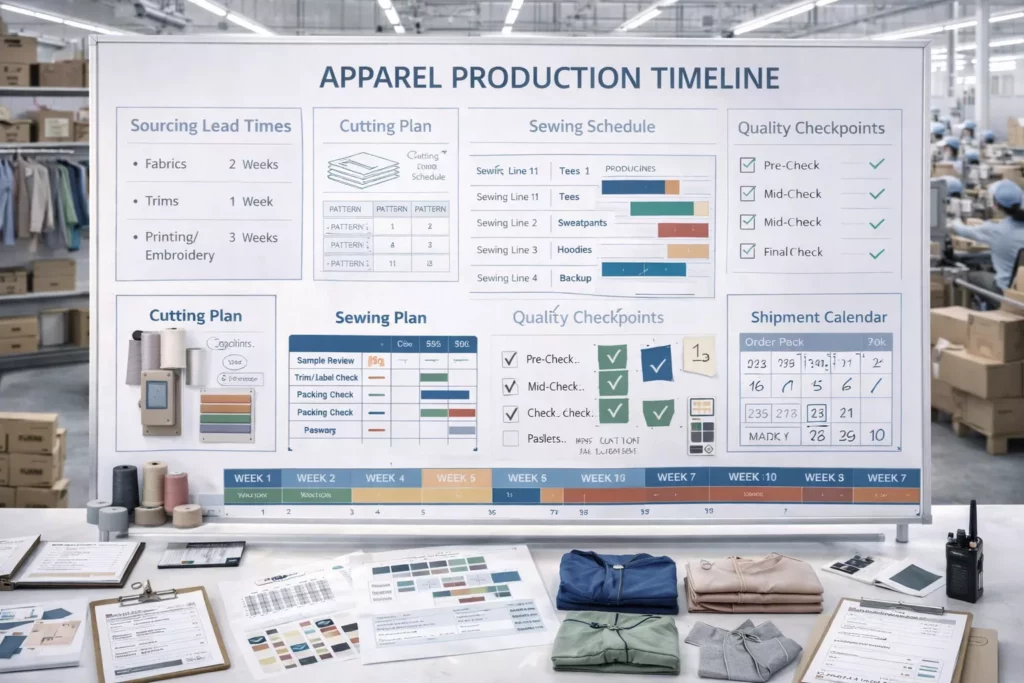
A larger order means more time for material sourcing, cutting, line allocation, sewing, finishing, quality control, and packing. It may also involve multiple colors, more sizes, more cartons, and stricter shipping requirements. The production calendar becomes a serious management tool, not just a rough expectation.
Brands also need to build more buffer into bulk timelines. Fabric delays, approval delays, trim issues, machine maintenance, washing problems, or freight coordination can all affect the final schedule. When the order is small, these problems may be absorbed more easily. In bulk, they can disrupt launches, retail delivery dates, or sales campaigns.
A common mistake is expecting bulk to move as fast as small-batch production. In reality, larger orders need more structured planning and more realistic deadlines. A strong factory should provide this, but the brand must also respect the complexity of scale.
Cost Structure Changes in Ways Many Brands Do Not Expect
Many fashion brands assume bulk production only means lower cost per unit. While that can be true, the full cost picture is more complex. Yes, larger orders often improve efficiency and may reduce unit cost due to better material pricing, production flow, and fixed cost distribution. But bulk production also introduces new types of financial exposure.
First, inventory commitment becomes much larger. The brand is investing more cash upfront into fabric, trims, labor, packaging, and freight. That means stronger forecasting is needed. A mistake in product demand is much more expensive in bulk than in small-batch production.
Second, quality mistakes cost more. If a fabric issue affects a small run, the financial damage may be limited. If it affects a bulk order, the loss can be substantial. The same applies to sizing problems, shipment delays, or packaging errors.
Third, bulk production may require more spending on systems, inspections, testing, warehousing, and logistics. The brand may need better planning tools, more formal quality control support, or more organized inventory management.
So while bulk can improve efficiency, it also raises the stakes. Brands should not view scale only through lower unit price. They should view it through margin protection, inventory health, and risk control.
How Does Mass Production Reduce Unit Costs?
When mass production is used, manufacturers spread fixed costs such as plant, machinery, and tooling over a much larger number of units, which lowers the average unit cost per item; this effect is the core of economies of scale.
High-volume processes also enable specialization and automation, reducing the time and labor required to make each unit and decreasing variable costs like wages and handling; standardization of parts further cuts waste and shortens setup times.
Finally, as output grows companies move down the learning curve: production teams and equipment become more efficient, suppliers offer better pricing for bulk orders, and continual improvements lower defects and rework, all combining to reduce the cost to produce every single unit.
When Should Small-Batch Production Be Chosen?
Choosing between mass manufacturing and smaller runs depends on demand, cost, and goals; small-batch production refers to manufacturing products in limited quantities, while batch production refers more broadly to grouped runs and batch production is generally about producing a limited quantity to reduce risk.
For startups or niche lines, production is ideal when iterative design and based on customer feedback adjustments matter, because production allows for greater flexibility and production allows designers to react quickly without creating unsold stock or excess inventory. Smaller runs also lower the carbon footprint compared with large production, and modern manufacturing solutions blend automation with precision and attention to detail so that choosing production refers to manufacturing products in small batches balances quality, sustainability, and market responsiveness.
Communication Becomes More Structured and More Critical
As production grows, communication between brand and manufacturer becomes more formal and more necessary. In small-batch production, a few quick messages may be enough to keep things moving. In bulk production, that is usually not sufficient.
Now the factory must communicate material status, sampling approvals, production start dates, line input, quality updates, finishing status, packing progress, and shipment readiness. The brand also needs to provide clear approvals, final documents, and fast decisions. There are more people involved, more details to track, and more places where confusion can create delays or quality issues.
This is why bulk production benefits from structured communication. Brands often need clear order confirmations, approval records, pre-production meeting notes, QC reports, and shipping updates. The process becomes more professional because the risk is higher and the quantity is larger.
A weak communication system may survive in small runs, but it often breaks down in bulk. Clear documentation, timely response, and aligned expectations become essential for smooth production.

Packaging, Logistics, and Delivery Become More Complex
Packaging and shipping may feel like final steps, but in bulk production, they become major operational considerations. A small-batch order might involve relatively simple folding, labeling, and dispatch. Bulk production often requires far more structure.
Brands may need carton ratios, barcode labeling, size assortment rules, buyer-specific packaging standards, export carton marks, polybag requirements, and shipment documentation. Wholesale and retail buyers may have exact compliance expectations. Even DTC brands may need more organized fulfillment preparation when larger inventory volumes arrive.
Logistics also become more sensitive. A delay in shipping a small order may be inconvenient. A delay in a bulk shipment can affect product launches, warehouse planning, and revenue timing. Freight mode, container planning, customs paperwork, and delivery coordination all matter more at this stage.
Bulk production is not only about making the garments. It is about moving them correctly, efficiently, and in sale-ready condition.
The Manufacturer Relationship Must Evolve Too
The move from small batch to bulk also changes what a brand needs from its clothing manufacturer. In the early stage, flexibility and willingness may be enough. As the brand grows, it needs stronger systems, more consistent execution, and better operational discipline.
A manufacturer supporting bulk production should be able to manage larger sourcing requirements, clearer technical files, organized line planning, structured quality control, and timely updates. They should also be honest about capacity and lead times. A factory that worked well for development and low MOQ production may not always be the best fit for large-scale growth.
This does not automatically mean the brand must change factories, but it does mean the relationship must be evaluated differently. The brand must ask whether the manufacturer can still support current needs. Can they handle volume without sacrificing quality? Can they keep communication strong? Can they manage complexity as collections grow?
If the answer is yes, the relationship can scale with the brand. If the answer is no, it may be time to adjust sourcing strategy or add new production partners.

How Brands Can Prepare for the Shift Successfully
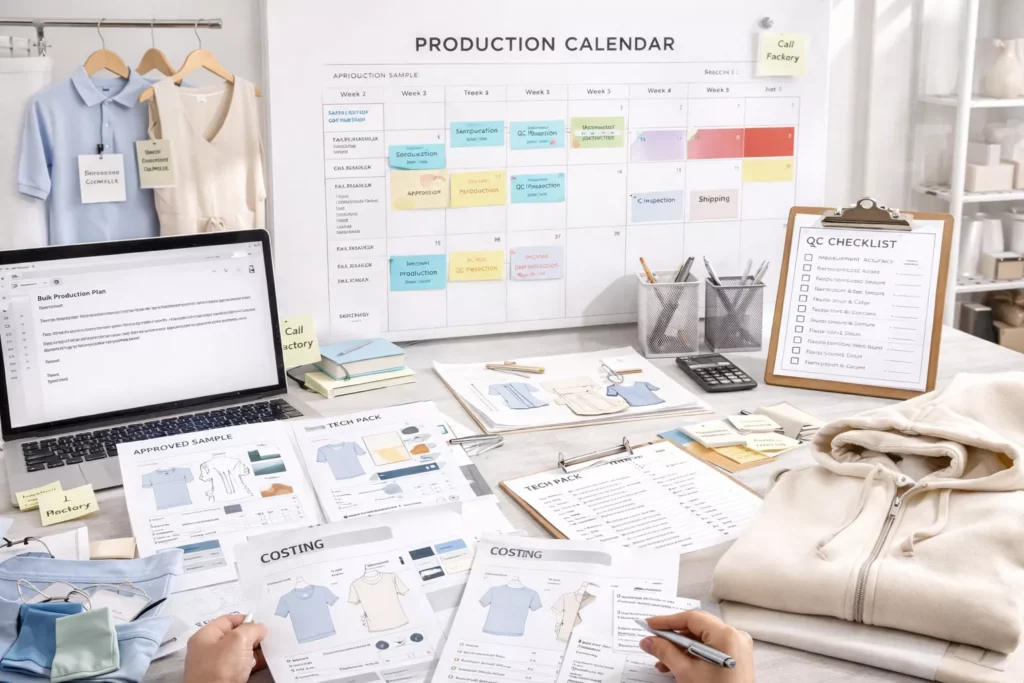
The transition from small batch to bulk production goes much better when brands prepare intentionally. The first step is product clarity. Styles should be technically ready, with strong tech packs, approved samples, stable measurements, and confirmed materials. Bulk should not begin while major product decisions are still unresolved.
The second step is production planning. Brands should work backward from the launch date and allow enough time for sourcing, approvals, production, finishing, and shipping. Unrealistic deadlines create pressure, and pressure usually hurts quality.
The third step is quality planning. Decide how quality will be monitored, what the key checkpoints are, what tolerances matter most, and how recurring problems will be handled. A factory with good systems helps, but the brand should also define its expectations clearly.
The fourth step is financial readiness. Bulk production ties up more cash and creates more inventory risk. Demand forecasting, inventory planning, and margin analysis become more important than ever.
Finally, the brand should communicate closely with its manufacturer. Pre-production alignment prevents confusion later in both small batch and mass production scenarios. The more clearly both sides understand the product and the plan, the safer the transition becomes.
Conclusion
Moving from small batch to bulk production is one of the biggest operational changes a clothing brand can make. It affects almost every part of the apparel manufacturing process, from product development and material sourcing to quality control, communication, costs, logistics, and factory management.
The most important thing to understand is that bulk production is not simply bigger small-batch production. It requires more precision, more planning, more technical clarity, and more system-based execution. The freedom and flexibility of early-stage production begin to give way to structure, consistency, and process control.
For growing fashion brands, this is not something to fear. It is something to prepare for. When handled well, the shift to bulk production can support stronger margins, better product availability, smoother scaling, and long-term brand growth. But it only works when the product is ready, the manufacturer is capable, and the systems are strong enough to protect quality at scale.
If your brand is preparing for this transition, the smartest move is to treat it as a new stage of manufacturing, not just a larger order. That mindset alone can help you avoid many of the most common mistakes and build a more reliable production foundation for the future.
Frequently Asked Questions
What is the difference between small-batch and bulk production in clothing manufacturing?
Small-batch production usually involves lower quantities, more flexibility, and lower inventory risk, while bulk production involves larger quantities, more structured systems, and a greater need for consistency, planning, and quality control.
Why do quality issues appear more often in bulk production?
Quality issues become more visible in bulk because volume magnifies small mistakes. Material variation, unclear instructions, weak quality control, and inconsistent construction can affect many more garments when production is scaled.
Does bulk production always reduce the cost per unit?
Bulk production often lowers unit cost, but it also increases financial exposure due to the challenges of economies of scale. Brands invest more in materials, labor, inventory, logistics, and quality management, so total risk is also higher.
Can a small-batch manufacturer handle bulk production?
Sometimes yes, but not always. Some factories are excellent for low MOQ production but may lack the capacity, planning systems, or quality controls needed for larger-scale manufacturing.
What should a brand finalize before moving into bulk production?
A brand should finalize the tech pack, approved samples, measurements, materials, trims, labeling, packaging instructions, and production timeline before bulk manufacturing begins.
Is bulk production the right move for every clothing brand?
Not immediately. Bulk production makes the most sense when demand is validated, the product is technically stable, the manufacturer is ready, and the brand has enough planning and financial strength to handle larger inventory commitments.