

Sustainable Textile & Apparel Certification: GOTS, Oeko-Tex,More
As apparel brands grow, one question comes up again and again: which certifications actually matter? Founders hear terms like CE, GOTS, and OEKO-TEX in sourcing conversations, factory presentations, product pages, and retailer requirements, but they are not interchangeable. They do not certify the same thing, they do not apply to the same garments, and they do not solve the same business problem. That is why many clothing brands either overuse recognized certifications they do not need or ignore the ones that could genuinely strengthen their product credibility and ensure transparency.
A big source of confusion is that one certification may be about regulatory conformity, another about organic fibre processing and social-environmental criteria, and another about the importance of transparency in achieving fair wages and environmental impact. harmful-substance testing. If a brand treats them as simple marketing badges, it can waste money, create misleading claims, or miss the certification that actually matches its product and market position.
This guide explains CE, GOTS, and OEKO-TEX for apparel in a practical, beginner-friendly way. It covers what each one means, when it matters, when it does not, how they differ, and how fashion brands should decide whether any of them belongs in their product strategy. It is a business guide, not legal advice, so brands should still verify product-specific requirements with their compliance, customs, or legal advisors before making certification or labelling decisions.
Global Organic Textile Standard (GOTS)
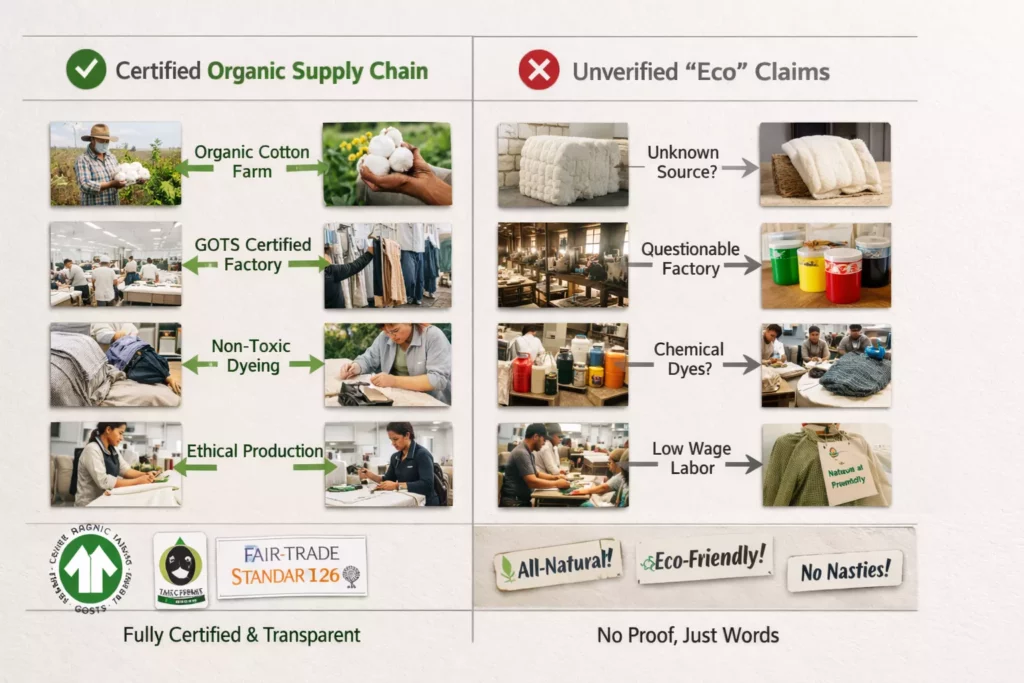
The Global Organic Textile Standard (GOTS) is a leading certifications for organic textiles program that sets environmental and social standards for the entire supply chain in the fashion industry. GOTS requires raw material and raw material sourcing to be organic and limits harmful chemicals, so products must be free from harmful substances and often include recycled material where possible. Certified companies are regularly audited and may be accredited by credible bodies to prevent greenwashing. The standard enforces strict environmental criteria through the production process and promotes sustainable production and sustainable practices across every stage.
GOTS also covers social and environmental responsibility: it requires safe working conditions, fair labor practices, reasonable working hours — at least 70 hours per month in some contexts is discouraged — and protections for farmers and workers. Alongside other key certifications like oeko-tex certified, oeko-tex step, the fair wear foundation, and sedex members ethical trade, GOTS gives brands and consumers credible assurances. When companies in the textile and garment industry pursue GOTS it signals responsible production practices and helps distinguish real standards from greenwashing.
Why certifications matter in apparel at all
Certifications matter because apparel buyers, retailers, and consumers are asking more detailed questions than before. They want to know whether a garment is safe, whether the fibre sourcing claims are credible, whether the product is suitable for a regulated category, and whether the brand can support what it says with third-party verification. Certifications can help answer those questions, but only when the certification matches the actual product claim.
They also matter commercially. Some certifications support ecommerce conversion, some help with wholesale discussions, some make retailer onboarding easier, and some are relevant mainly when the product falls into a regulated category. A certification can strengthen trust, but only if it is meaningful. A random badge on a product page does not create real credibility. A clear certification connected to a real product need does.
This is why the real question is not “Which certification is best?” The better question is “Which certification matches the product, the market, and the claim I want to make, including GOTS certification and fair trade?”
Quick answer: which certification matters most for apparel?
For ordinary fashion apparel, GOTS and OEKO-TEX are usually more relevant than CE, because CE marking generally does not apply to standard clothing under the EU textile labelling rules. However, certain textile products that fall under other EU legislation, such as personal protective equipment or some medical-device-related products, may require CE marking. GOTS matters when a brand wants credible organic textile and broader processing claims. OEKO-TEX STANDARD 100 matters when a brand wants to communicate harmful-substance testing and textile safety from yarn to finished product.
So for most regular apparel brands:
- CE Usually matters only for regulated product categories, not normal fashion clothing, but transparency can elevate the brand’s credibility.
- GOTS matters when organic-fibre and process integrity are core to the brand promise.
- OEKO-TEX STANDARD 100 matters when product-safety and harmful-substance testing are important selling points.
That means the answer depends heavily on what kind of clothing you sell and what kind of trust signal your customer actually values.
What CE marking actually means
CE marking is a conformity mark used in the European Economic Area for products covered by specific EU rules. According to the European Commission, CE marking shows that a product sold in the EEA has been assessed to meet applicable EU safety, health, and environmental protection requirements, but CE marking only applies to products covered by specific harmonised EU legislation. Products outside those rules do not use CE just because they are sold in Europe.
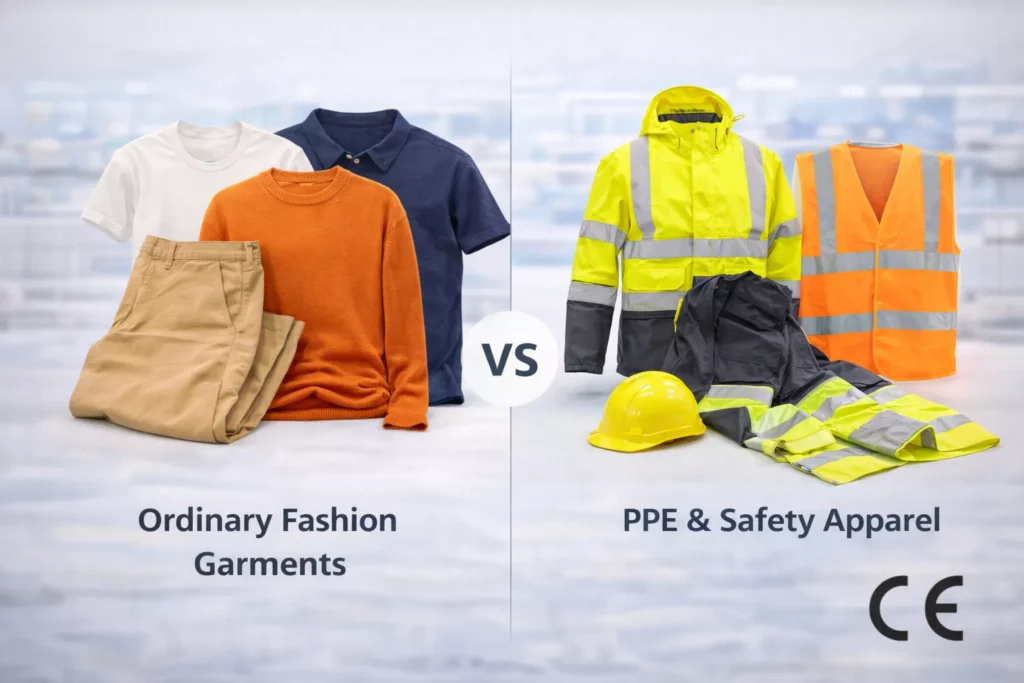
This is where fashion brands often get confused. Ordinary apparel does not become “more compliant” just because it carries a CE mark. In fact, the EU textile ecosystem page states that textile products and footwear do not have to be CE marked according to the Textile Labelling Regulation or the Footwear Directive, and the EU’s 2024 textile FAQs repeat that the Textile Regulation itself does not require CE marking of textile products.
So CE is not a generic “good quality” apparel certification, especially when compared to GOTS certification and fair trade standards. It is a regulatory conformity marking for certain covered product types. That difference is critical.
Does CE matter for ordinary clothing brands?
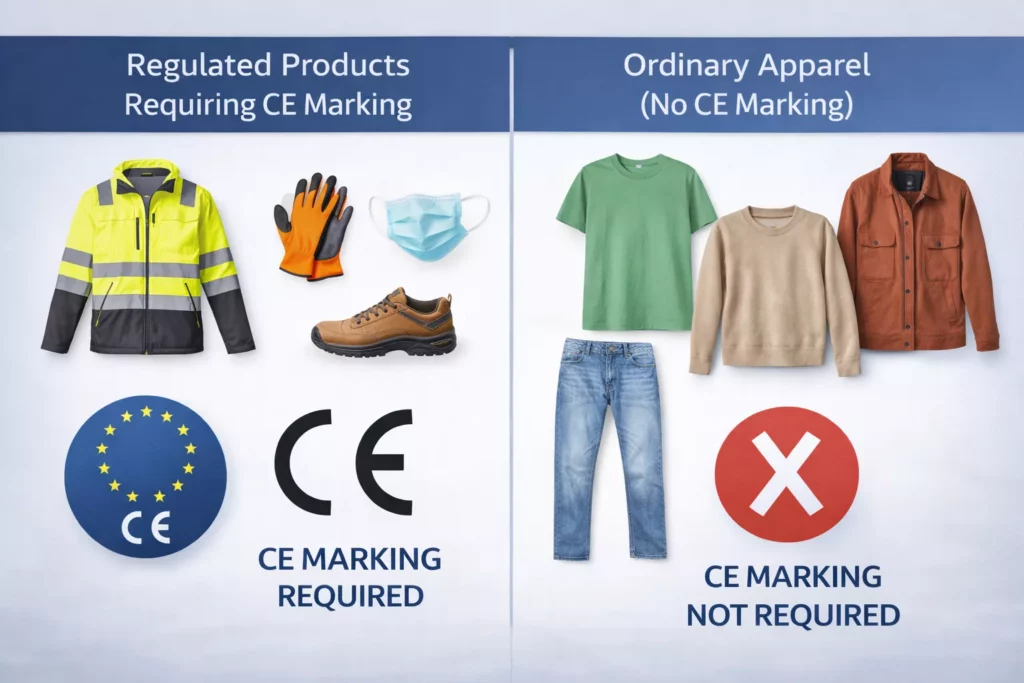
For most ordinary fashion apparel brands often overlook ethical practices in favor of trends., CE does not matter in the way many founders think about ethical practices and social responsibility. If you sell regular t-shirts, dresses, hoodies, trousers, knitwear, or lifestyle fashion pieces, CE marking is generally not the main certification question under ordinary textile-labelling rules. The EU’s own textile FAQ states that the Textile Regulation does not require CE marking of textile products.
Where CE becomes important is when the textile product falls under other EU legislation. The EU FAQ explicitly gives examples such as personal protective equipment under Regulation (EU) 2016/425 and medical devices under the Medical Devices Regulation. In those cases, CE is not about ordinary apparel branding. It is about legal conformity for a regulated product class.
That means if your brand sells fashion basics, streetwear, resortwear, kidswear, or general casualwear, CE is usually not the certification you should prioritize first. But if you sell protective workwear, high-visibility PPE, specialist safety clothing, or certain medical textile products, CE can become essential.
When CE actually matters in apparel
CE matters when the apparel product is not just “clothing,” but a regulated protective or medical-related product. The EU FAQ explicitly points to PPE and medical devices as examples where textile products may still require CE marking under other legislation even though the Textile Regulation itself does not require it.
Examples where CE may matter include:
- high-visibility protective garments
- thermal or hazard-protective clothing
- some industrial safety apparel may need to comply with health and safety regulations and certifications like GOTS certification.
- certain textile products classified under medical-device frameworks
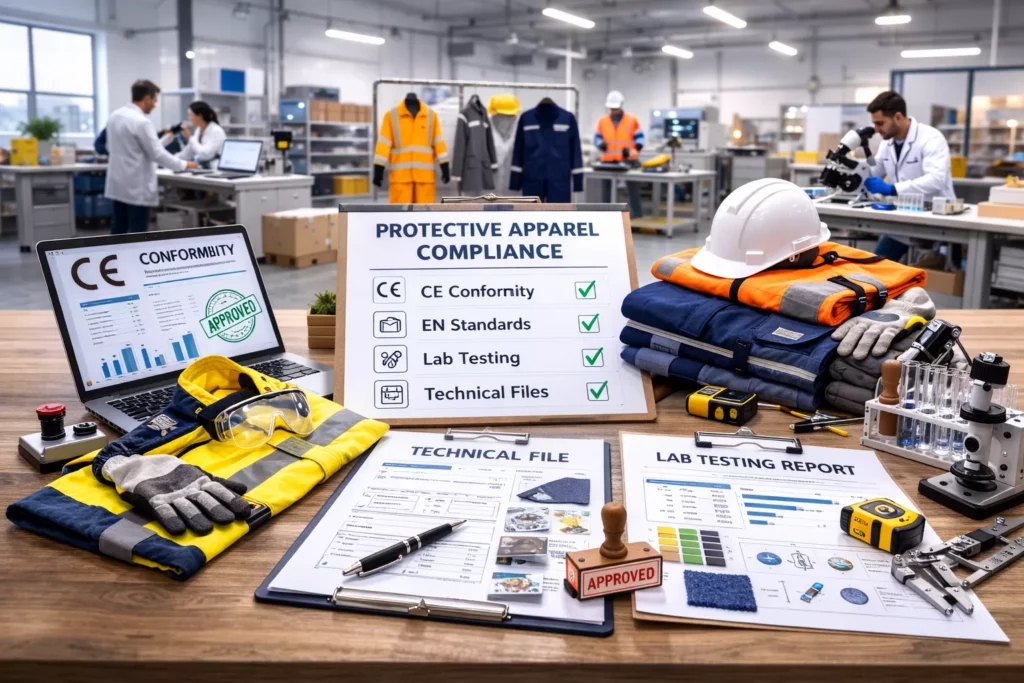
In those cases, brands should not treat CE like a marketing extra, as it can impact the integrity of their certified products. It becomes part of product conformity, technical documentation, and legal market access. That usually involves a much more structured compliance process than ordinary fashion certification discussions.
For most fashion entrepreneurs, the practical lesson is simple: ensure that your products are aligned with recognized certifications to build trust. CE is usually a “regulated product” issue, not a “premium apparel” issue.
What GOTS actually certifies
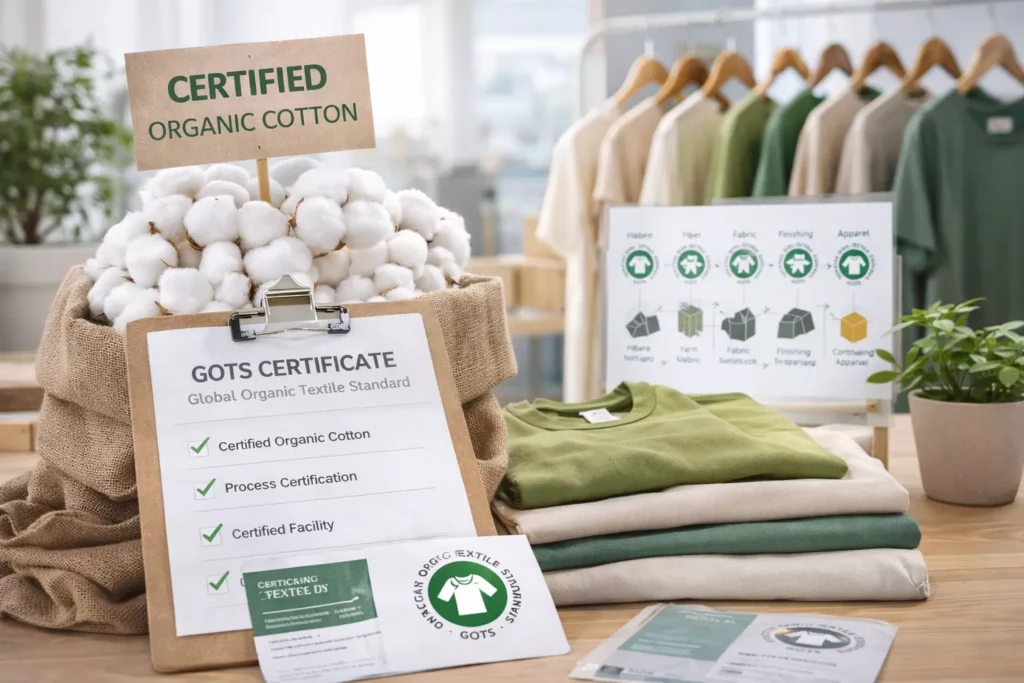
GOTS, or the Global Organic Textile Standard, is a third-party certification framework for textiles made with organic fibres and processed according to environmental and social criteria. The official GOTS standard describes itself as the worldwide leading textile processing standard for organic fibres, backed by third-party certification of all processing stages. GOTS-certified final products can include fibre products, yarns, fabrics, clothes, home textiles, mattresses, hygiene products, and more, ensuring a lower environmental impact through the use of recycled content.
The official standard also states that GOTS covers the processing, manufacturing, packaging, labelling, trading, and distribution of textiles made from at least 70% certified organic natural fibres. The GOTS key-features page similarly notes that a textile product carrying the GOTS label must contain a minimum of 70% certified organic fibres.
This is important because GOTS is not simply a “fabric test” and not simply a “contains organic cotton” badge. It is a broader chain-based standard covering both material integrity and parts of the textile processing system.
Why GOTS matters for apparel brands
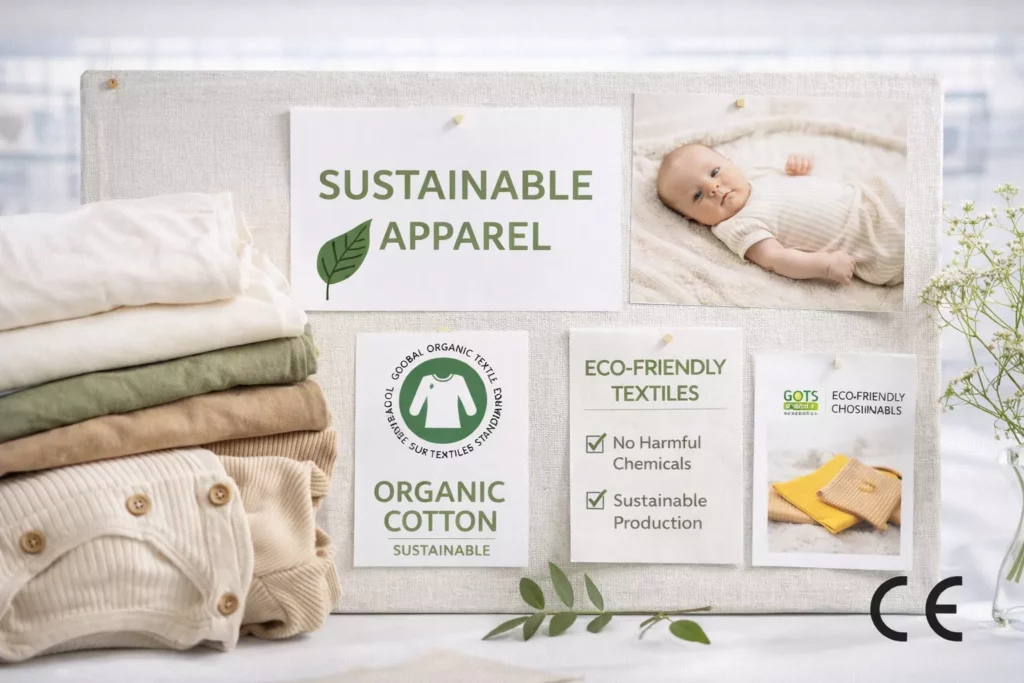
GOTS matters most when your brand promise includes certified products that prioritize environmental impact and fair wages. organic fibres, credible sustainability positioning, and supply-chain trust. Because it covers more than just the finished garment, it can be a stronger signal than a simple organic-material claim without chain verification. The GOTS site says its certification system is based on on-site inspection and certification of the entire textile supply chain, including processing and trade, by approved third-party certification bodies.
This makes GOTS certification especially relevant for ensuring that brands can credibly communicate their commitment to sustainability and social responsibility.
- organic cotton apparel brands
- babywear brands using organic fibres
- sustainable basics labels
- Many premium eco-conscious fashion lines focus on certified products, such as those with GOTS certification, that prioritize fair wages and environmental impact.
- brands supplying retailers that require recognized organic-textile verification
GOTS can support both consumer trust and B2B credibility because it addresses the broader processing chain, not only the final product label. That makes it stronger when your core business claim is not merely “soft natural fabric,” but something closer to “certified organic textile processing with recognized third-party control.”
What GOTS does not mean
A common mistake is assuming GOTS means every sustainability issue is fully solved. The official GOTS language is specific: it is a textile processing standard for organic fibres with environmental criteria and third-party certification across processing stages. It is powerful, but it is not a vague “all good” label for any product with a green-looking story.
It also does not mean that every product containing a little organic material can automatically use the certification. The minimum organic-fibre threshold matters, and certification must be handled through the official system rather than informal marketing language.
That means GOTS matters when your brand has built its material and supply-chain strategy around it. It matters less when you are making loose or partial sustainability claims that do not align with what the standard actually covers.
What OEKO-TEX STANDARD 100 actually certifies
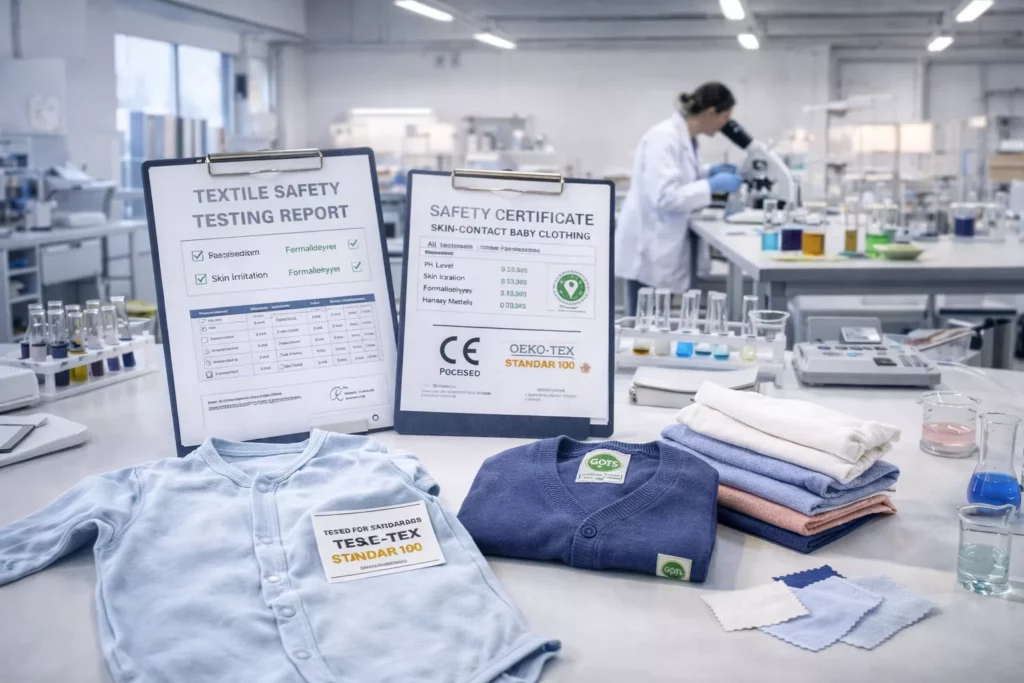
OEKO-TEX STANDARD 100 is a product label for textiles tested for harmful substances. The official OEKO-TEX page says it sets the benchmark for textile safety from yarn to finished product, and every item bearing the label is certified as having passed safety tests for the presence of harmful substances.
This is a very different focus from GOTS. OEKO-TEX STANDARD 100 is not mainly about organic fibres or broad supply-chain sustainability. It is about product-level testing for harmful substances in textile items. That makes it especially useful for brands that want to communicate skin-contact safety and chemical-screening reassurance in a way customers can understand.
The OEKO-TEX ecosystem includes other programs too, such as STeP, which addresses responsible production standards at the facility level, but STANDARD 100 is the label most directly recognized by consumers in textile-product contexts.
Why OEKO-TEX matters for apparel brands
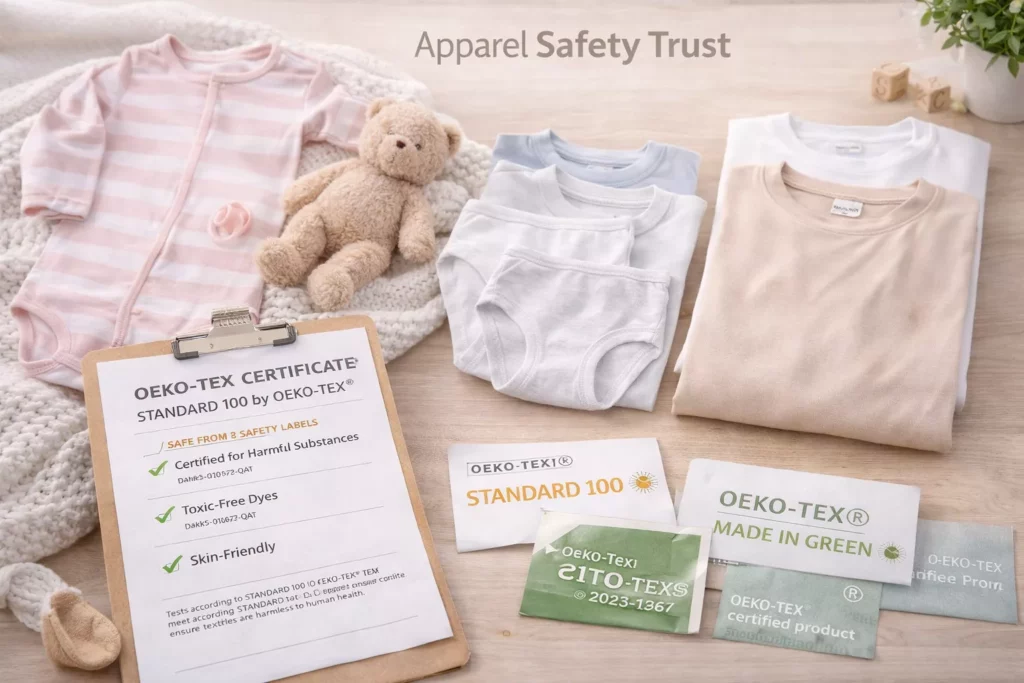
OEKO-TEX STANDARD 100 matters when the brand’s message includes textile safety, Skin contact is crucial for ensuring that textiles meet the standards of recognized certifications like OEKO-TEX., or tested-for-harmful-substances reassurance. This can be especially useful in categories such as:
- babywear
- underwear and intimates
- basics and loungewear
- bedding-related apparel lines
- sensitive-skin-oriented products
- premium essentials where material trust matters
For customers, OEKO-TEX is often easier to understand than a long technical explanation about chemical compliance because the label communicates a direct safety-testing message. For brands, it can be a strong support tool when shoppers care about what touches their skin, their children’s skin, or their daily-wear garments.
It can also help in B2B conversations when retailers or distributors want reassurance that the product has been tested according to a recognized textile-safety framework.
What OEKO-TEX Does Not Replace
A lot of brands misuse OEKO-TEX by assuming it replaces every other kind of textile credibility, including GOTS certification and fair trade standards. It does not. OEKO-TEX STANDARD 100 is about harmful-substance testing in the textile product. It is not the same as a broad organic-fibre certification, and it is not the same as a full sustainability certification for every stage of the supply chain.
So if your brand promise is “certified organic textile processing,” GOTS is more directly aligned than OEKO-TEX STANDARD 100. If your promise is “tested for harmful substances,” OEKO-TEX is much more relevant. If your product is regulated PPE, CE may become the central issue instead.
This is why choosing the right certification matters more than collecting the most badges. Different certifications solve different trust problems.
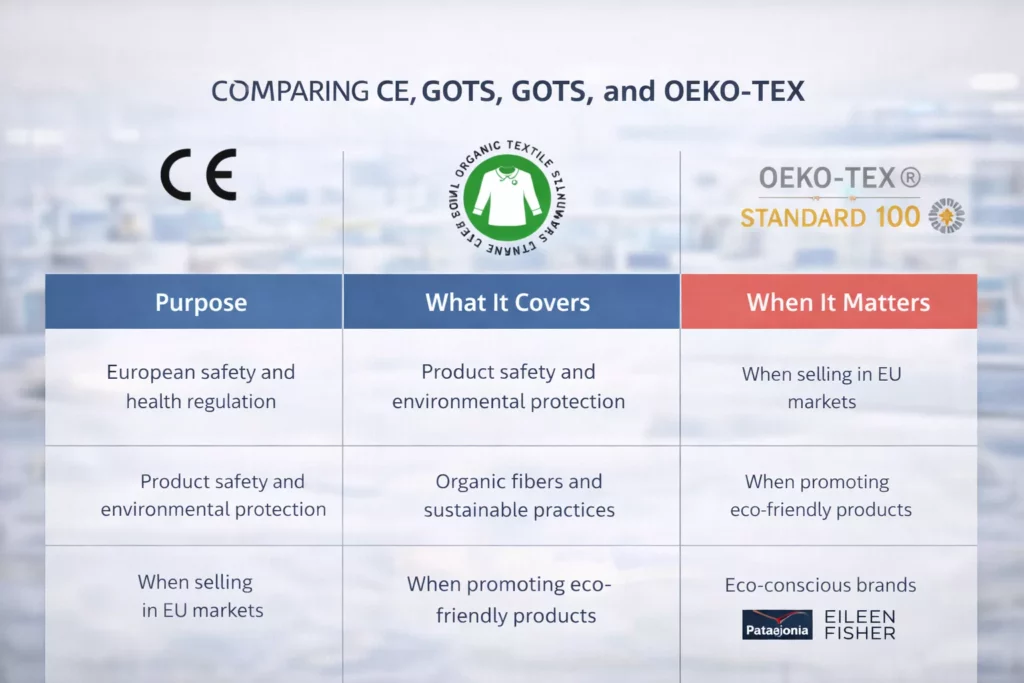
CE vs GOTS vs OEKO-TEX: the easiest way to compare them
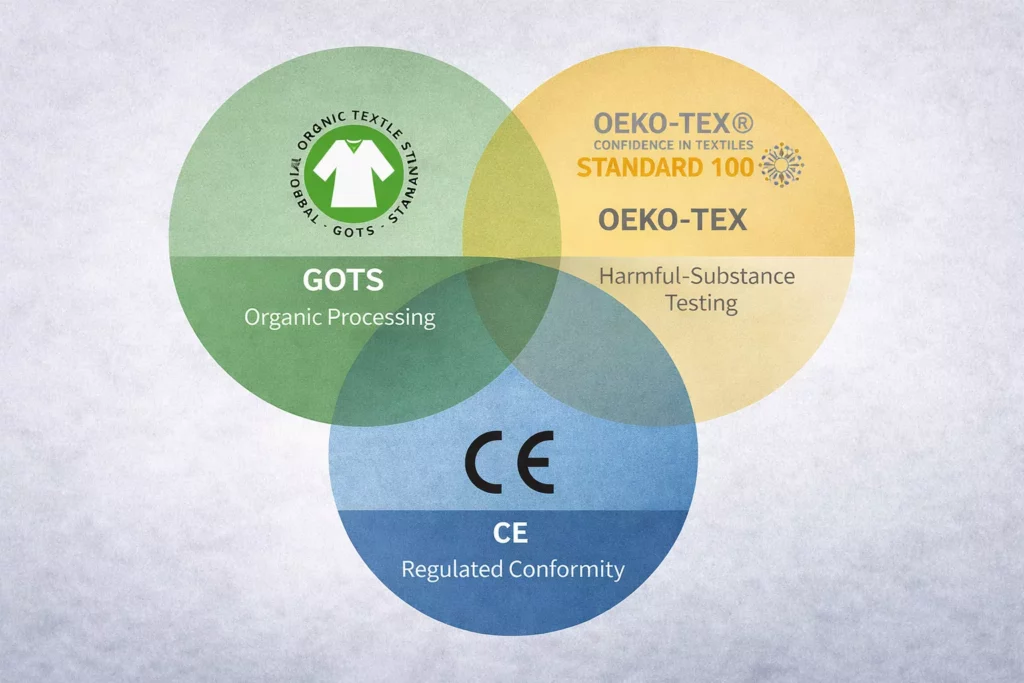
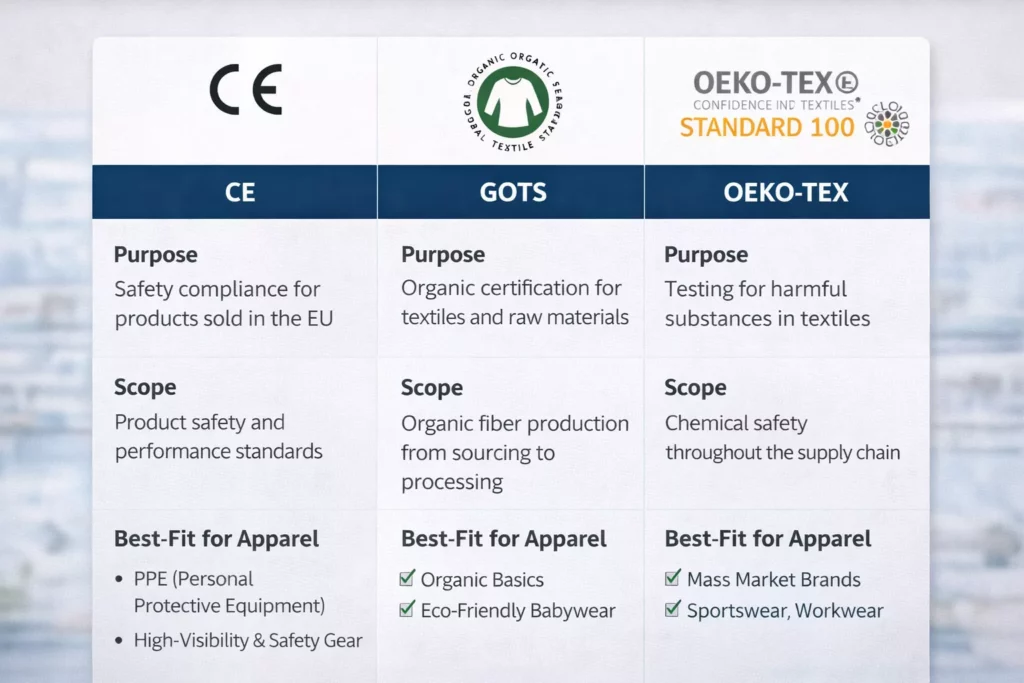
The simplest comparison is this:
| Certification | Main purpose | Usually relevant for | Usually not the main issue for |
| CE | Regulatory conformity under specific EU legislation | PPE, certain medical or regulated textile products | Ordinary fashion clothing |
| GOTS | Organic textile processing and chain assurance | Organic-fibre apparel and sustainability-driven brands | General non-organic clothing without organic-chain claims |
| OEKO-TEX STANDARD 100 | Harmful-substance testing of textile products | Babywear, basics, intimatewear, safety-conscious apparel | Brands looking specifically for organic-process certification |
This comparison matters because founders often ask “Which one is best?” when the more accurate question is “Which one fits the claim and product?” For standard fashion apparel, CE is often not the main conversation at all. For organic apparel brands, GOTS can be central. For safety-sensitive textile categories, OEKO-TEX can be one of the most commercially useful trust signals.
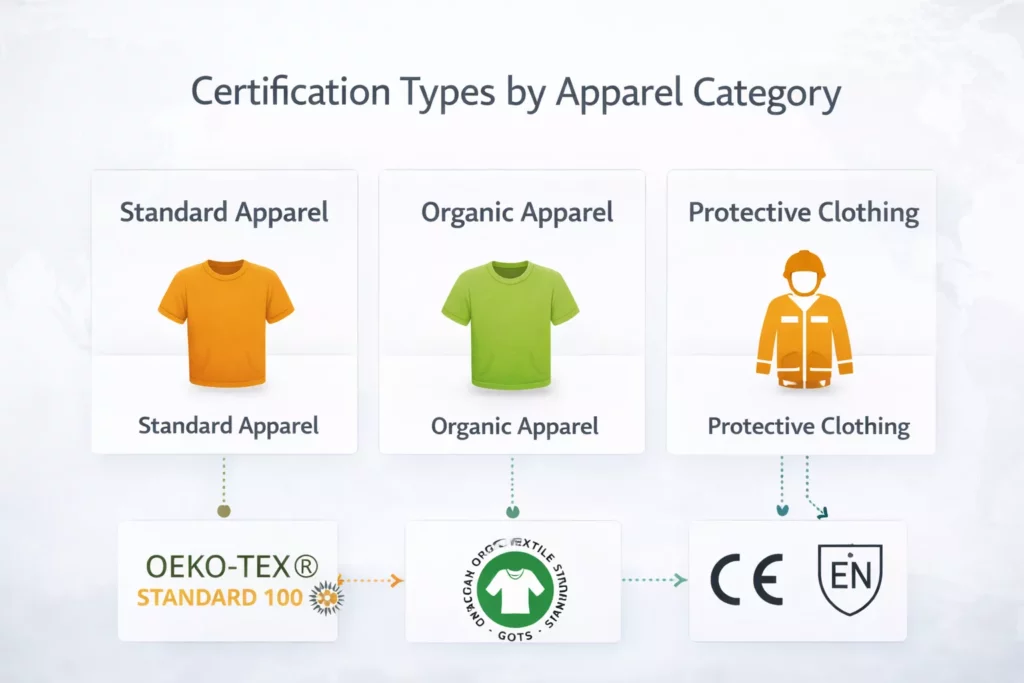
Which Certification Matters For Different Apparel Categories?
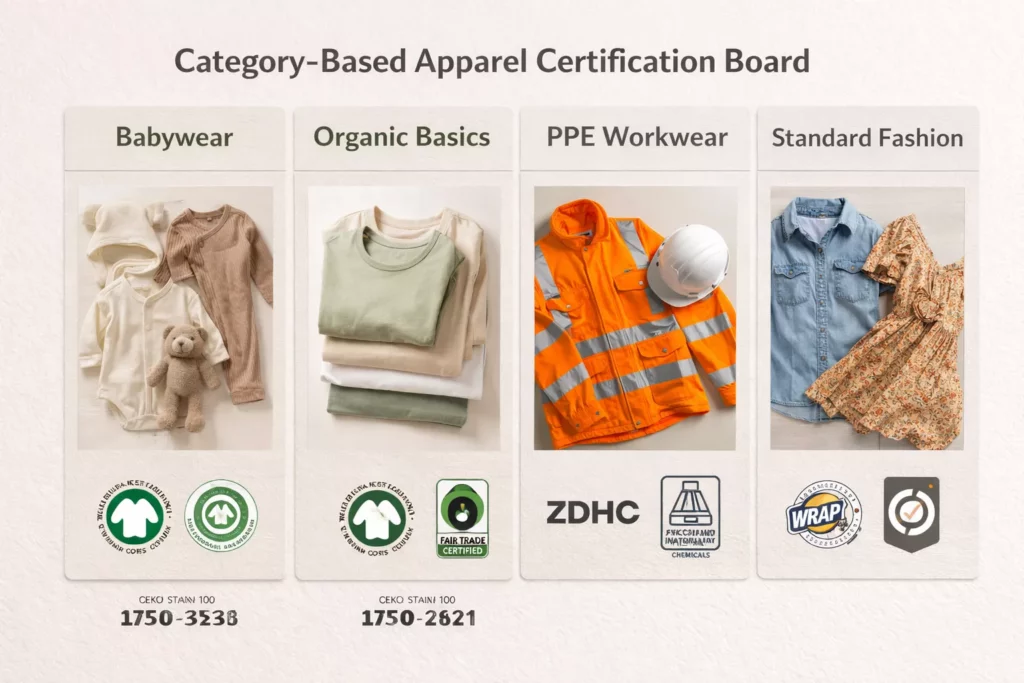
Different apparel categories naturally align with different certifications.
For ordinary fashion basics, CE usually does not matter unless the product enters a regulated category that requires health and safety certifications. GOTS matters if the basics line is built around certified organic fibres and verified processing. OEKO-TEX matters if the brand wants to emphasize safety testing and skin-contact reassurance.
For babywear, OEKO-TEX STANDARD 100 can be especially valuable because parents are often highly sensitive to harmful-substance concerns. GOTS can also matter strongly if the babywear line is built around organic natural fibres and a broader sustainability promise.
For organic cotton brands, GOTS is often the more powerful signal because it is directly tied to organic-fibre textile processing and certification across stages. OEKO-TEX may still complement the story, but it addresses a different question.
For protective workwear or high-visibility PPE, CE can become essential because the product may be governed by PPE conformity rules rather than ordinary apparel labelling alone.
This is why the category matters. A certification that adds strong value in one segment may add very little in another.
Which Certification Matters for Different Types of Clothing?
Not every apparel category needs the same certification. The right certification depends on the garment type, the customer expectation, and the brand promise.
Organic Cotton T-Shirts and Basics
For brands selling organic cotton basics, GOTS often matters the most because it supports stronger claims around certified organic fibres, ethical practices, and textile processing. If the brand also wants to reassure customers about harmful substance testing, OEKO-TEX STANDARD 100 can also be valuable.
Babywear and Kidswear
For babywear and kidswear, OEKO-TEX STANDARD 100 is often especially useful because parents are highly sensitive to product safety and skin-contact concerns. If the product is also built around certified organic cotton, GOTS can strengthen the sustainability position further.
Underwear, Loungewear, and Intimates
For garments worn close to the skin, OEKO-TEX STANDARD 100 is often one of the most practical certifications because it directly supports textile safety messaging. This can improve trust for basics, underwear, sleepwear, and soft loungewear categories.
Protective Workwear and PPE
For protective garments such as high-visibility workwear, hazard-protective clothing, or other regulated functional products, CE may become essential because the product may fall under specific EU conformity rules. In these cases, CE is not a marketing extra. It is part of legal compliance.
Premium Sustainable Fashion
For premium fashion brands that want to communicate a deeper sustainability and organic-material position, GOTS is usually more meaningful than simply using eco-friendly language without certification. It helps support stronger textile processing claims.
This is why certification should always be linked to product category and customer expectation, not chosen only because it looks impressive on packaging or product pages.
Which certification matters most for customer trust?
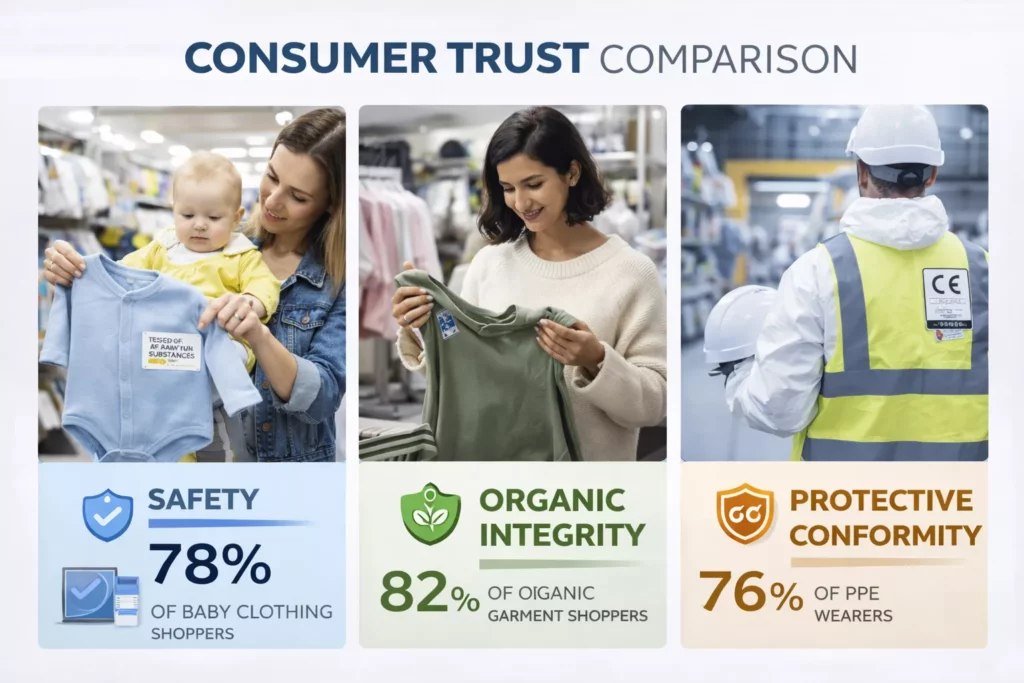
From a consumer-trust perspective, OEKO-TEX STANDARD 100 is often one of the clearest and easiest certifications to communicate because its basic message is simple: the textile product has been tested for harmful substances. That is easy to connect to real customer concerns, especially in close-to-skin and children’s categories.
GOTS matters strongly when your customer actively cares about organic fibres and wants a more robust sustainability-oriented textile certification rather than just a single-material claim. It can be especially powerful for consumers already looking for organic cotton, natural-fibre trust, and more responsible processing signals.
CE, by contrast, usually matters most where the product’s legal conformity is central to use and safety. It is less a lifestyle trust badge for ordinary fashion and more a conformity necessity for regulated categories.
So the customer-trust answer is not universal; it varies depending on the certifications that ensure environmental impact and fair wages. It depends on what the customer is actually worried about: chemical safety, organic integrity, or regulated functional protection.
Which Certification Matters Most For Retailers And Sourcing Discussions?
Retailers and sourcing teams usually think differently from end customers. They may care less about badge recognition alone and more about whether the certification supports risk reduction, product claims, and channel requirements.
GOTS can matter strongly in wholesale and retail partnerships where organic-textile integrity is part of the assortment or where sustainability positioning is a buying criterion. OEKO-TEX can matter where product-safety reassurance is important, especially in categories such as children’s, basics, or close-to-skin apparel. CE matters where regulatory conformity is a legal or procurement necessity because the textile product sits inside a regulated class like PPE.
This means a fashion founder should not choose certification only by what sounds impressive online. They should also ask: what do my target retailers, distributors, or category buyers actually care about? That usually leads to a much better certification decision.

Common Certification Mistakes Apparel Brands Make
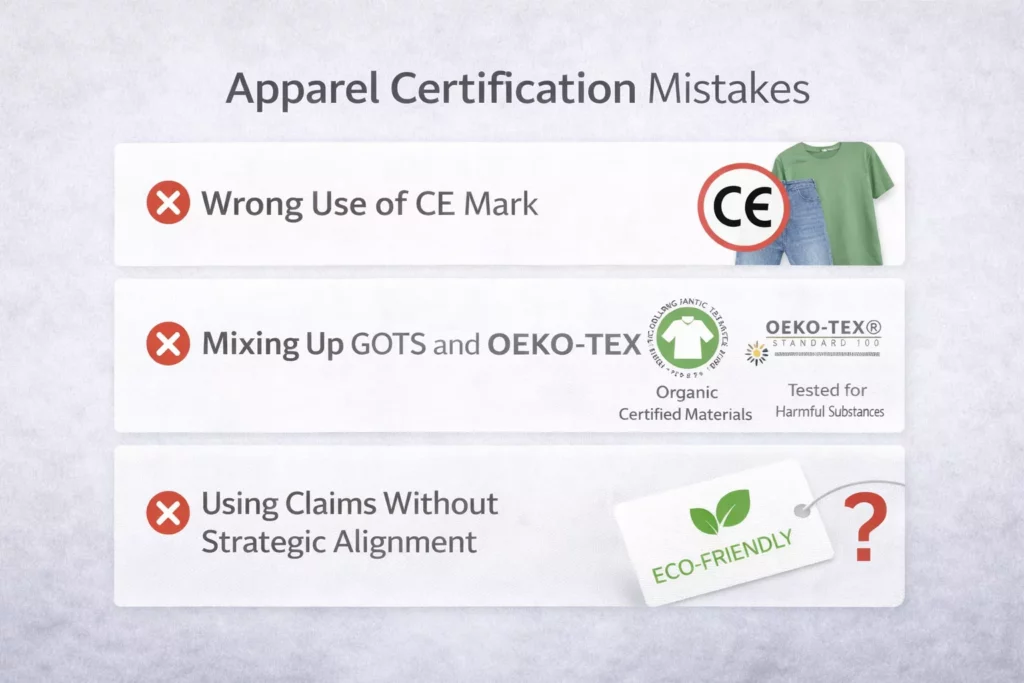
One frequent mistake is using CE as if it were a general apparel quality badge. For ordinary fashion clothing, that is usually the wrong approach because CE is linked to specific EU product legislation, not generic textile branding, which can obscure transparency.
Another mistake is treating GOTS and OEKO-TEX as if they certify the same thing. They do not. GOTS is about organic-textile processing and related criteria across the chain. OEKO-TEX STANDARD 100 is about harmful-substance testing in the textile product. A brand should not substitute one claim for the other.
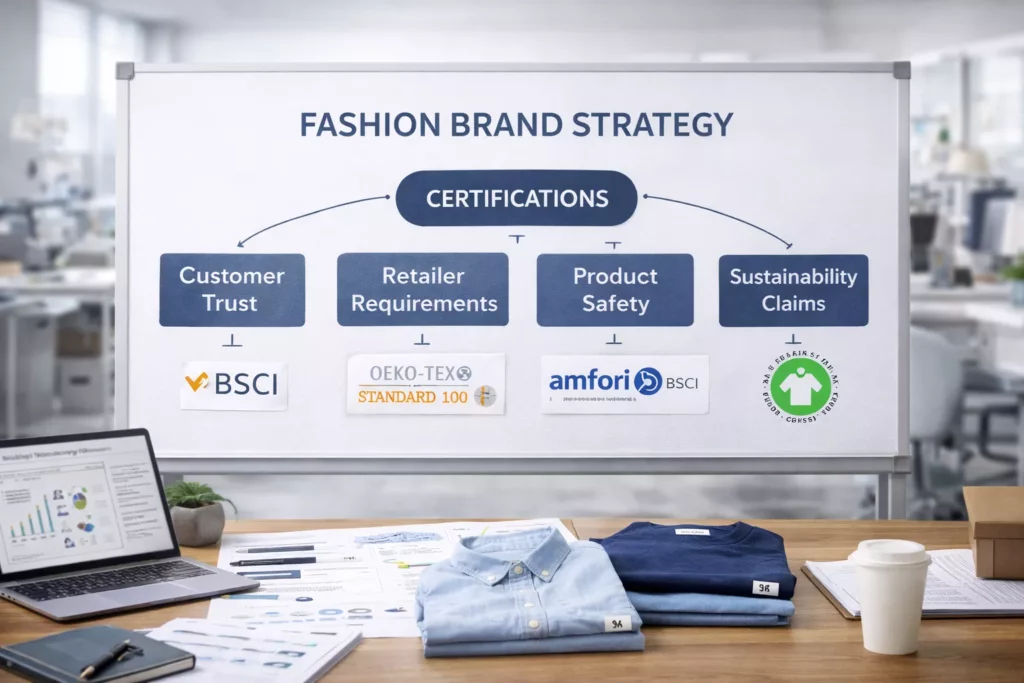
A third mistake is adding certifications for marketing reasons without building the product or sourcing system around them. Certifications work best when they are integrated into the product strategy, not pasted onto it later, to ensure authenticity and audit readiness.
How To Decide Which Certification Matters For Your Brand
A simple decision framework helps ensure that your product strategy aligns with recognised certifications.
Ask first: Is my product an ordinary fashion textile or a regulated protective/medical-type product? If it is regulated, CE may matter. If it is ordinary fashion, CE is usually not the first certification question.
Then ask: Is organic fibre integrity a central part of my brand promise? If yes, GOTS is likely much more relevant than a generic sustainability claim.
Then ask: Do I want to communicate tested-for-harmful-substances textile safety to customers or retail partners? If yes, OEKO-TEX STANDARD 100 may be highly relevant.
Finally ask: Will this certification actually influence trust, retailer access, or conversion in my market? If the answer is unclear, the certification may not be the first thing your brand needs. Sometimes, better fabric, better sizing, and better clarity create more value than a badge the customer does not understand.
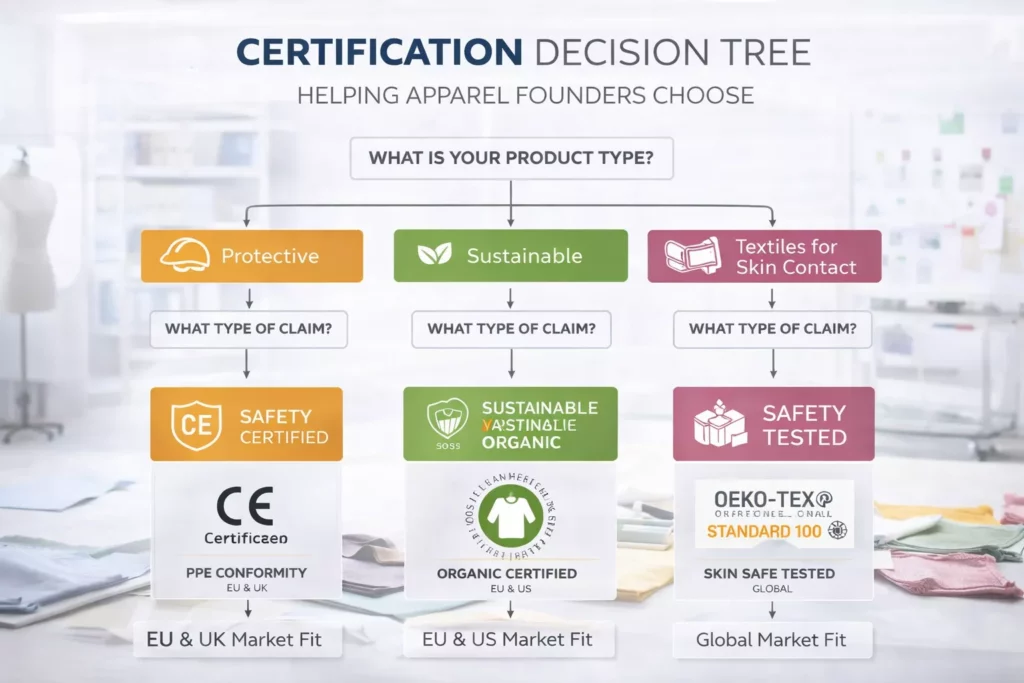
How certifications can help you discover more sustainable fashion
Certifications can guide shoppers and companies to more sustainable choices by highlighting key certifications that ensure sustainable production and traceability throughout the supply chain. Globally recognised labels like the Fair Wear Foundation and OEKO-TEX certified programs help verify environmental and social standards, showing that certified companies follow responsible production practices.
In the garment industry and certifications in the textile sector, schemes such as OEKO-TEX STEP, certifications for organic textiles, and being Sedex members ethical trade demonstrate commitment to strict environmental and social criteria. Certifications offer clarity about raw material sourcing, safer chemistry — being free from harmful substances — and protection for farmers and workers. By following credible certifications, brands and consumers can support ethically produced goods and make it easier to choose fashion that is truly gr and responsible worldwide.
Certifications For The Supply Chain
Certifications for the supply chain are vital in the apparel industry, where transparency must span the entire textile and leather production process to guarantee sustainability and ethical practices. Standards like gots certified label fibers and fibers-to-finish goods, making sure every stage of textile processing is verified so that certified products must meet strict chemical, social and environmental limits. By requiring documentation and audits, certification schemes support ethical practices throughout the supply and help brands demonstrate compliance to consumers who want responsible sourcing.
A clear chain-of-custody means certified products include raw fibers, yarns, fabrics and finished items such as like clothing, while third-party oversight like gots ensures that production sites follow fair labor, low-impact dyeing and traceable sourcing. These frameworks promote practices and sustainable production that reduce harm and build trust across the global textile ecosystem.
A Practical Way To Think About Certification Strategy
For most clothing brands, certification strategy should follow business strategy, not lead it. If you are building an organic basics line, GOTS may become a core structural choice. If you are selling babywear or skin-sensitive basics, OEKO-TEX may become one of the most customer-visible trust signals, helping to ensure skin contact safety. If you are entering protective clothing, CE may shift from optional curiosity to mandatory conformity.
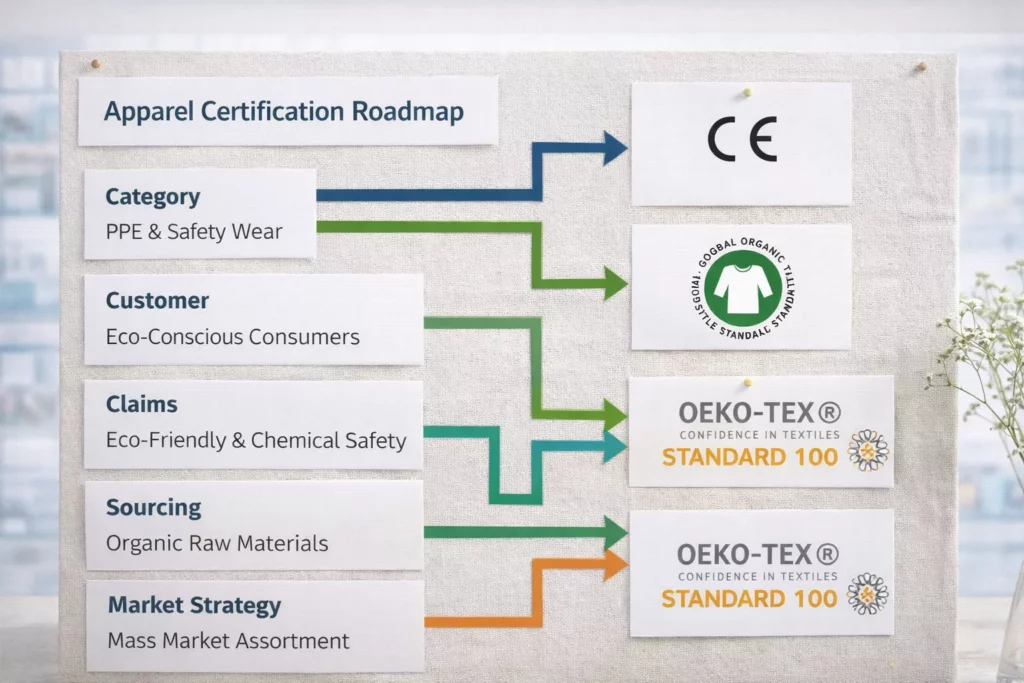
That means your certification roadmap should come after you define:
- your category
- your target customer
- your product claims
- your retail or DTC strategy
- your sourcing capability can be enhanced by incorporating global recycled standards and ethical practices.
When certification is aligned with those things, it supports the brand. When it is disconnected from them, it becomes a cost and communication problem.
CE vs GOTS vs OEKO-TEX at a Glance
| Certification | Main Purpose | Best For | Usually Not the Main Priority For |
| CE | Regulatory conformity under specific EU product rules | PPE, protective clothing, certain medical textile products | Standard fashion apparel |
| GOTS | Organic textile processing and certified organic fibre claims | Organic cotton brands, sustainable apparel, babywear | Non-organic general fashion products |
| OEKO-TEX STANDARD 100 | Testing textiles for harmful substances | Babywear, underwear, basics, close-to-skin products | Brands focused mainly on organic supply chain certification often seek GOTS certification to enhance their credibility. |
This comparison makes it easier to understand that these certifications are not interchangeable. Each one serves a different business and product purpose.
ApparGlobal
Many apparel brands make stronger certification decisions when they work with manufacturing partners that understand product category, textile compliance, organic-material sourcing, safety testing expectations, and scalable production workflows. Companies such as ApparGlobal help clothing brands align garment specifications, material claims, sourcing strategy, and manufacturing execution so certification decisions become more practical, more accurate, and more market-ready from the beginning.

Frequently Asked Questions About Apparel Certifications
Is CE required for normal fashion clothing?
In most cases, no. CE is generally not required for ordinary fashion garments such as t-shirts, dresses, hoodies, and casualwear. It usually matters only for textile products that fall under specific regulated product categories.
Is GOTS better than OEKO-TEX?
Not necessarily. They do different things. GOTS is mainly about certified organic textile processing and organic fibre claims, while OEKO-TEX STANDARD 100 focuses on testing textile products for harmful substances.
Can a clothing brand use both GOTS and OEKO-TEX?
Yes. In some cases, a brand may use both if the product and supply chain support it. For example, a brand may want to communicate both organic textile processing and harmful-substance testing.
Which certification matters most for baby clothing?
For babywear, OEKO-TEX STANDARD 100 is often very valuable because of product safety concerns. If the product is also based on certified organic fibres, GOTS may also be important.
Which certification matters most for sustainable apparel brands?
For brands that want to make credible organic textile claims, GOTS is often one of the most important certifications because it supports a stronger sustainability and organic-fibre story.
Do customers really care about apparel certifications?
Many customers do, especially in categories such as babywear, basics, underwear, and sustainable fashion. Certifications can help build trust, but only when they clearly match the product and the brand promise.
Final Decision Framework for Apparel Brands
Before choosing any certification, ask these five questions:
- Is my product a standard fashion garment or a regulated textile product?
- Is my main claim about organic fibres and sustainability?
- Is my main claim about textile safety and harmful-substance testing?
- Will this certification actually matter to my customers or retail buyers?
- Can my supply chain properly support the certification claim?
If the answer is clear, the certification decision becomes much easier. A strong apparel brand does not collect certifications randomly. It uses them strategically to support the exact trust signal the product needs.
Conclusion
So, CE, GOTS certification, OEKO-TEX: which certifications matter for apparel? The answer depends on what you sell and what you claim. CE usually matters only when the textile product falls under specific regulated EU product rules, such as PPE or certain medical-device contexts, not ordinary fashion clothing. GOTS matters when your apparel brand is built around certified organic fibres and a more structured organic-textile processing claim. OEKO-TEX STANDARD 100 matters when your brand wants to communicate harmful-substance testing and textile safety in a clear, product-level way.
For most fashion brands, the smartest move is not to chase every certification. It is to choose the certification that truly matches the product, the customer, and the market strategy. When the certification fits the business model, it can build trust, support retailer conversations, and strengthen the brand. When it does not, it becomes noise.