

Switch Apparel & Clothing: Remarkable Custom Options
One of the hardest decisions a growing clothing brand will face is knowing when to stay loyal to a manufacturer and when to switch. In the early stage, a factory that supports small runs, works through your mistakes, and helps you get your first products made can feel like a major part of the brand’s journey. That relationship matters. But growth changes the relationship. As your brand scales, your needs become more complex. You may need better consistency, faster lead times, stronger quality control, more technical development support, better compliance, or higher production capacity. A manufacturer that was perfect for your first 300 units may not be the right partner for your next 10,000.
This is where many brands get stuck. Some stay with the wrong factory for too long because they are afraid of disruption. Others switch too quickly because of one frustrating order, then discover the new supplier creates even bigger problems. The real goal is not switching for the sake of switching. The real goal is understanding whether your current manufacturer still fits the stage your brand has reached.
That is why learning when to switch manufacturers as your brand grows is so important. A factory is not only a vendor. It is a major part of your product quality, delivery reliability, pricing structure, and ability to scale. The wrong manufacturer can create late shipments, rising defect rates, weak communication, lost margin, and customer complaints. The right one can help your brand grow with more confidence, stronger systems, and better long-term consistency.
This guide explains how to evaluate your current production partner, what warning signs matter most, when a manufacturer mismatch becomes a real growth problem, and how to switch suppliers without damaging your quality, timelines, or brand stability.
Explore outfits and trends today! switch remarkable clothing, unique clothing styles, fashion inspiration Switch
What is Switch A Clothing brand?
Switch A is a contemporary clothing brand that blends urban style with mindful design, offering versatile pieces meant for everyday wear and self-expression. Founded with a focus on quality and adaptability, Switch A emphasizes durable fabrics, thoughtful cuts, and functional details so garments feel timeless rather than trend-driven.
The brand also champions sustainability and ethical production, sourcing eco-conscious materials and working with manufacturers committed to fair labor practices. With attention to inclusive sizing and capsule collections, Switch A creates limited edits that encourage thoughtful consumption while fostering a strong, creative community around the label. Whether you seek clean basics or statement pieces, Switch A positions itself as a modern option for consumers who care about design, impact, and longevity in their wardrobe.
Why Manufacturer Decisions Matter in the Global Apparel Industry
The global apparel industry produces over 100 billion garments every year, involving complex international supply chains that include fabric mills, trim suppliers, factories, logistics providers, and retailers.
Because clothing production often involves multiple partners across different countries, choosing the right manufacturing partner becomes one of the most important operational decisions a growing fashion brand can make.
A reliable manufacturer helps maintain product consistency, control costs, and deliver garments on time to customers and retailers.
Manufacturer Evaluation Checklist
Before switching manufacturers, clothing brands should evaluate their current factory carefully.
Consider the following questions:
- Is product quality still consistent across bulk orders?
- Are delivery timelines reliable and predictable?
- Does the factory have enough capacity for future growth?
- Is communication clear and responsive?
- Can the supplier support new product categories?
If several of these areas are consistently weak, the brand may need to explore new manufacturing partnerships.
When Should a Clothing Brand Switch Manufacturers?
A clothing brand should consider switching manufacturers when its current production partner can no longer support the brand’s growth.
Common signs include:
- recurring quality problems in bulk production
- unreliable delivery timelines
- limited production capacity
- poor communication and slow responses
- rising costs without better service
- inability to support new product categories
If these issues begin affecting customer satisfaction, retailer relationships, or product consistency, it may be time to evaluate alternative manufacturing partners.
Why this decision matters more as your brand grows
In the beginning, many clothing brands choose manufacturers based on accessibility. The factory was willing to work with a small order of switch clothing. The sample cost felt manageable. The communication was good enough. The MOQ was achievable. At that stage, survival and product launch matter more than building a perfect supply chain.
But growth changes the standard. Once your brand has demand, repeat orders, more SKUs, larger order sizes, or wholesale commitments, the manufacturer starts affecting much more than the physical garment. The factory now influences:
- your reorder speed
- your inventory risk
- your cash flow timing
- your customer satisfaction
- your retailer relationships
- your quality reputation
- your ability to launch new products on time
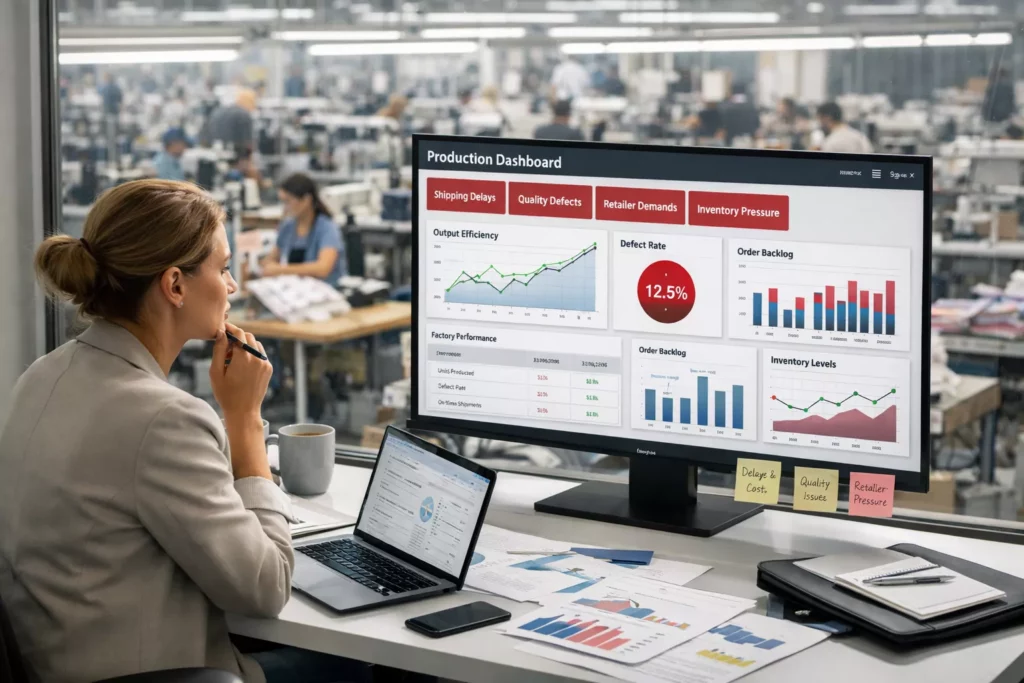
A weak manufacturing partner becomes more expensive as the brand grows because every problem now affects more units, more customers, and more money. A delayed order of 200 units is frustrating. A delayed order of 8,000 units can damage an entire season. A quality issue in one small launch may be survivable. A quality issue in a scaled retail or wholesale run can weaken trust quickly.
That is why the question is not only whether your manufacturer can still make the product. The deeper question is whether they can still support your brand at the level you now need.
Do not switch too early, but do not stay too long either
One of the biggest mistakes brands make is taking an extreme approach. Some founders switch manufacturers after every difficult order, which creates instability and repeated relearning. Others stay with an unsuitable factory for years because they feel loyal, afraid, or too busy to rebuild the supply chain.
Both approaches can hurt the business.
Switching too early can create instability in the production of streetwear.
- repeated sampling costs
- inconsistent product quality
- lost technical knowledge
- unstable lead times
- confusion in fit and finishing
- distraction from real business growth
Staying too long with the wrong manufacturer can create:
- ongoing quality decline
- late deliveries
- rising hidden costs
- poor communication
- lost wholesale opportunities
- weak scalability
- customer dissatisfaction
The strongest decision is usually not emotional. It is evidence-based. You should not switch because of one stressful week. You also should not stay because “they have always made our products.” You should evaluate the full pattern: quality, speed, transparency, flexibility, pricing, and future alignment.
A smart sourcing strategy balances relationship value with business reality. A good factory relationship is worth protecting. A weak one becomes expensive if it keeps the brand from growing well.
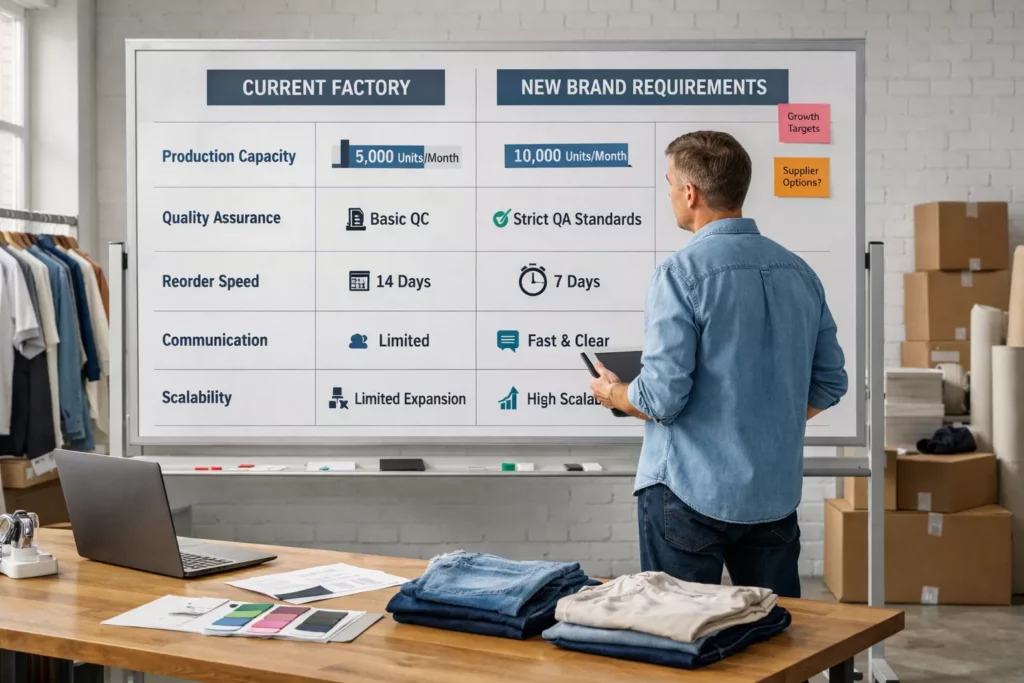
Start by asking whether the factory still fits your current stage
A manufacturer can be good and still be wrong for your current stage. That is an important distinction. The issue is not always that the factory is unprofessional. The issue is often that the brand has outgrown what the factory does best.
For example, your current factory may be great at:
- low MOQ development
- startup flexibility
- simple casualwear
- short experimental runs
- close founder communication
But your brand may now need:
- higher monthly capacity
- better line planning
- stronger QC reporting
- better compliance documentation
- more technical product development
- more fabric sourcing reliability
- faster repeat-order execution
In that case, the problem is not necessarily bad performance. It is fit. The manufacturer that helped you start may not be the manufacturer that helps you scale. This is a normal part of business growth, not a betrayal of the relationship.
A useful question is this:
If I were choosing a factory today for the brand I have now, would I still choose this one?
That question often reveals more truth than habit does.
What Are The Popular Products Of Switch Remarkable Clothing Brand?
Switch Remarkable, a family-owned label, is best known for versatile everyday pieces that attract every buyer seeking quality and individuality. Their popular product range includes tailored tees and corporate uniform lines, cozy hoodies, and signature denim jeans that combine durable cuts with fashionable fits. Customization is a highlight: many shoppers choose embroidery for a premium, tactile logo or name treatment.
For bolder graphics, Switch uses advanced surface techniques like digital printing, vibrant sublimation on performance fabrics, and precise transfer vinyl for seasonal designs and limited drops. These options let buyers personalize pieces for teams, events, or retail collections, keeping the brand relevant across casual, workwear, and promotional markets.
Sign one: quality problems are becoming more frequent
Quality drift is one of the clearest signals that your current manufacturer may no longer fit your growth stage. This does not mean one mistake automatically requires a switch. It means recurring issues are appearing often enough to damage trust or force constant intervention.
Common recurring issues include:
- inconsistent measurements
- poor stitching quality
- trim attachment failures
- fabric variation between lots
- shade inconsistency
- packaging errors
- higher-than-normal defect rates
- bulk garments not matching approved samples
As brands grow, these issues become harder to tolerate because more customers are affected. They also become more expensive. A small correction in a tiny run is manageable. A repeated quality issue across multiple large orders creates return risk, rework cost, and brand damage.
The key warning sign is not just that defects exist in the switch custom apparel. Every factory has occasional issues. The warning sign is that the same issues keep happening and the factory does not build stronger prevention systems around them.
If your team is repeatedly catching the same mistakes, reminding the factory of the same standards, and feeling anxious every time bulk starts, the factory may no longer be a stable growth partner.
Sign two: lead times are no longer reliable
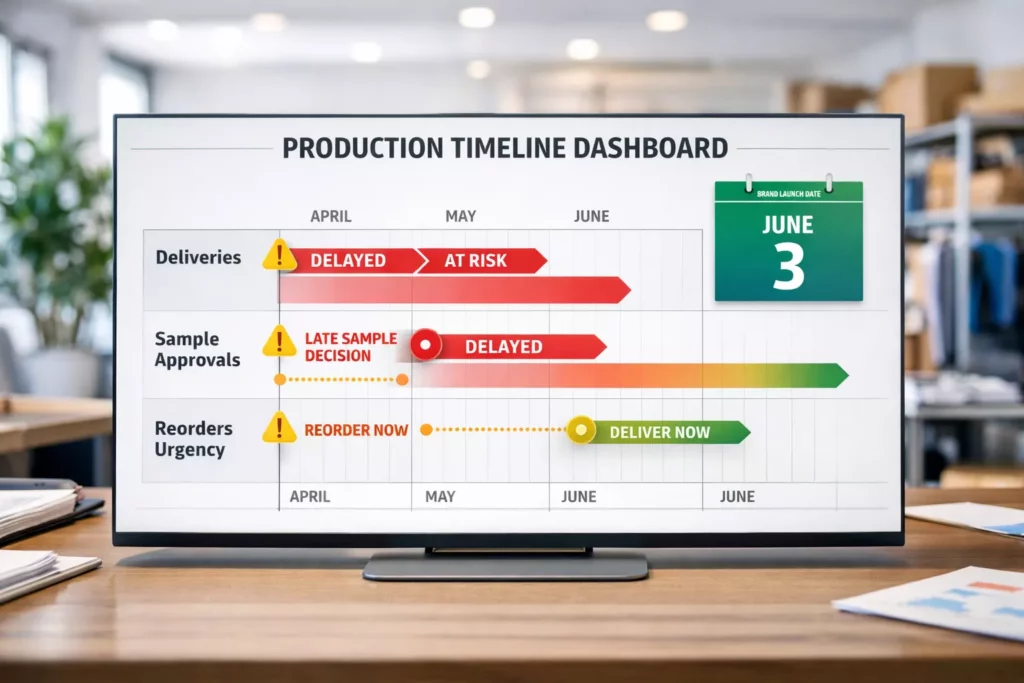
When your brand is small, some delay may feel tolerable. As you grow, lead-time reliability becomes much more important. Retail launches, wholesale deliveries, seasonal demand, and cash flow planning all depend on timing.
A manufacturer may no longer be the right fit if:
- promised production dates slip often
- sample timelines stretch repeatedly
- fabric booking delays become common
- finished goods wait too long before shipping
- the factory commits to schedules it cannot meet
- urgent reorders become too slow to support demand
The issue here is not just inconvenience. Late delivery can create serious business damage. You may miss a sales window, disappoint wholesale accounts, run out of your best seller, or tie up cash in delayed inventory.
A growing brand needs a factory that does not only produce well, but plans well. Capacity management, line booking, fabric readiness, and timeline honesty matter more as volume grows.
If your current manufacturer is always apologizing for delays but never getting more predictable, it may be time to re-evaluate the relationship.
Sign three: communication feels increasingly difficult
Communication problems become more expensive as production gets bigger. A factory that is slow to respond, unclear in updates, or inconsistent in executing instructions can create small misunderstandings that grow into real production losses.
Signs of a communication problem include:
- delayed replies on critical issues
- unclear status updates
- conflicting information from different team members
- repeated misunderstanding of specs
- weak revision tracking
- last-minute surprises about materials or timelines
- limited transparency when problems appear
A growing brand needs more than polite messaging. It needs operational clarity. That means the factory should be able to communicate around:
- sample status
- fabric and trim readiness
- production schedule
- quality issues
- shipment progress
- necessary approvals
- risk escalation when something changes
If your team feels like it has to chase every update, repeat every instruction, and interpret vague factory responses constantly, communication is no longer strong enough for scale.
Good communication is not a “nice extra” in manufacturing. It is part of production control.
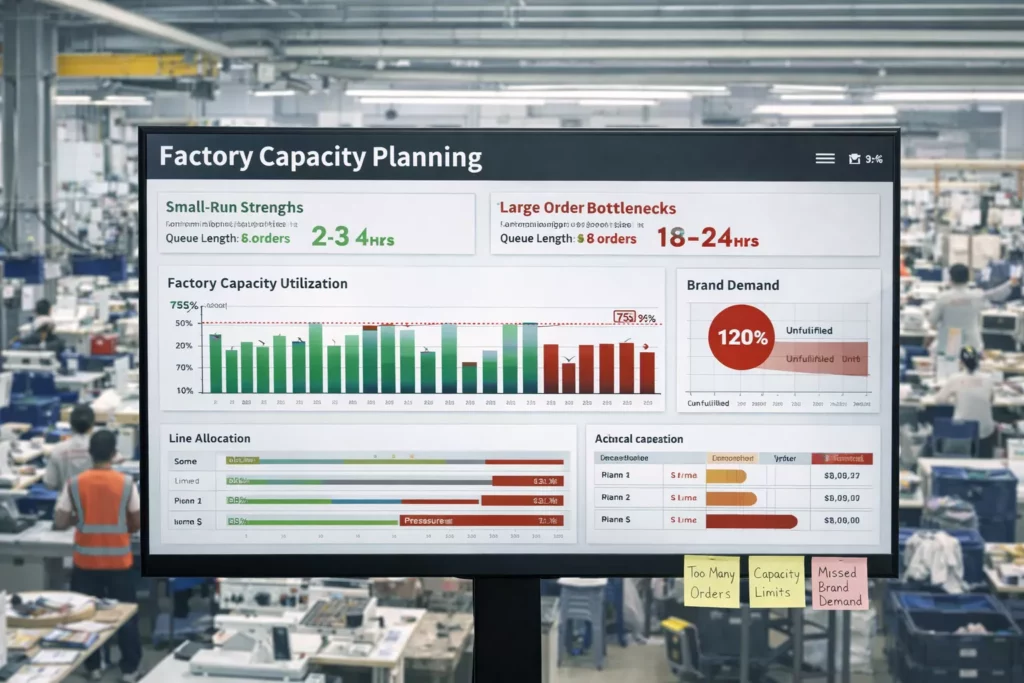
Sign four: The factory cannot handle your required volume
Some clothing manufacturers are simply not built for larger-scale production of t-shirts. They may produce high-quality small runs, but once order volume increases, they struggle with line allocation, scheduling, staff consistency, or sourcing flow.
Capacity mismatch may show up through:
- slower turnaround as quantities rise
- more quality issues in larger runs
- frequent production bottlenecks
- limited ability to reserve line time
- difficulty handling repeat orders and new developments at once
- refusal of volume increases during peak demand periods
A brand should not wait until this becomes a crisis. If sales are growing, ask whether the factory can realistically support future demand, not only current demand. It is much better to plan a transition before the capacity ceiling becomes urgent than after inventory shortages already start affecting the business.
Sometimes the right answer is not a full switch. It may be adding a second factory or moving only certain categories. But if capacity limits are becoming a repeated constraint, the brand needs a new sourcing strategy.
Sign five: You are not getting enough technical support anymore
As brands grow, product development usually becomes more sophisticated. You may need better fit refinement, more advanced fabric sourcing, stronger trim development, improved wash processes, or better packaging control. Not every factory can support that evolution.
Technical-support mismatch may show up when:
- sample development becomes too basic
- the factory struggles with more advanced products
- fit corrections are poorly understood
- fabric recommendations are weak
- trims or finish development feels limited
- the product stays “good enough” instead of getting better
This matters because growth often depends on product refinement, not only production volume. A brand that wants to move from average to premium usually needs a factory that can support more technical precision.
If your manufacturer can still make your existing core items but cannot support the next level of product development your brand needs, that is a sign the relationship may be reaching its natural limit.
Sign six: cost is rising without better performance
Cost increases do not automatically mean it is time to switch to a new clothing manufacturer. Raw materials, labour, logistics, and exchange rates can all change. But if your manufacturer’s pricing keeps rising while quality, service, and speed do not improve, that is worth investigating carefully.
This may appear as:
- higher quotes without clear explanation
- repeated extra charges for routine requests
- shrinking flexibility on MOQ or color splits
- higher prices combined with slower service
- hidden costs created by errors, rework, or delays
A brand should never chase the cheapest factory only for lower quotes. That often creates bigger problems later. But it should also not ignore the total cost of staying with a supplier whose value has declined.
The right comparison is not only ex-factory cost. It is total value:
- product quality
- speed
- communication
- defect rate
- repeat-order reliability
- development support
- hidden operational cost
If another supplier can deliver better overall value at a similar or even slightly higher nominal price, switching may still make strong business sense.
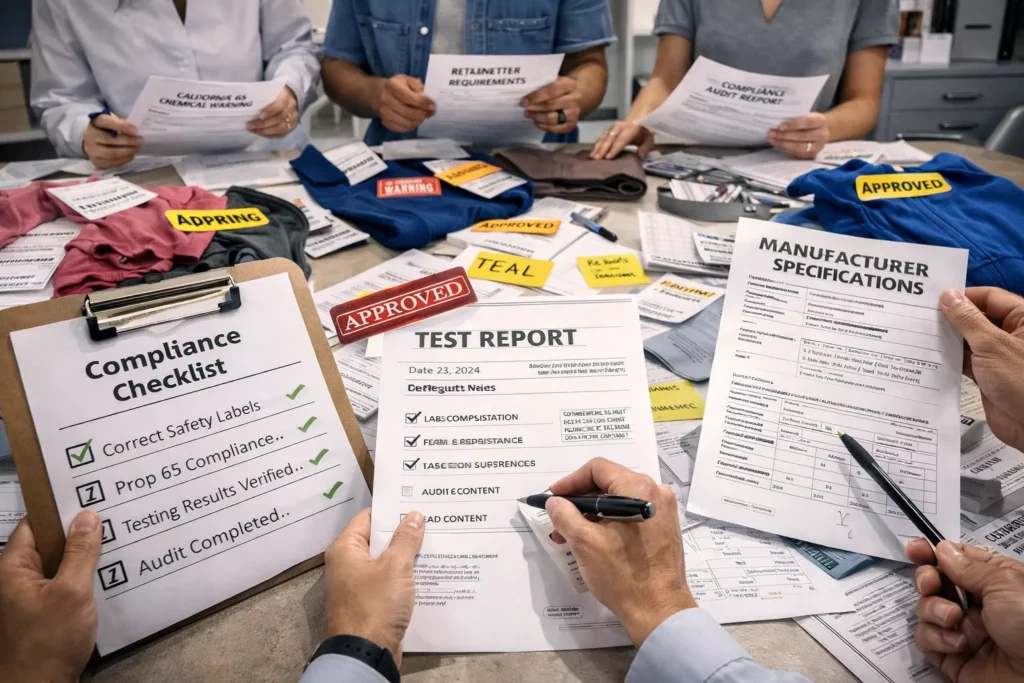
Sign seven: Compliance or documentation is becoming a problem
As clothing brands grow into wholesale, international markets, or larger retailers, compliance expectations usually increase. Your manufacturer may now need to support things like:
- fibre-content accuracy
- care-label consistency
- country-of-origin detail
- testing support
- quality documentation
- social or facility audit readiness
- packaging standards
- destination-market labeling requirements
A factory that was acceptable for early small-batch DTC may not be strong enough for retailer-facing or export-driven growth. If your brand is now dealing with more formal channel requirements and the manufacturer keeps creating documentation gaps or compliance mistakes, that becomes a real growth barrier.
Compliance issues are especially serious because they affect not only customer trust, but also retailer relationships, customs readiness, and operational costs. A factory that cannot keep up with this side of growth may no longer match your brand’s direction.
Sign eight: the manufacturer says yes to everything, but delivers inconsistently
Some factories are very agreeable in conversation but weak in execution. They say yes to timeline requests, yes to quality promises, yes to volume increases, and yes to technical changes, but the actual output does not support those promises.
This creates a dangerous dynamic because the brand starts planning around commitments that are not real. Over time, the founder may realize:
- sample dates for switch apparel are rarely met.
- trims are not actually secured
- lead times were unrealistic from the start
- bulk quality differs from the sample, especially when dealing with streetwear.
- promised improvements do not last
In manufacturing, honest limits are often more valuable than unlimited promises. A strong supplier says yes when it can deliver and flags risks early when something needs adjustment. A weak supplier often protects the relationship in the short term by overpromising, then creates bigger operational problems later.
If your current manufacturer sounds reassuring but your internal team has stopped trusting the schedule or the standards, that is a major warning sign.
Sign nine: your product categories no longer match the factory’s strengths
A manufacturer may be excellent at certain categories and average at others. This becomes more noticeable as your brand expands.
For example:
- a knit basics factory may struggle with tailored wovens
- a casualwear factory may not be ideal for technical activewear
- a sample-friendly boutique factory may not handle large denim runs well
- a fashion dress supplier may not be right for performance compression garments or t-shirts.
As your assortment evolves, ask whether the current supplier is still a true category match. A factory that was perfect for your original t-shirt line may not be the right partner for jackets, denim, swimwear, or sports bras.
Sometimes this leads to a full switch. Other times, it leads to a category-based sourcing model where different product types go to different manufacturers. The important thing is not forcing the wrong category into the wrong factory out of convenience.
Growth often requires more specialized supplier alignment.
Sign ten: your brand is spending too much energy managing the factory
This is one of the clearest but least discussed signs. If your internal team spends too much time fixing problems that should not be happening, the factory relationship may no longer be efficient enough.
Watch for signs like:
- constant follow-up on routine tasks
- repeated correction of recurring quality issues
- high internal stress before every order
- too much manual checking to maintain basic standards
- factory management consuming energy that should go toward growth
A factory should need management, but it should not need rescuing all the time. As a brand grows, your internal team needs more space to focus on design, marketing, product strategy, customers, and channel growth. If the manufacturer is pulling leadership attention back into repeated operational firefighting, the partnership may be costing more than it appears.
A good growth-stage manufacturer reduces internal friction. A weak one creates a gap in the quality of switch clothing.

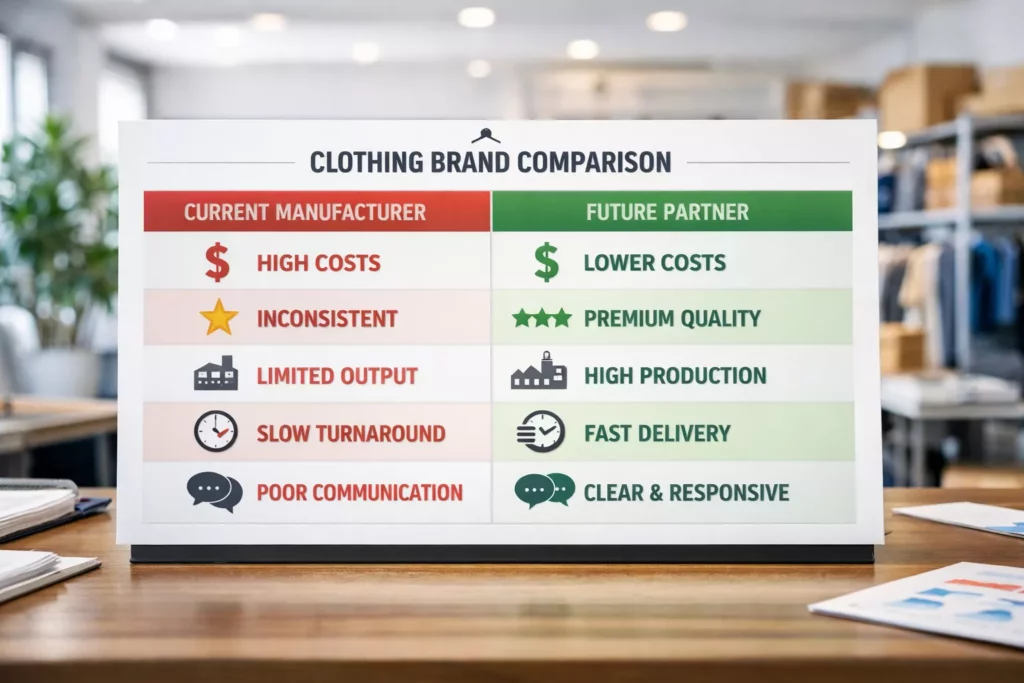
Comparing Your Current Manufacturer vs a New Factory
| Factor | Current Manufacturer | New Manufacturer |
| Production capacity | Limited to small or medium orders | Capable of larger-scale production |
| Lead times | Often delayed | More predictable timelines |
| Quality consistency | Increasing defect rates | Strong QC systems |
| Technical support | Basic sampling support | Advanced development capability |
| Communication | Slow or unclear updates | Structured production communication |
When not to switch manufacturers
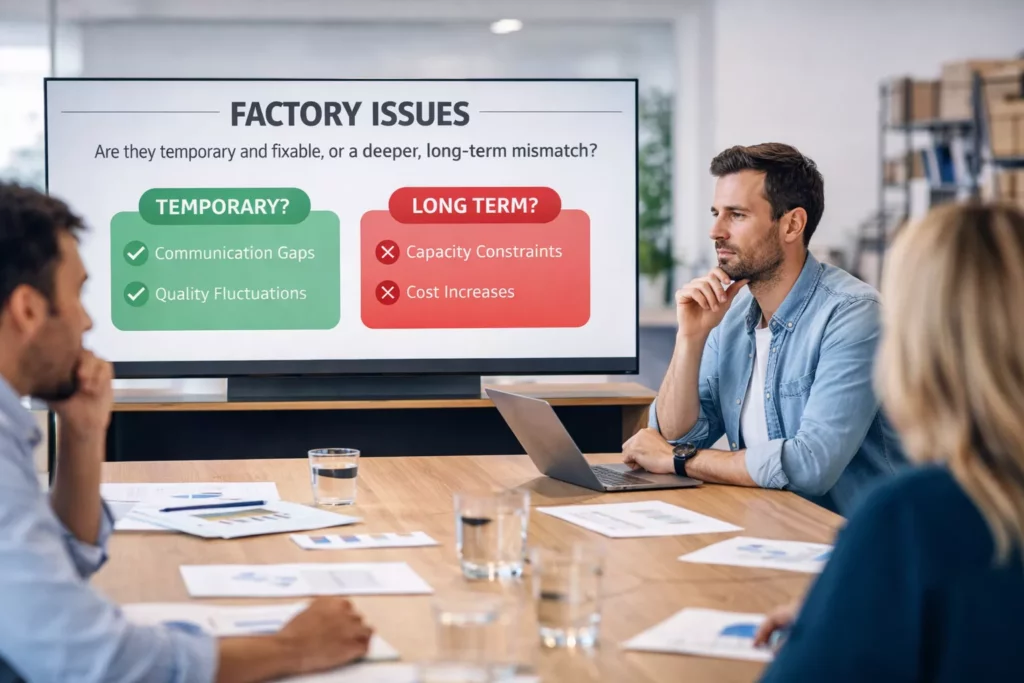
It is also important to know when not to switch. Not every difficult season means your supplier is wrong. Sometimes the better move is strengthening the current relationship instead of replacing it.
You may not need to switch if:
- quality issues are rare and fixable
- the factory responds well to corrective action
- delays happened because of temporary external disruptions
- your documentation or approvals were part of the problem
- the supplier is improving with your growth
- the category fit is still strong
- your current relationship provides important flexibility
In some cases, the right solution is:
- better tech packs
- stronger QC checkpoints
- clearer line booking
- firmer timeline alignment
- improved pre-production approvals
- vendor scorecards and review meetings
A switch should usually happen when the pattern is clear, not when frustration is high for one short period.
How to evaluate your current manufacturer objectively
Before switching, create a structured evaluation. This helps remove emotion and gives your team a clearer decision basis.
Review the manufacturer across these areas:
- product quality consistency
- fit and sample accuracy
- communication speed and clarity
- lead-time reliability
- capacity and scalability
- costing and price stability
- compliance and documentation support
- technical development capability
- flexibility with your business model
- overall trust and problem-solving
You can rate each one on a simple internal score. Then ask:
- which issues are isolated?
- which are recurring?
- which threaten growth directly?
- which could be fixed through process improvement?
- which reflect a deeper factory mismatch?
This evaluation often reveals whether you need:
- a corrective action plan
- a second backup factory
- a partial category shift to include streetwear.
- a full manufacturer transition
Clear evaluation usually leads to better sourcing decisions than frustration alone.
How to switch manufacturers without damaging the business
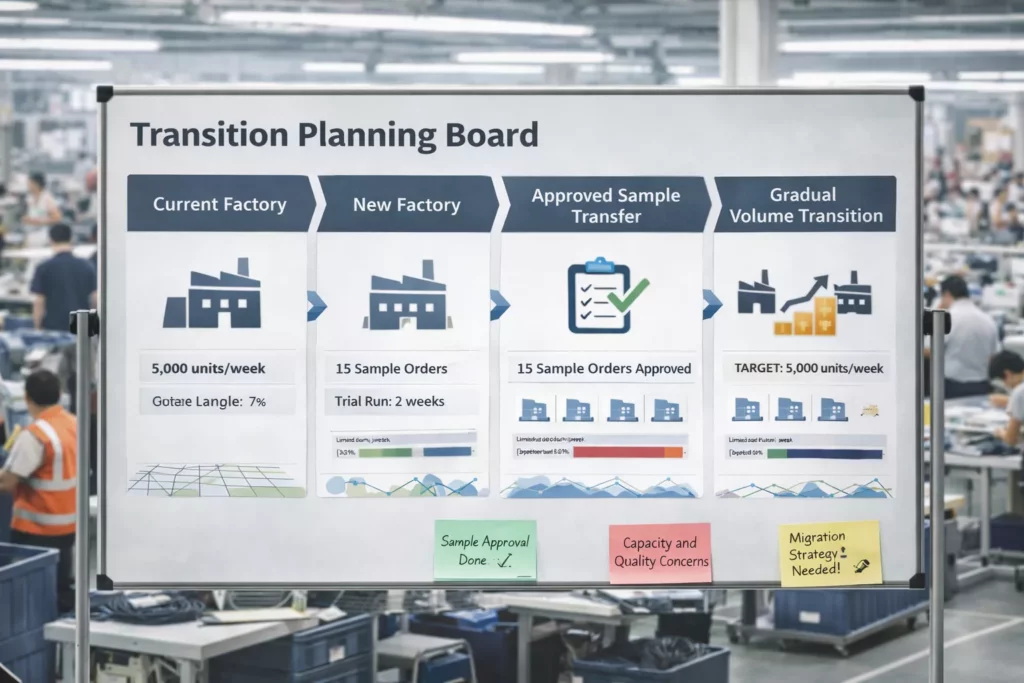
If the decision to switch becomes clear, the transition to switch clothing should be handled carefully. A rushed switch can create new quality issues even if the old supplier was wrong. The goal is controlled transition, not reactive escape.
A safer switching process usually includes:
- documenting the current product properly
- collecting approved samples and trim standards
- organizing updated tech packs and BOMs
- testing new factories through samples first
- comparing fit, quality, and communication closely
- starting with limited trial production
- overlapping old and new production of switch apparel if needed.
- protecting best-selling products first
Do not assume a new factory automatically understands your standards just because it looks more capable. Every new supplier relationship needs onboarding. If the brand transfers too much volume too quickly, the transition itself may create instability in the production of wear.
A careful switch protects continuity while still opening the door to better long-term scaling.
Should you fully switch or add a second manufacturer?
Sometimes the right answer is not a full exit. It may be building a dual-factory strategy.
A second manufacturer may help when:
- your current supplier is good but at capacity
- your category range is expanding to include t-shirts and streetwear.
- you want risk diversification
- you need a regional backup
- one factory is strong for development while another is stronger for scale
A full switch may be better when:
- trust has broken down
- quality decline is ongoing
- communication is poor
- compliance risk is rising
- the category mismatch is too large
- the relationship is consuming too much internal energy
The best structure depends on the nature of the problem. Some brands grow well by keeping a trusted small factory for new developments and moving core repeat styles to a stronger scale partner. Others need a full replacement because the old relationship is no longer workable.
This is why the real question is not only “Should I switch?” It is also “What sourcing structure will best support the next stage of growth?”
A simple framework for knowing when to switch
If you want a practical rule, use this framework:
Stay
Stay with the current manufacturer when quality is stable, communication is strong, and the issues are occasional rather than structural.
Improve
Improve the relationship when the factory still fits your stage, but your processes, approvals, or review systems need to become stronger.
Add
Add a second manufacturer when growth is creating capacity pressure, category expansion, or sourcing concentration risk.
Switch
Switch when recurring problems in quality, capacity, timing, compliance, or communication are actively holding back the brand’s next stage.
This framework keeps the decision strategic. Not every challenge deserves a full move. But some clearly do.
ApparGlobal
Many clothing brands manage manufacturer transitions more safely when they work with apparel partners that understand factory evaluation, tech packs, supplier onboarding, quality control systems, and scalable production workflows. Companies such as ApparGlobal help fashion brands align garment specifications, production planning, factory capability, and sourcing strategy so switching or expanding manufacturer relationships becomes more organized, lower-risk, and more growth-ready.
Conclusion
Knowing when to switch manufacturers as your brand grows is really about recognizing when your current production partner no longer matches the level your business has reached. The best manufacturer for a startup is not always the best manufacturer for a scaling brand. As volume, channel complexity, and customer expectations increase, the factory needs to support stronger quality control, clearer communication, better lead times, and more reliable technical execution.
The clearest signals usually come from patterns: repeated quality issues, unreliable timelines, weak communication, capacity limits, poor technical support, compliance gaps, and rising internal effort just to keep orders on track. When those problems become recurring instead of occasional, the brand should stop asking whether the relationship is comfortable and start asking whether it is still commercially right.
A thoughtful switch can protect quality, improve scalability, and give the brand a stronger production foundation for the next phase of growth. The key is not moving too quickly or too emotionally. It is moving when the evidence shows that staying is now the bigger risk.